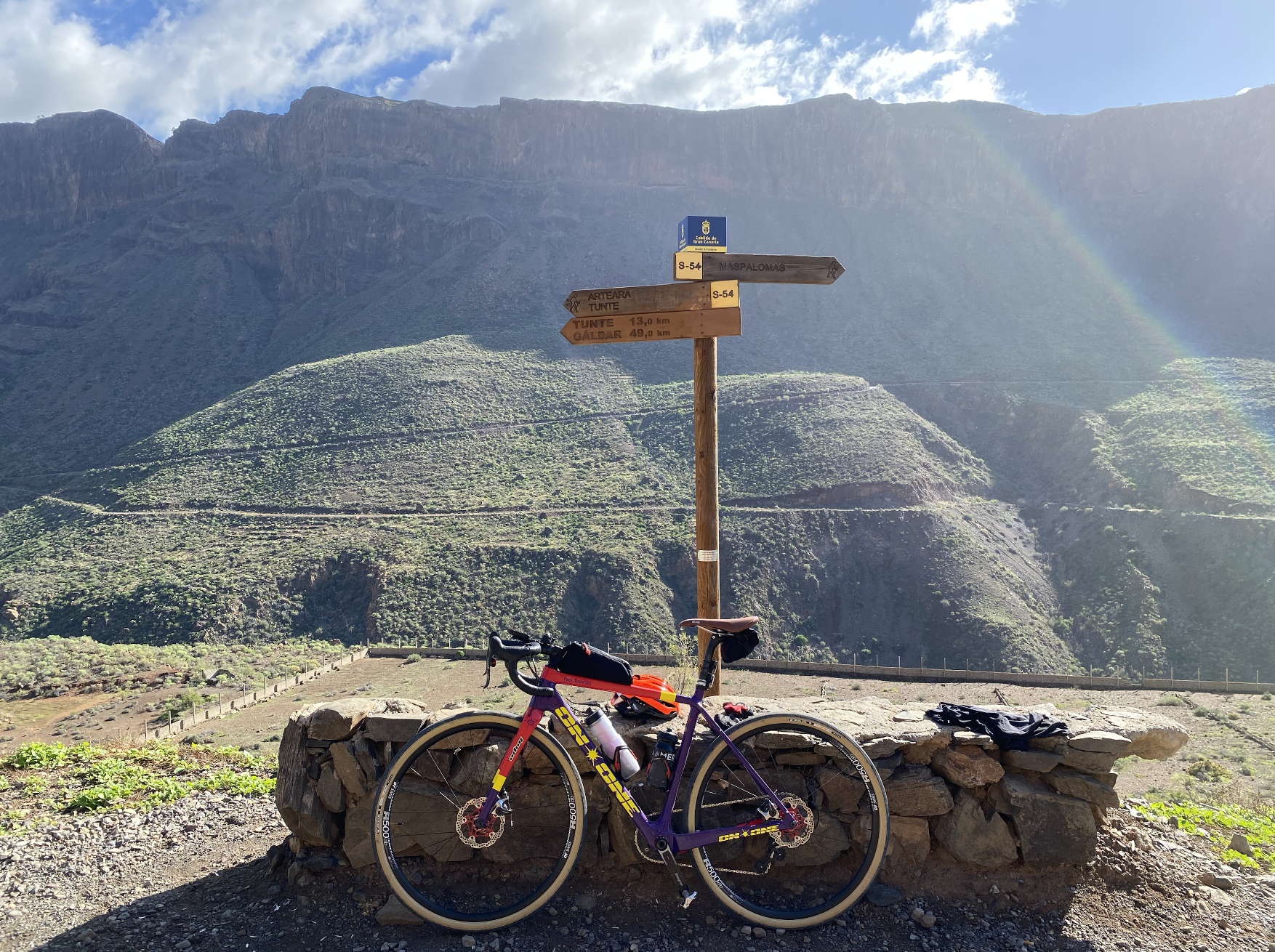
Gran Canaria is a great place to cycle. The wonderful all year warm climate and the mountainous terrain make it an ideal place for road, gravel and mountain bikes alike. For those reasons it’s a favourite winter training location for many of the professional teams and triathletes. What’s fascinating about the island is its diversity of terrain with numerous climbs that would not look out of place in any grand tour. My favourite being the Serenity climb (GC-605) with its multiple switchbacks through a pine tree lined mountain pass emerging at Ayacata. At the time of writing, the GC-500 remains closed between Taurito and Puerto de Mogán due to rock falls. The best advice is to take your bike on a ferry from Puerto Rico to Puerto de Mogán before heading inland to Mogán village on the GC-200, then taking a right turn up the Serenity climb and from the top of the climb descend back down hill to the coast at Arguineguin down the beautiful Soria climb.
Many other climbs in Gran Canaria deserve grand tour status, surely one edition of the Vuelta a España will include the island? The climb to Soria, mentioned above, is popular for good reason, the Alpe d’Huez of Gran Canaria. The ride to the highest point of the island at Pico de las Nieves is close to 2,000 metres in altitude and then there’s the terrifyingly difficult Valley of the Tears (GC-606), called so for obvious reasons. The latter being a climb I just had to do once, but it was best left as a feather in the cap, never to be repeated.
My trip to the island in December 2025 was the first visit with a gravel bike. I made a technical error thinking that a set of 40 mm slick tyres would be enough for the dry gravel whilst providing a fast rolling platform for some of my favourite road climbs and descents. However, it turned out to be an unusually wet week in the mountains which made things a little sketchy on the trails at times.
I set out with three main objectives; the first was to take the dirt road (GC-602) from the dam at Ayagaures to the GC-60 south of Fataga. The second was to ride the trail from San Fernando, North to Fataga and then ride the climb to San Bartolomé before visiting Santa Lucia and down the mountain to the coast utilising the road, although there is a gravel option. And finally, I wanted to ride some unfinished business, the gravel section of the GC-604 to Chira emerging on the GC-60 north of La Plata.
Ride 1: GC-602
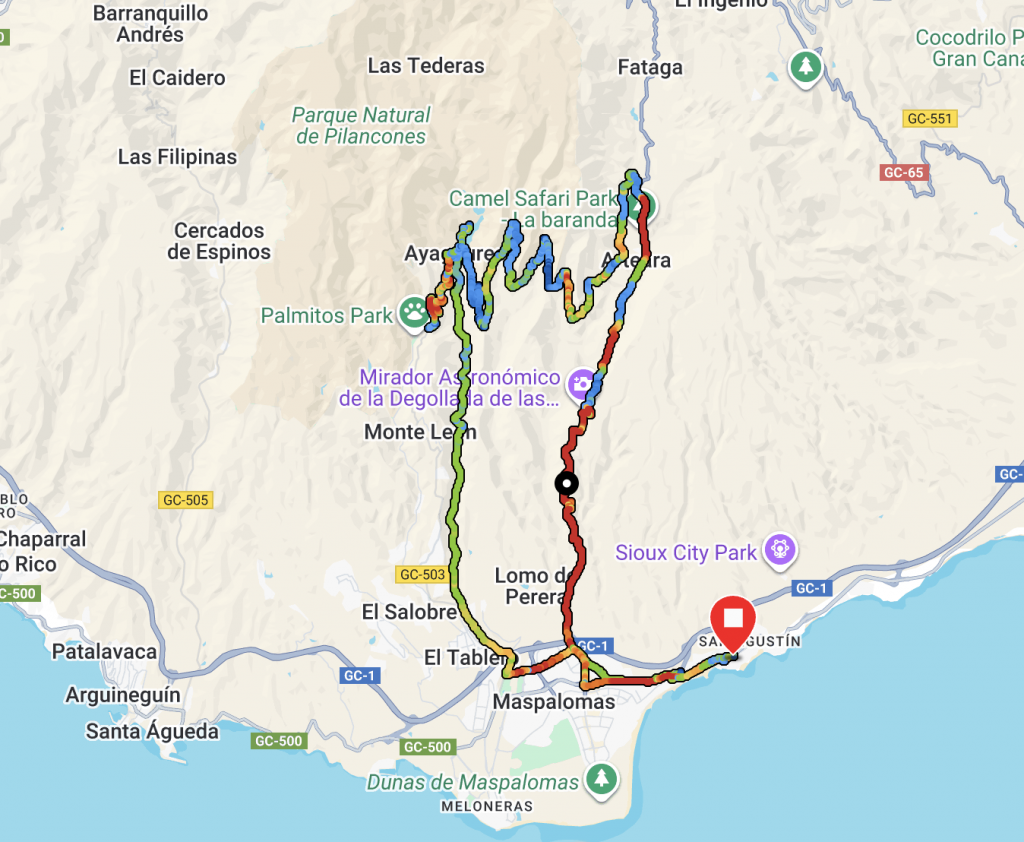
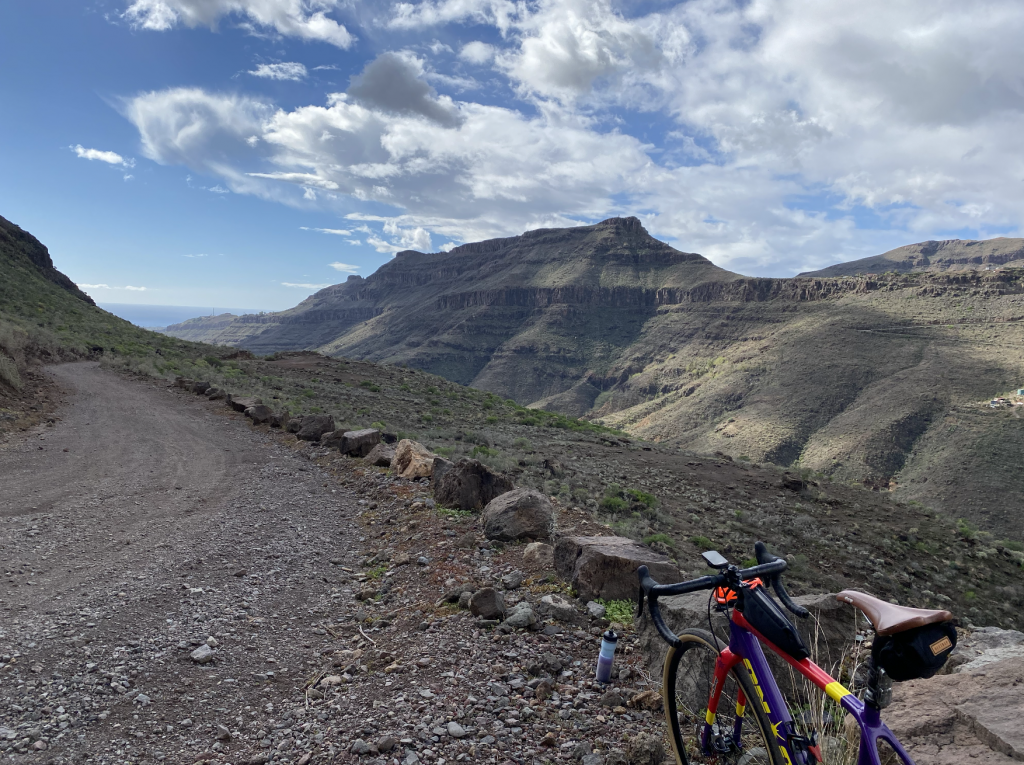
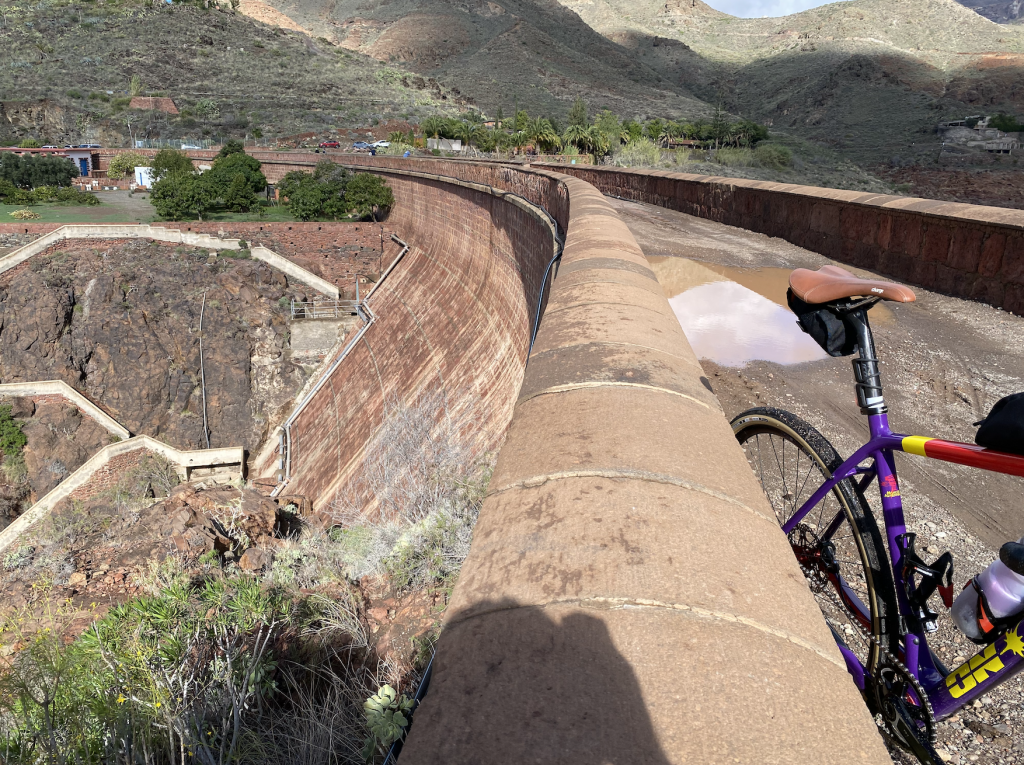
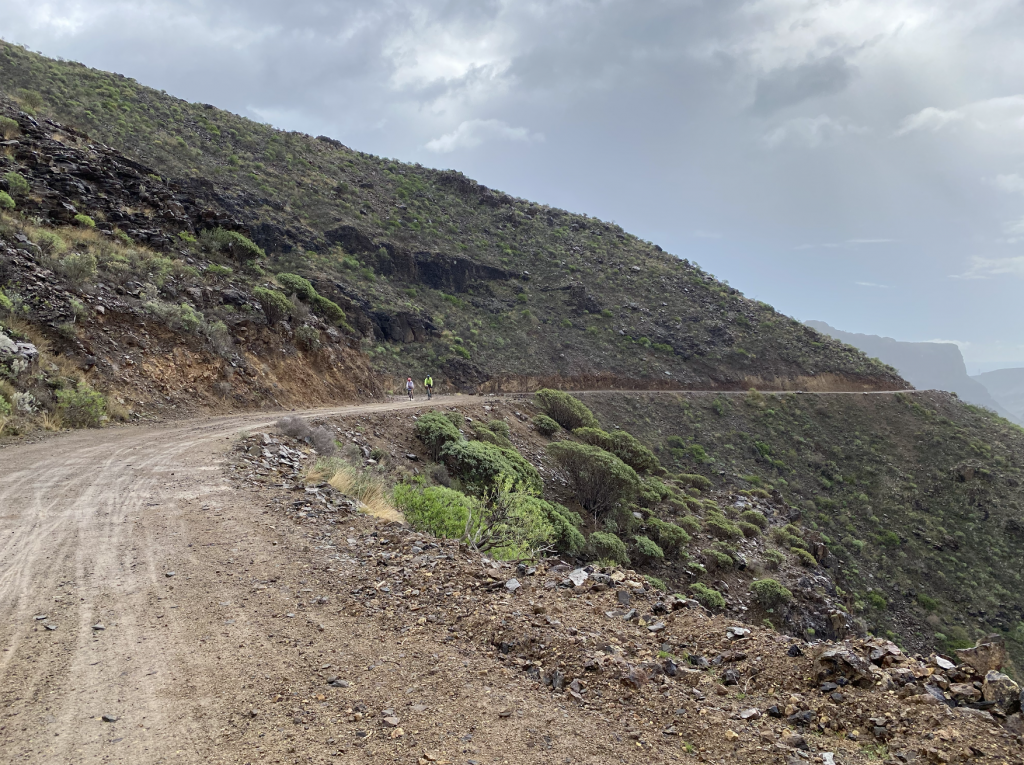
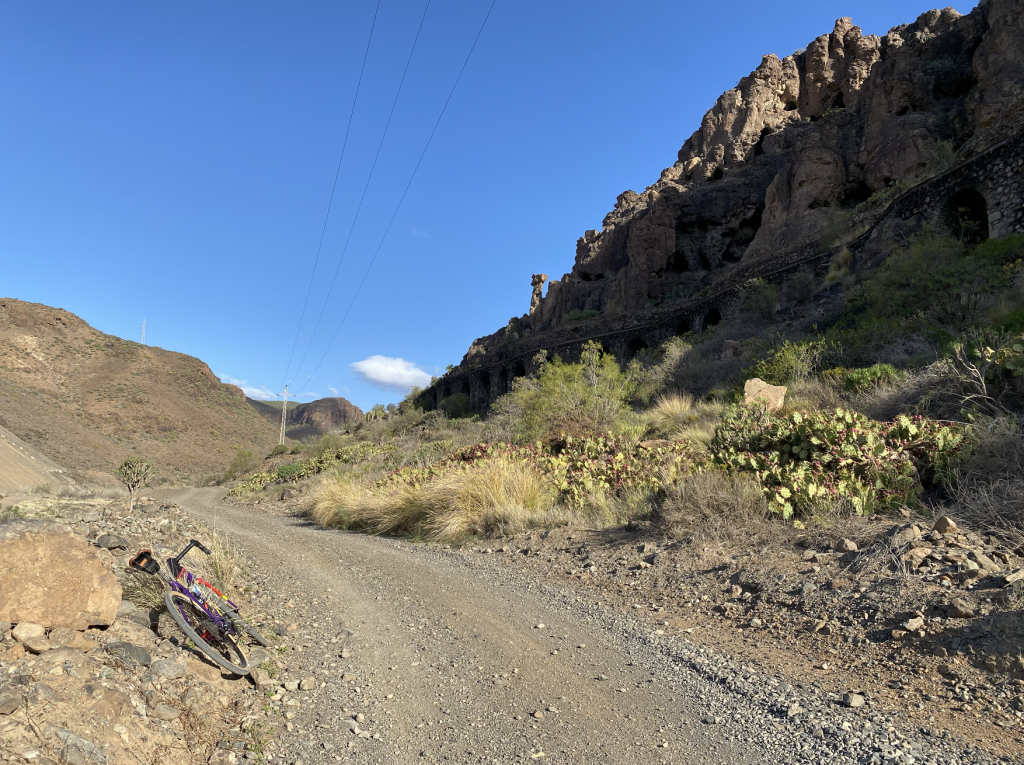
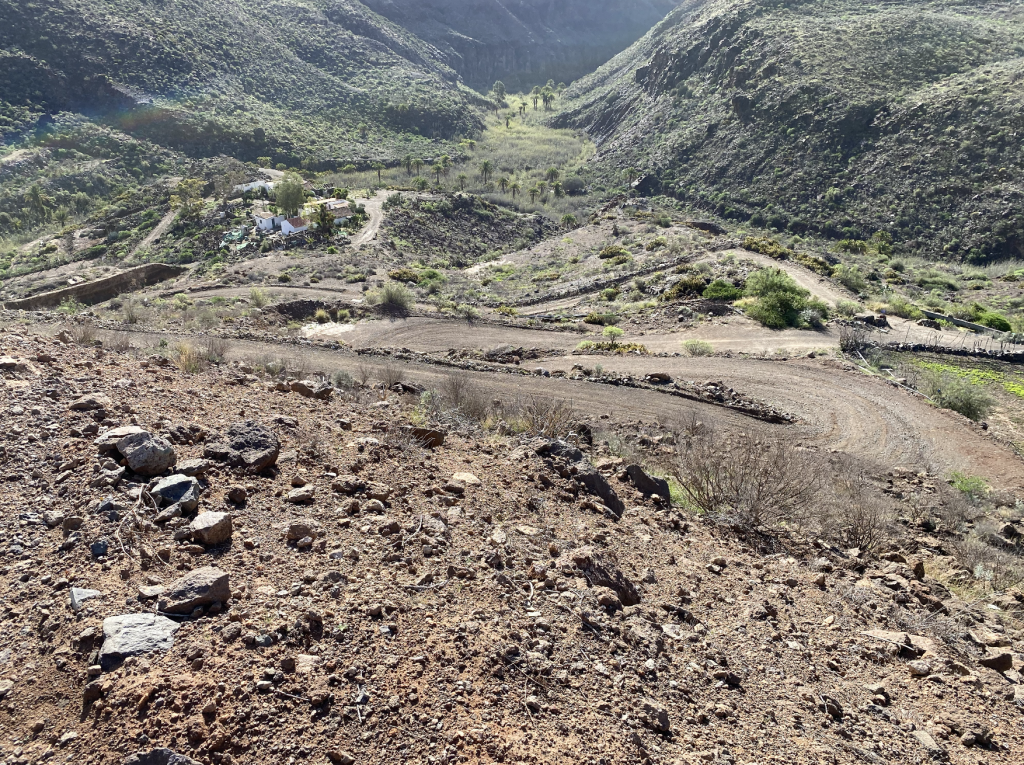
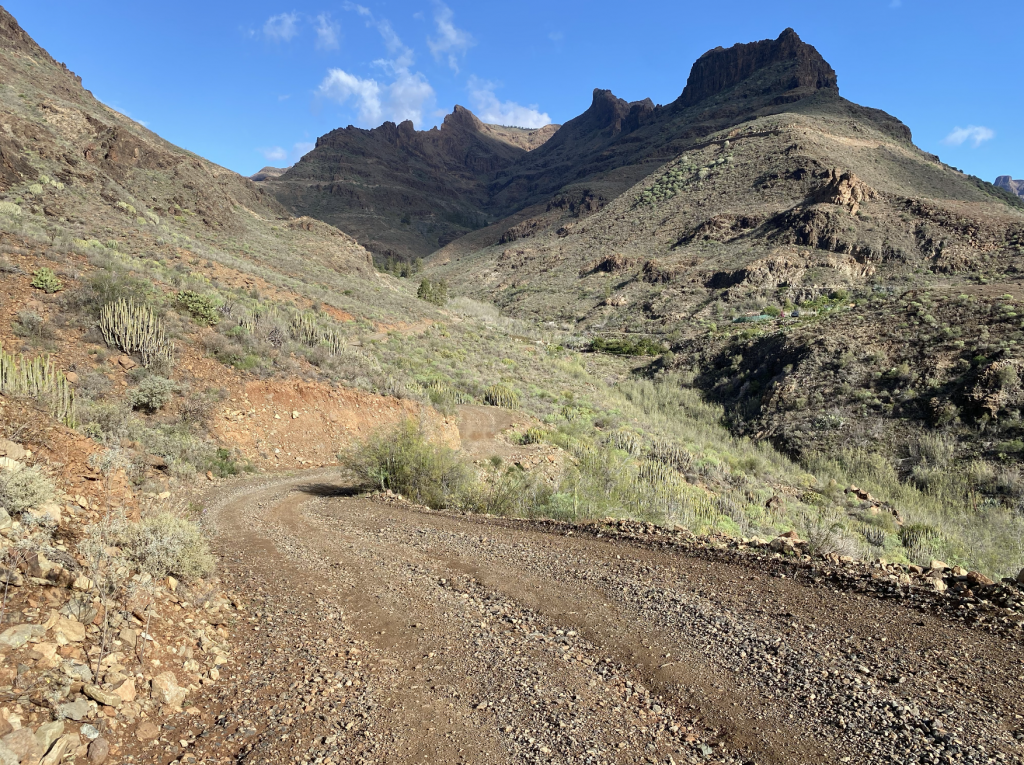
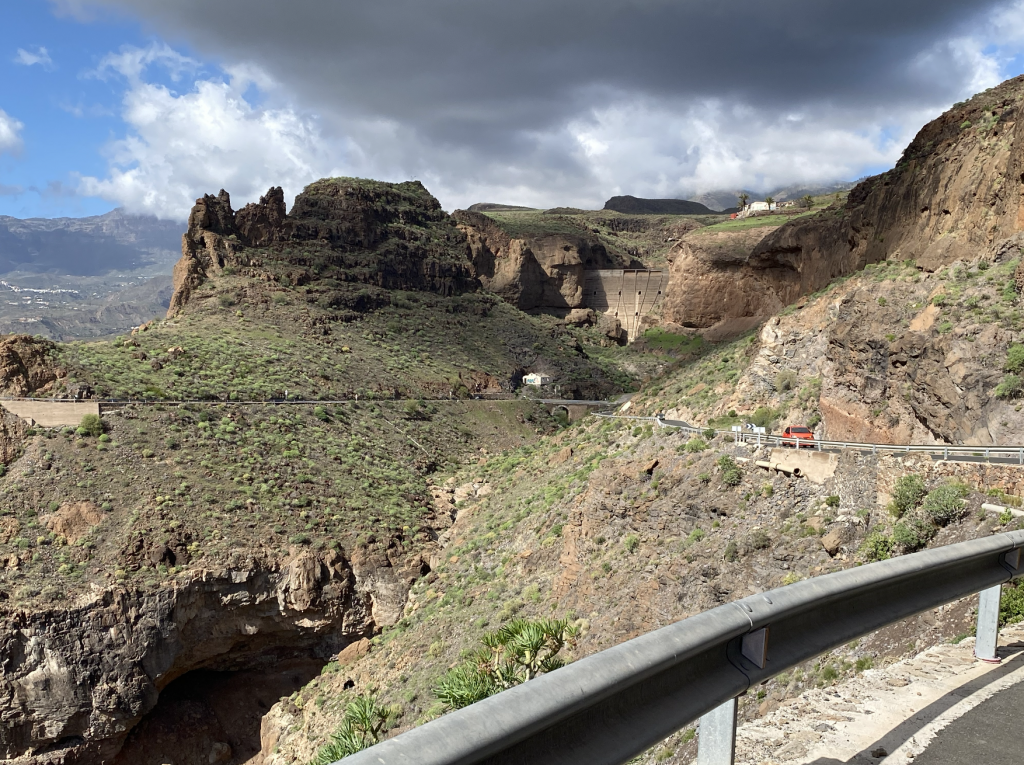
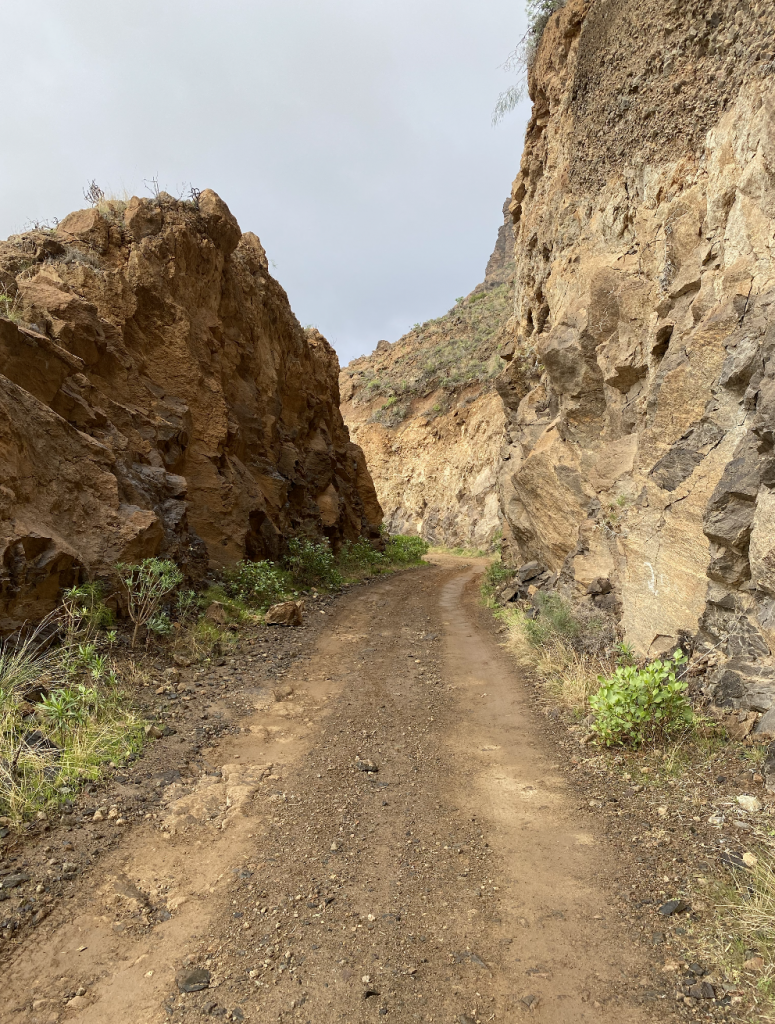
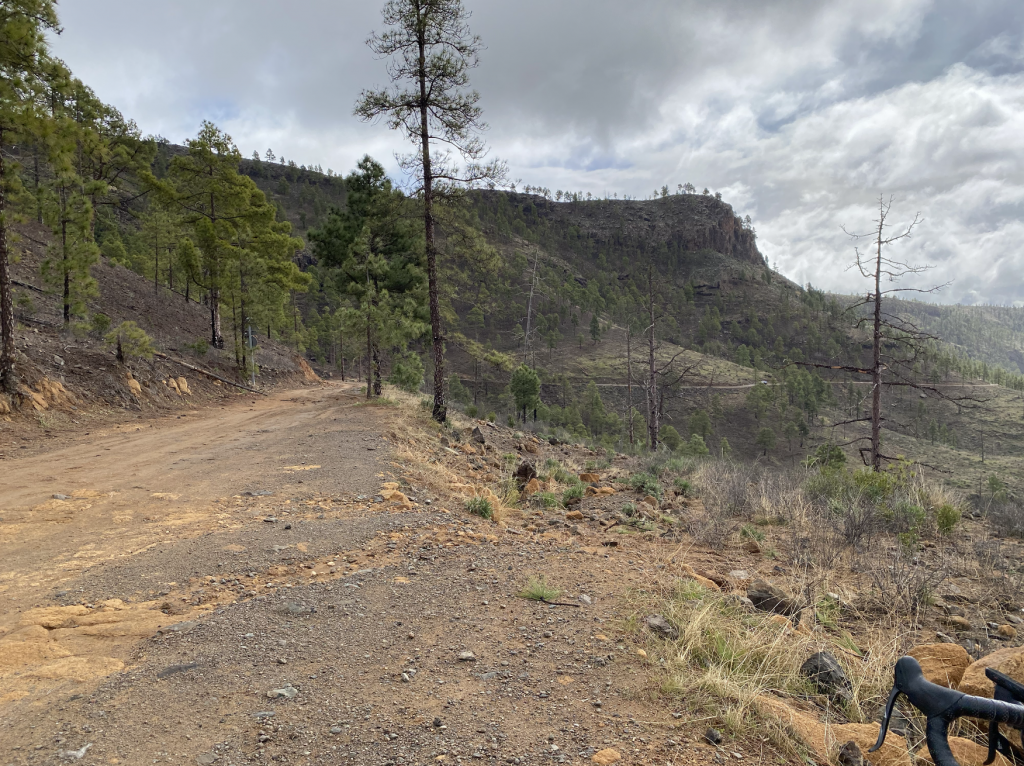
Before tackling the gravel on Ride 1, I made my way to Ayagaures to ride the tasty little road climb located there. It was for old time’s sake, a road climb I would undertake on my regular mid-week pre-work rides. I guess I wanted to see how much I had deteriorated since my last attempt in August 2021 when my Strava segment was 13.38. All I can say is either gravel bikes are very much slower or age is taking its toll, probably both. The GC-602 leaves Ayagaures village after the first few hairpins of the climb, taking a double right to cross over the top of the dam. It then climbs constantly but not brutally most of the way to the GC-60. The views are one of spectacular volcanic structures that were greener than normal due to the recent rains. Stopping at the first highpoint to take few pictures and eat a bar I was passed by a Swiss e-biker who stopped for a chat. After moving on the weather started to produce a few spots of rain requiring my rain jacket to be utilised. This was no matter as the vistas were amazing. Having ridden the roads in Gran Canaria many times I was not expecting to be even more impressed by the wonderful vistas but the gravel bike delivered an all new perspective of this most dramatic of landscapes.
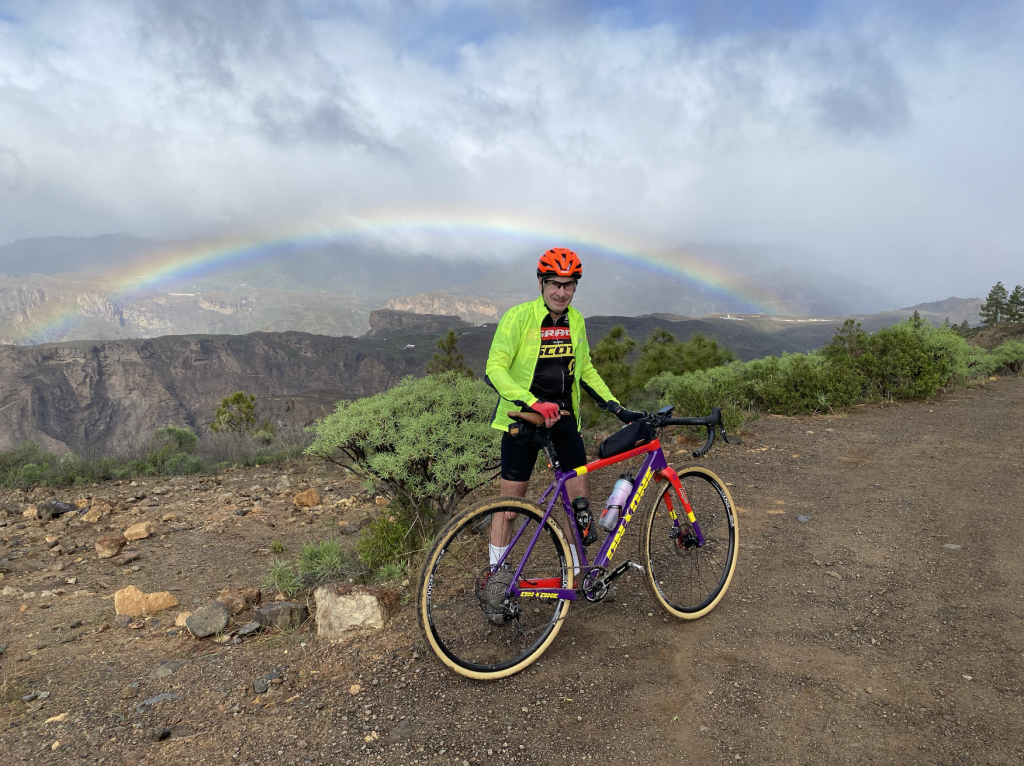
At that point a met a nice couple from Hull also on a gravel cycling break who were agreeable to taking a few pictures for me (vanity got the better). Eventually I emerged onto the GC-60 south of Fataga with just one more climb, a rather challenging road climb to the Mirador Astronomico Degollada before chasing the sun on the final descent into Maspalomas and a left turn to my base for the week in San Agustin. The pictures speak for themselves.
Total distance: 58.44 km
Maximum altitude: 490 meters
Elevation gain: 1,174 meters
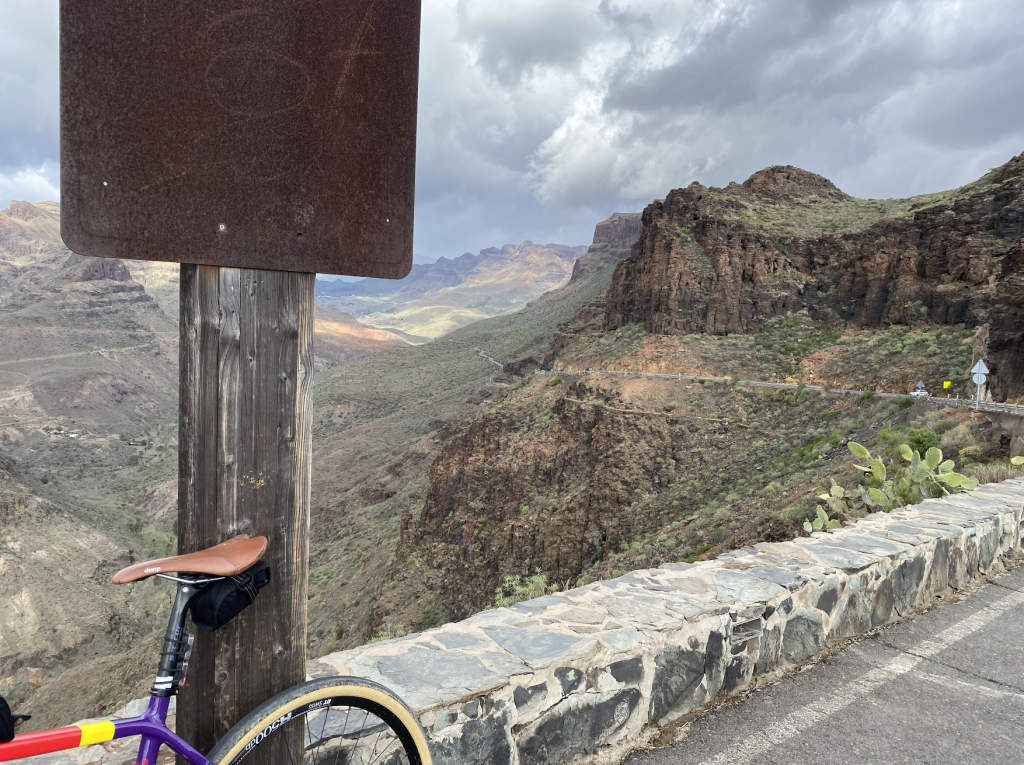
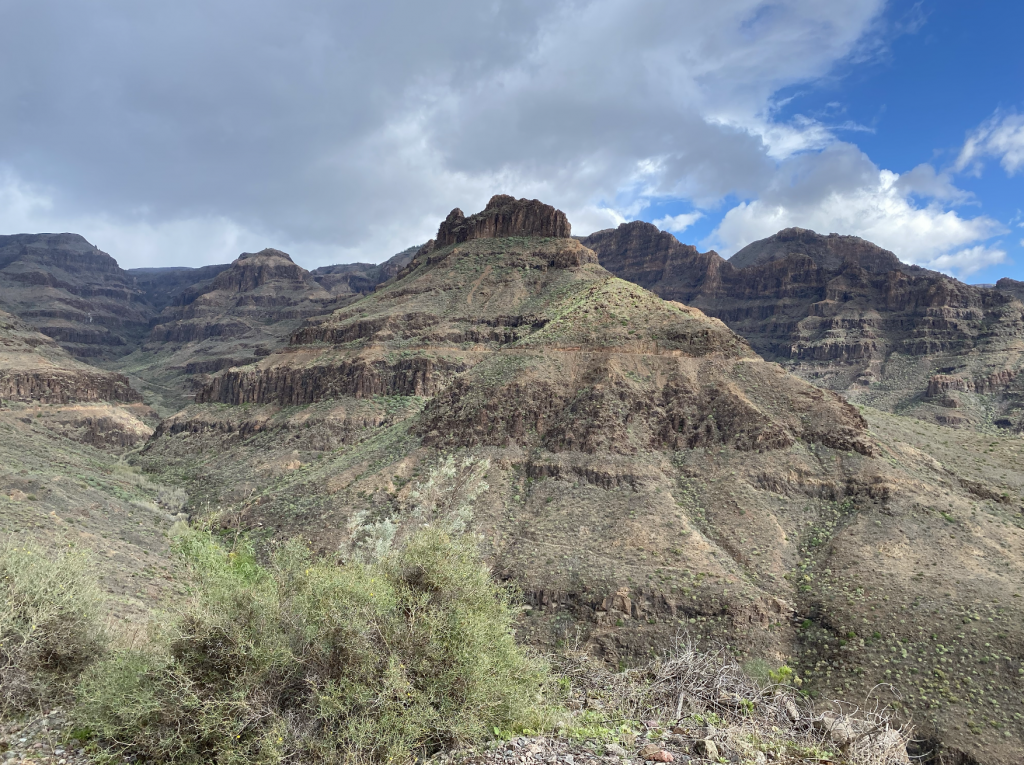
Ride 2: Gravel road from San Fernando
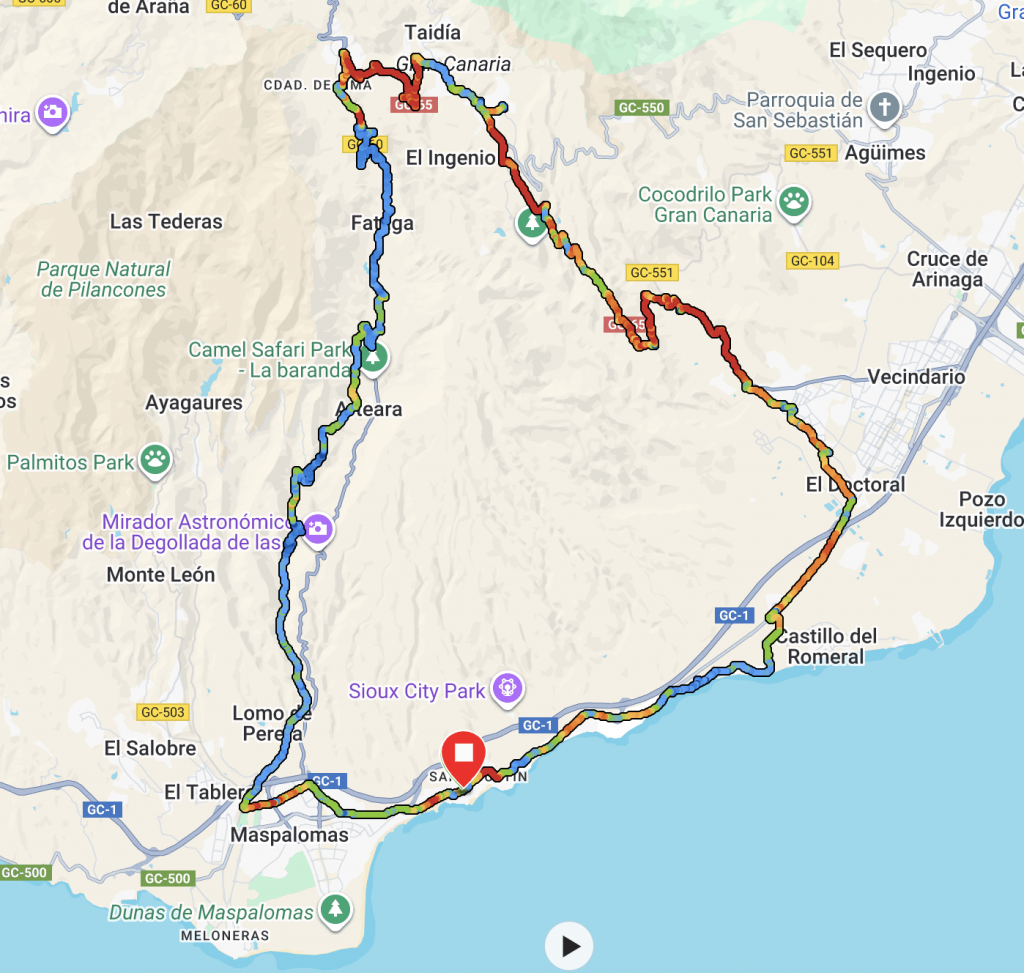
On Ride 2 I made my way from the resort to San Fernando passing along Avienda de Galdar where the numerous cafés where busy with locals taking coffee and breakfast. The route then diverted toward the local hospital, ‘Centro de Salud’ from which a gravel trail heads north along the valley before climbing out towards Fataga eventually joining the route ridden the previous day.
The first section was distinctively stoney making for slow progress. After passing through a fenced off section the surface improved and for a while good progress was made. Good progress that is until I began to ride out of the valley up towards the GC 60. That was the point where the gradients became challenging with a two Category 4 climbs averaging 11.3% and 8.4% respectively followed by a Cat 1 averaging 5.3%. Reaching asphalt, I then climbed onwards towards Fataga for a coffee and a chat with the multiple groups of cyclists gathered at the café . One of the great things about Gran Canaria is the diversity of cyclists from across Europe whilst not being swarmed by cyclists.
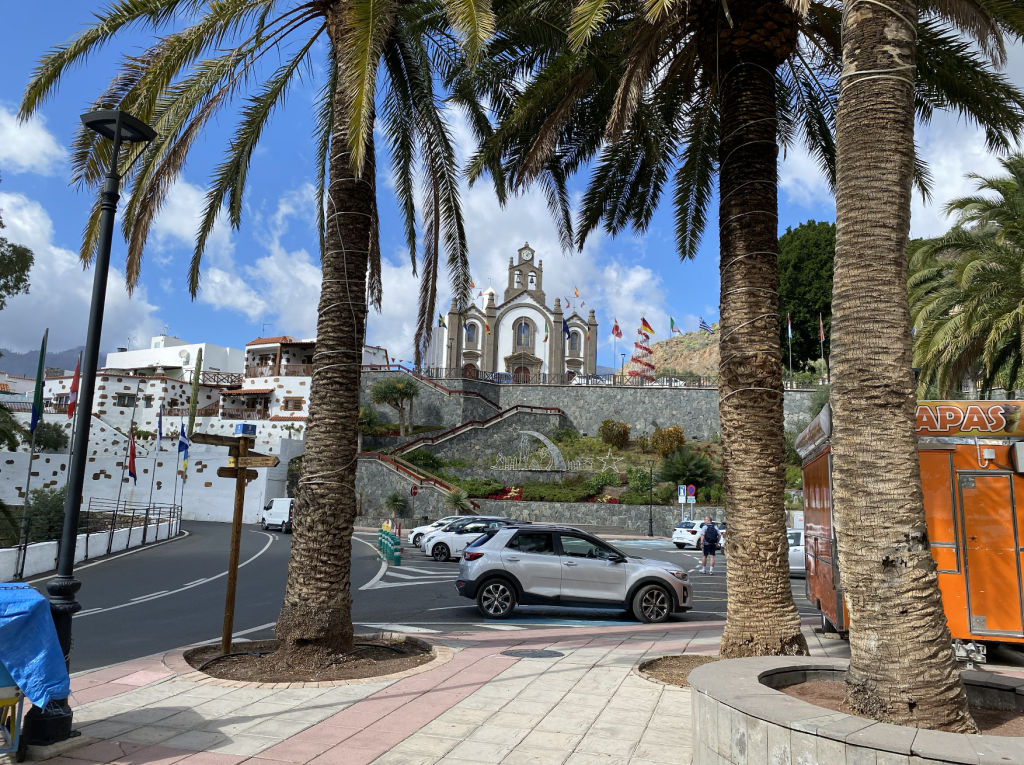
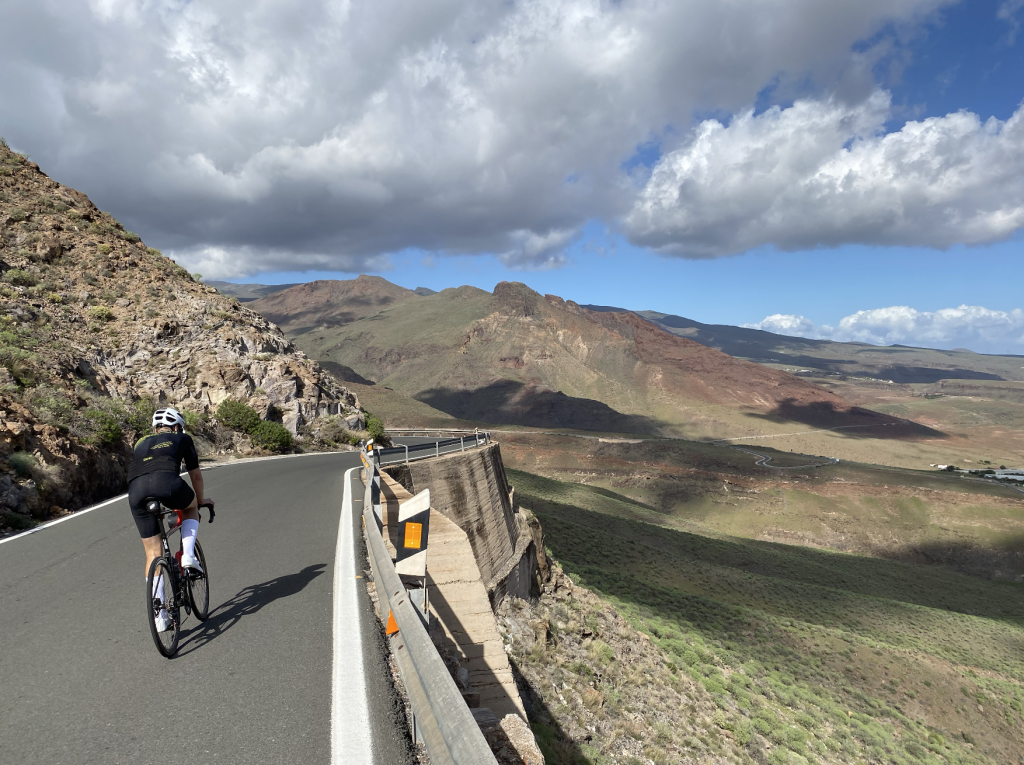
Riding onwards I’d made the decision to keep to the roads, mainly because I wanted to visit one of my favourite villages on the island, Santa Lucia. The climb to get there is special with endless hairpin bends on smooth tarmac. The slick tyres on my gravel bike were now in their element although that did not stop me from being caught in the climb. Towards the top I did however manage to catch one rider making the score 1-1. In all seriousness, as the riders gathered at the top of the climb to admire the view there was enjoyable banter by all. The chap I had passed telling me how he was in his 60’s, obviously my youthful looks lead him to believe I am much younger than he! The road from Fataga to San Bartolomé provides 420 meters of elevation gain in 4.6 km but the rider is rewarded by a fast scenic descent into Santa Lucia and, after an undulating section, an even faster descent down towards the coast.
There is a gravel route that leaves the GC-65 before Santa Lucia with an end point on the coast but I was feeling nostalgic for the road descent so continued on the GC-65 all the way the outskirts of Vecindario before picking up a rather bumpy beach ride back to my base in San Agustin.
Total distance: 71.29 km
Maximum altitude: 931 meters
Elevation gain: 1,321 meters
GC 604
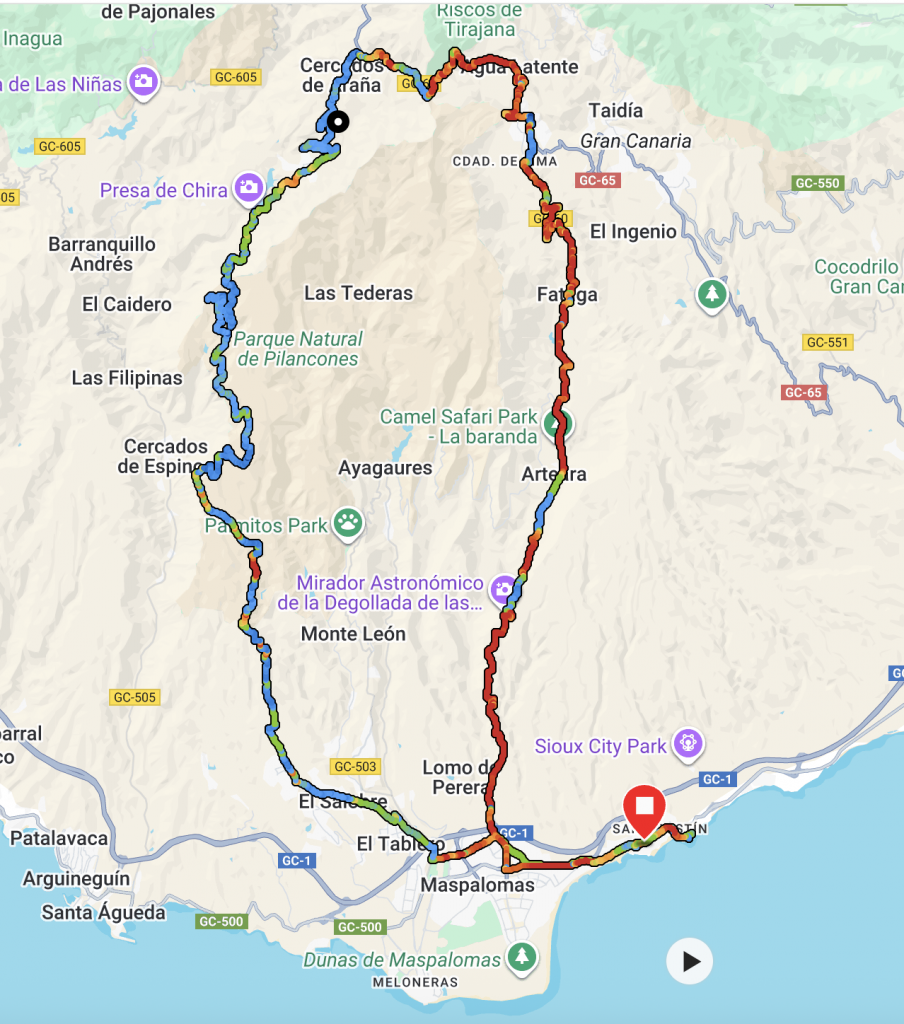
The GC-604 was unfinished business. A previous attempt on my road bike came to an end at the top of the asphalt section. It’s a brutal climb starting from the outskirts of Maspalomas through the villages of El Tablero and El Salobre before rising relentlessly to over 1,000 meters in altitude. With gradients close to 20% in places the asphalt section of the ride is a ‘hors catégorie’ (HC), the hardest category of climb in cycle racing. It lasts some 17 km with an average gradient of 5% before giving way to the most amazing gravel road that itself includes a few Category 4 slopes.
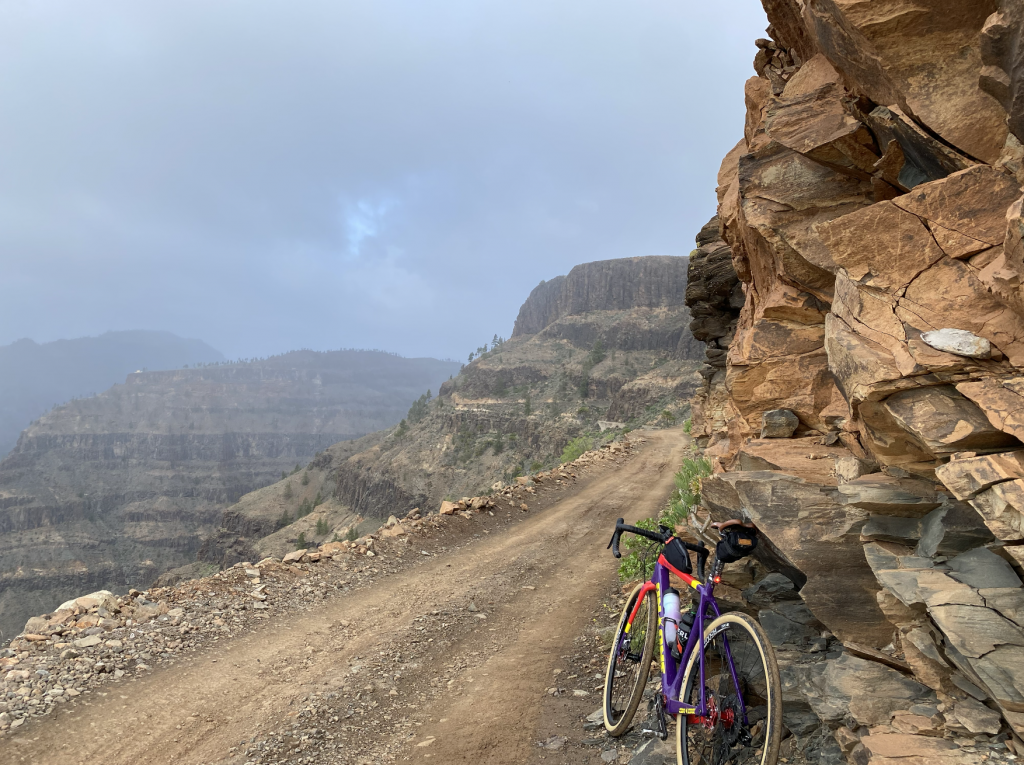
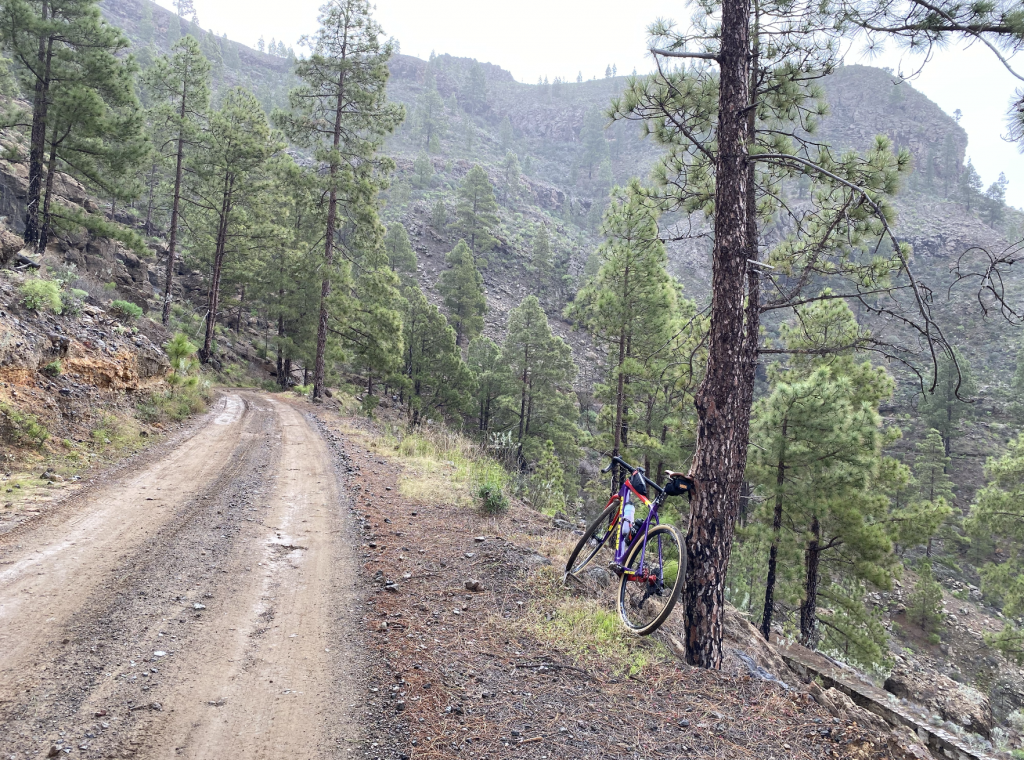
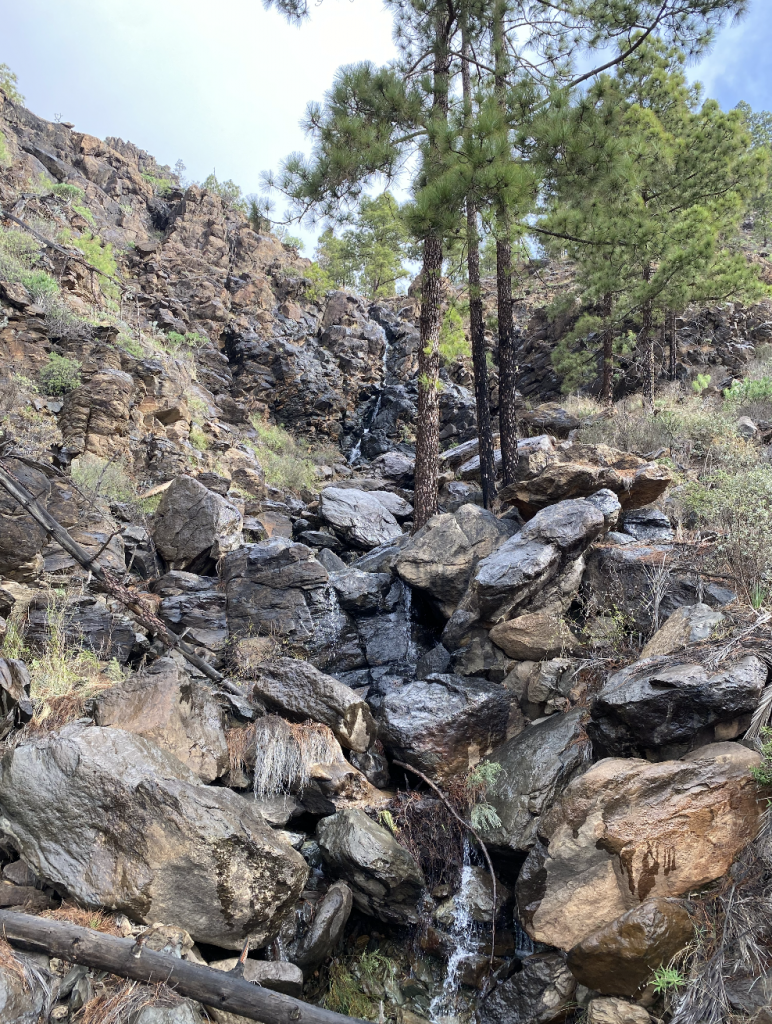
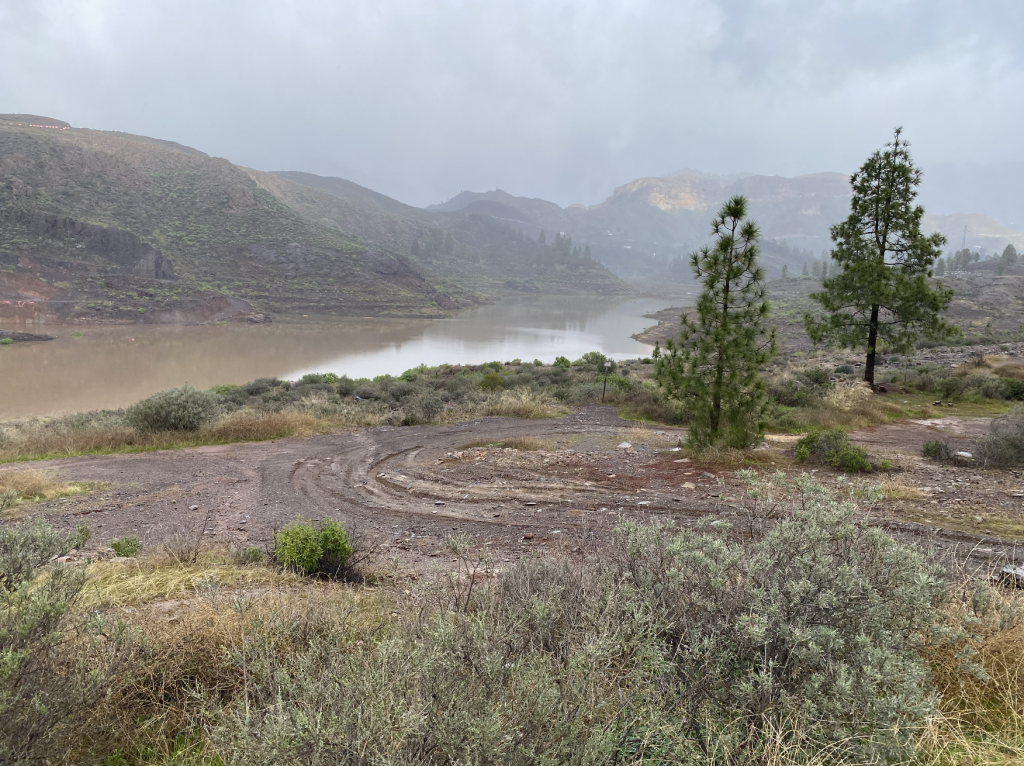
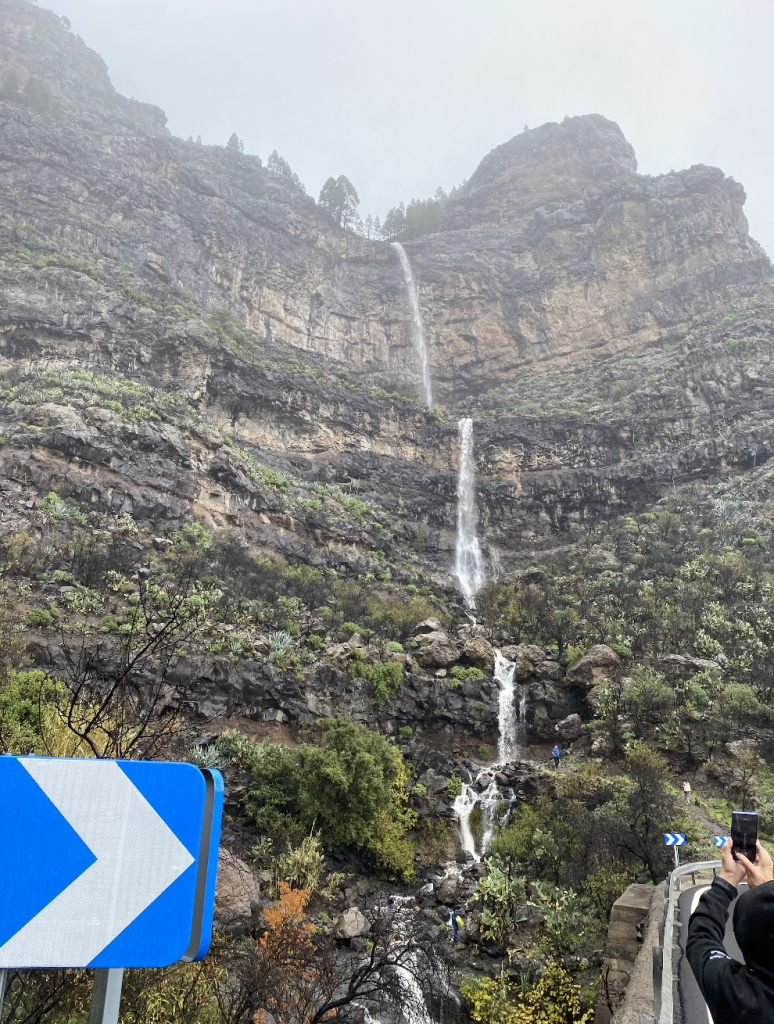
It’s a painful climb to get to the gravel, one could ride in the opposite direct but that is still a hell of a climb. Either way the rewards are there as the track winds it way around the top of the mountain, through forests, alongside waterfalls and simply the most amazing views. Stopping to eat my sandwich I was blessed with a rainbow straddling the valley. The track at times is a candidate for an episode of Worlds Most Dangerous Roads. As the trail gives way to road, as it meets the Embalse de Chira, I was left knowing that this ride was one of exceptional beauty, a special ride. Chatting to a local he explained how work is currently taking place to build a hydro-electric dam. Part of Spain’s drive for energy security through renewable technologies.
The GC-604 joins the GC-60 north of La Plata, high in the mountains at 1,238 meters above sea level. The rider is then rewarded with a 40 km descent of the mountain through breathtaking scenery. I’d picked a wet day in the mountains which actually increased the spectacle.
Total distance: 80 km
Maximum altitude: 1,238 meters
Elevation gain: 1,967
And so
I have described the three main rides undertaken during a week long visit to Gran Canaria. There are many more options to include linking up the gravel sections of the three rides described increasing the total gravel content of each ride. And, I didn’t even touch the north of the island, although that would have been a little wet at this time of the year. Maybe a summer return? There were of course other rides during the week but a lot of those were commutes to meet friends from my time living on the Island. Even so, my first discovery of Gran Canarian gravel has left me with an appetite for more. Isn’t that always the case?
If you’ve enjoyed reading this blog why not try one of the Gravel Notts Publications: