Posted on

Cycling Gran Canaria – 2025

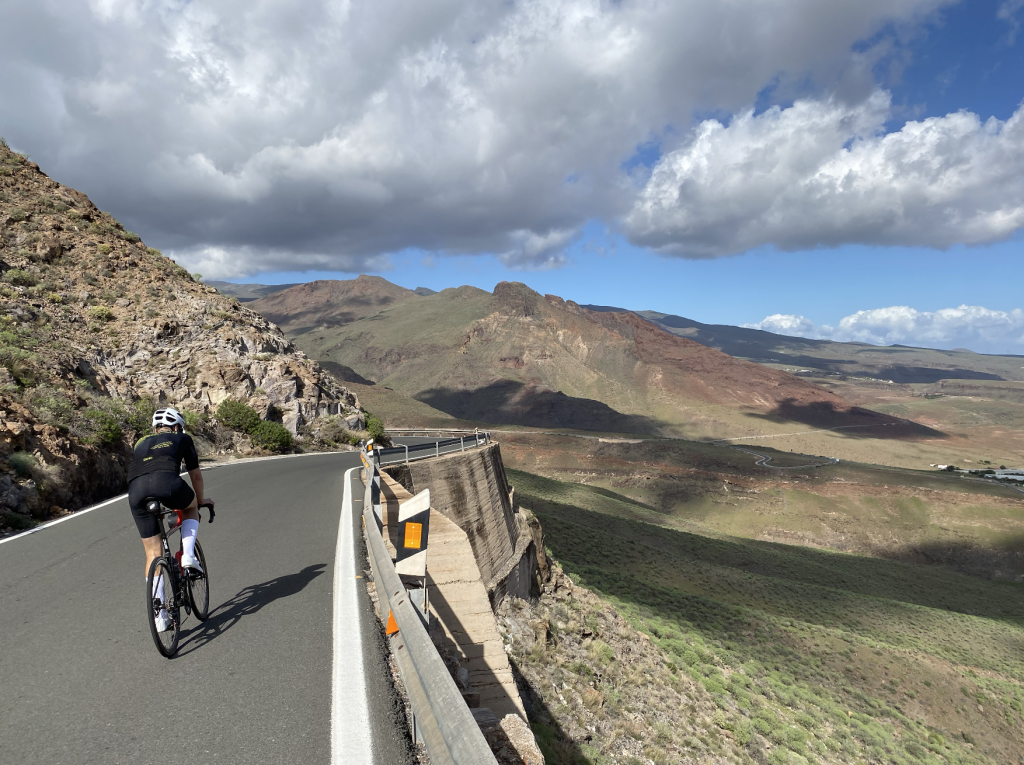
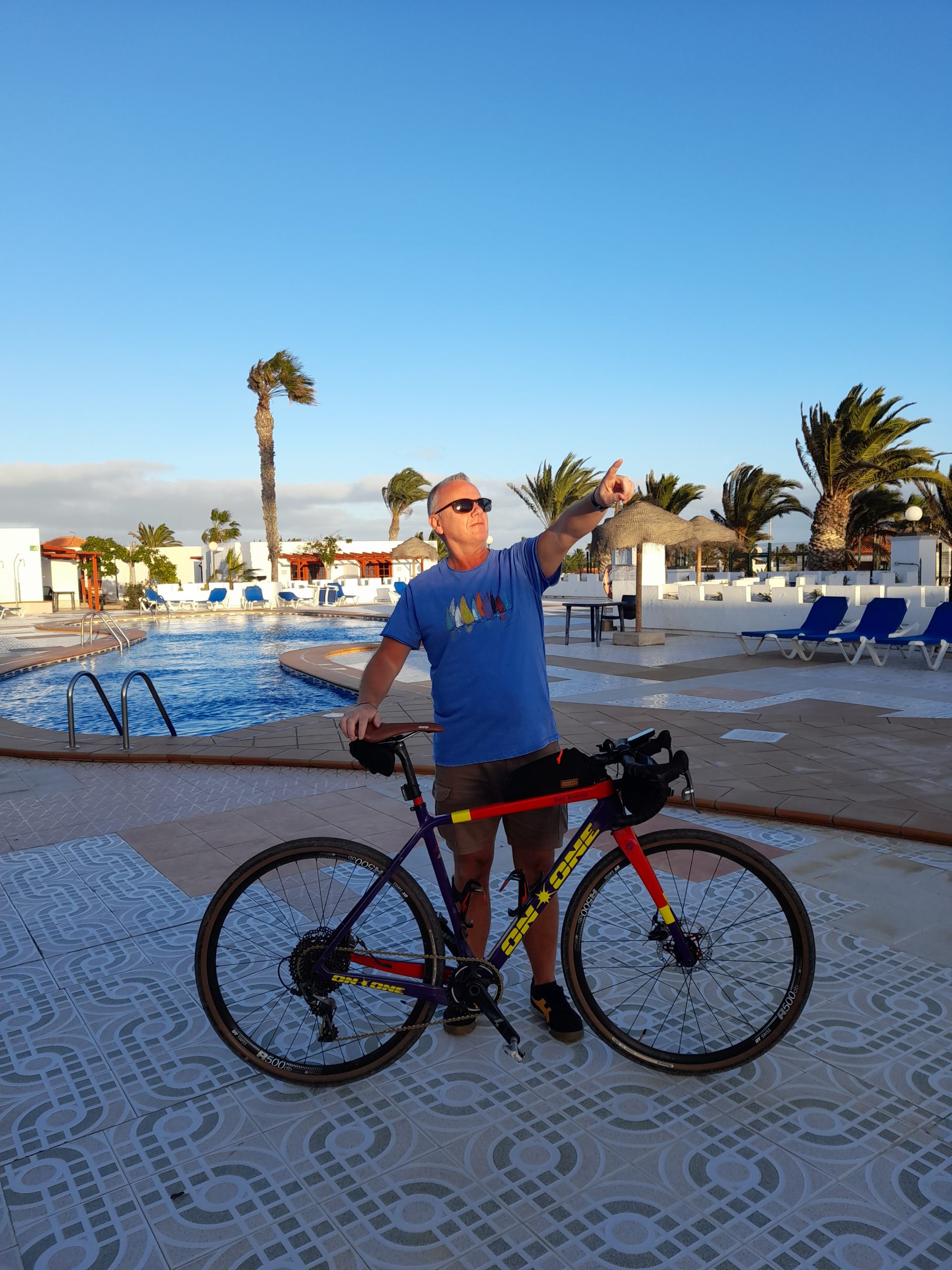
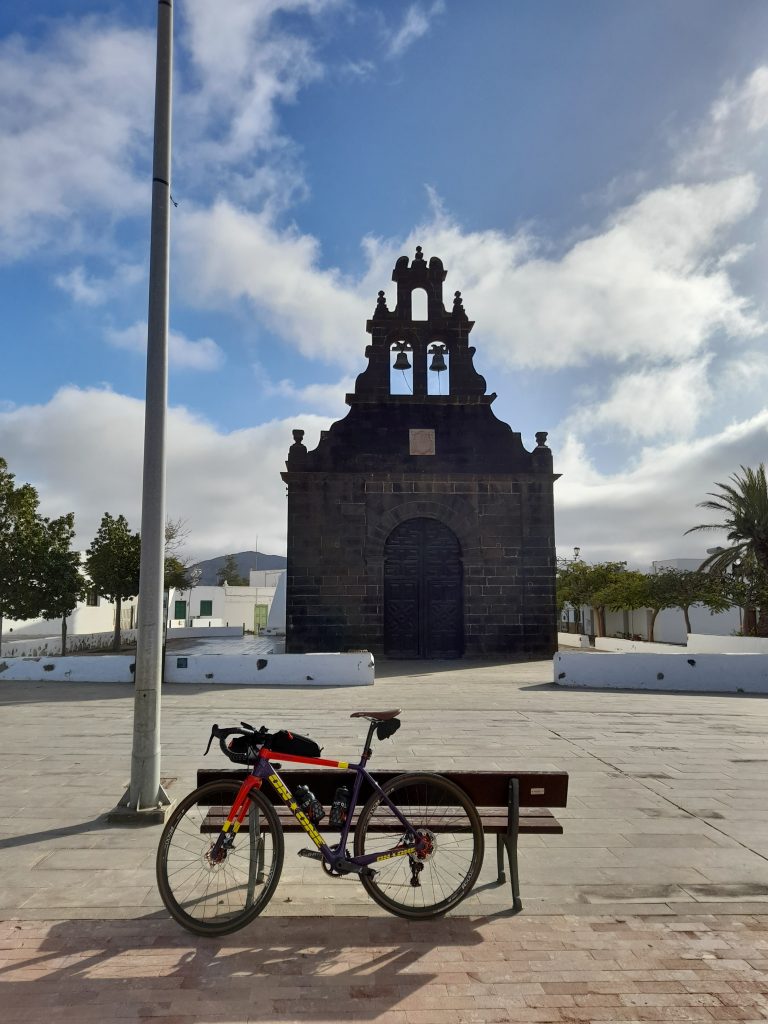
Gran Canaria is a great place to cycle. The wonderful all year warm climate and the mountainous terrain make it an ideal place for road, gravel and mountain bikes alike. For those reasons it’s a favourite winter training location for many of the professional teams and triathletes. What’s fascinating about the island is its diversity of terrain with numerous climbs that would not look out of place in any grand tour. My favourite being the Serenity climb (GC-605) with its multiple switchbacks through a pine tree lined mountain pass emerging at Ayacata. At the time of writing, the GC-500 remains closed between Taurito and Puerto de Mogán due to rock falls. The best advice is to take your bike on a ferry from Puerto Rico to Puerto de Mogán before heading inland to Mogán village on the GC-200, then taking a right turn up the Serenity climb and from the top of the climb descend back down hill to the coast at Arguineguin down the beautiful Soria climb.

Many other climbs in Gran Canaria deserve grand tour status, surely one edition of the Vuelta a España will include the island? The climb to Soria, mentioned above, is popular for good reason, the Alpe d’Huez of Gran Canaria. The ride to the highest point of the island at Pico de las Nieves is close to 2,000 metres in altitude and then there’s the terrifyingly difficult Valley of the Tears (GC-606), called so for obvious reasons. The latter being a climb I just had to do once, but it was best left as a feather in the cap, never to be repeated.

My trip to the island in December 2025 was the first visit with a gravel bike. I made a technical error thinking that a set of 40 mm slick tyres would be enough for the dry gravel whilst providing a fast rolling platform for some of my favourite road climbs and descents. However, it turned out to be an unusually wet week in the mountains which made things a little sketchy on the trails at times.

I set out with three main objectives; the first was to take the dirt road (GC-602) from the dam at Ayagaures to the GC-60 south of Fataga. The second was to ride the trail from San Fernando, North to Fataga and then ride the climb to San Bartolomé  before visiting Santa Lucia and down the mountain to the coast utilising the road, although there is a gravel option. And finally, I wanted to ride some unfinished business, the gravel section of the GC-604 to Chira emerging on the GC-60 north of La Plata.

Ride 1: GC-602
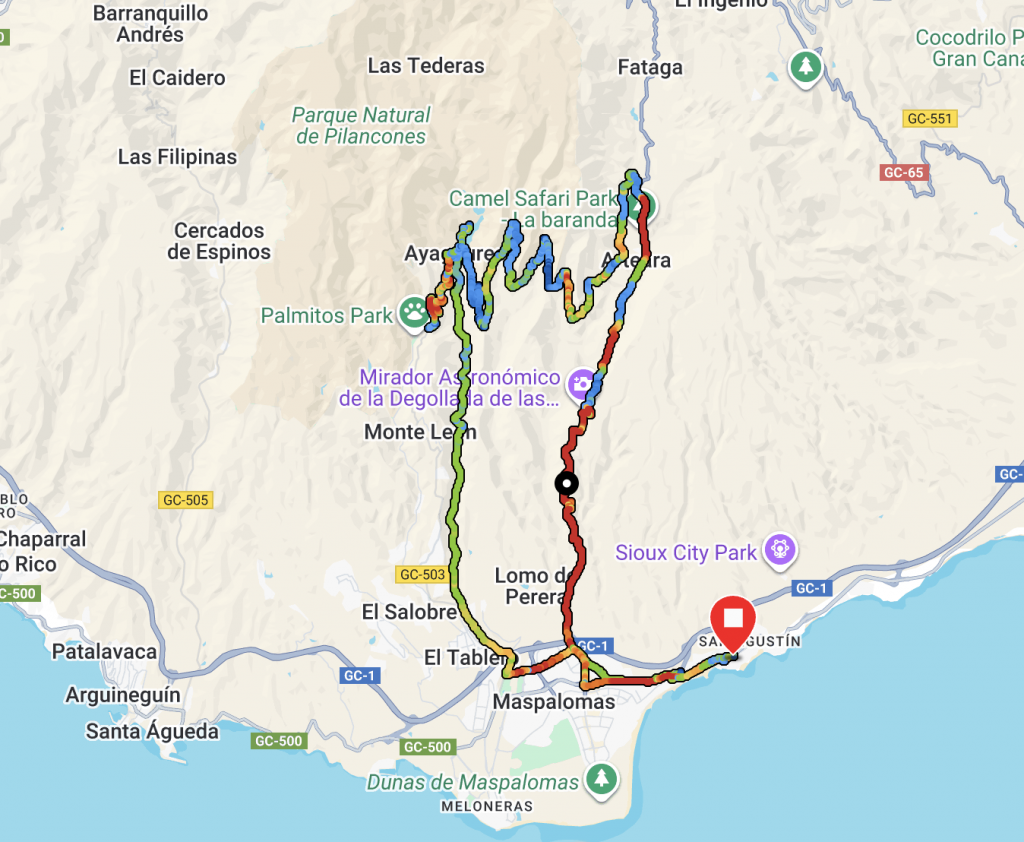
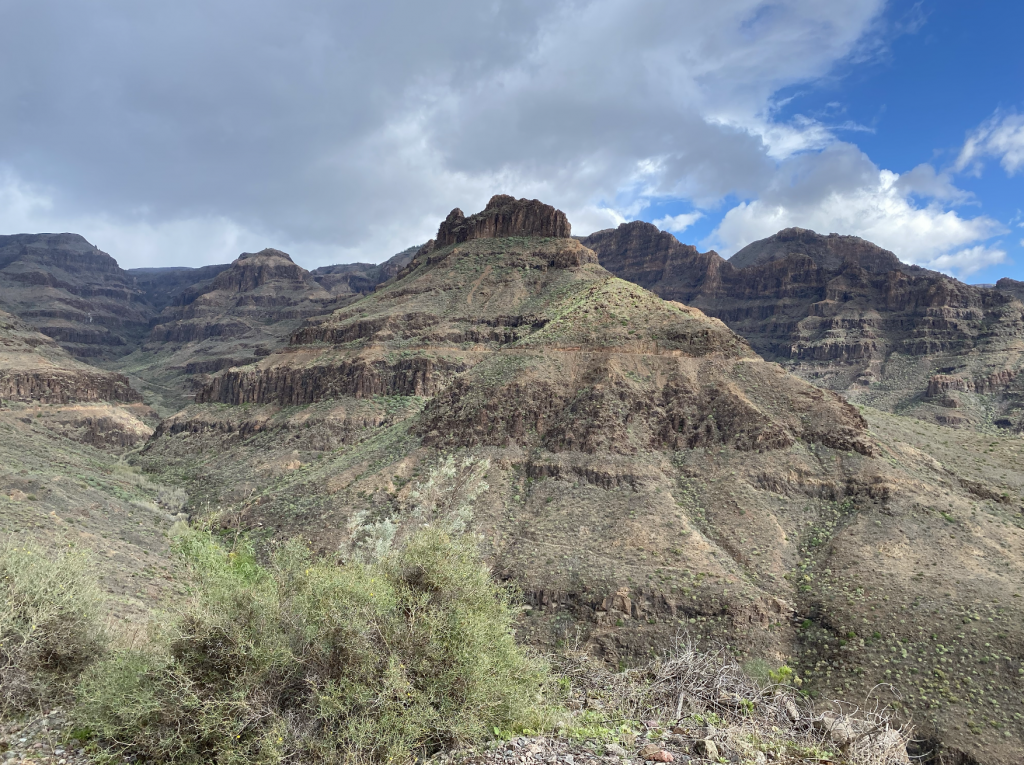
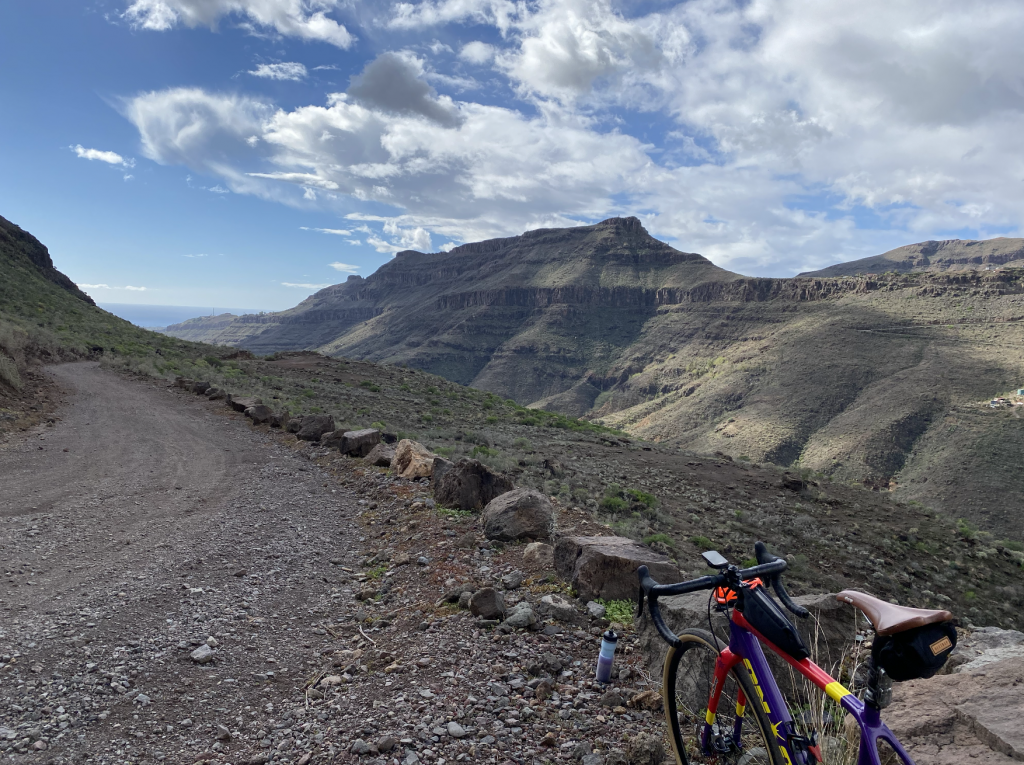
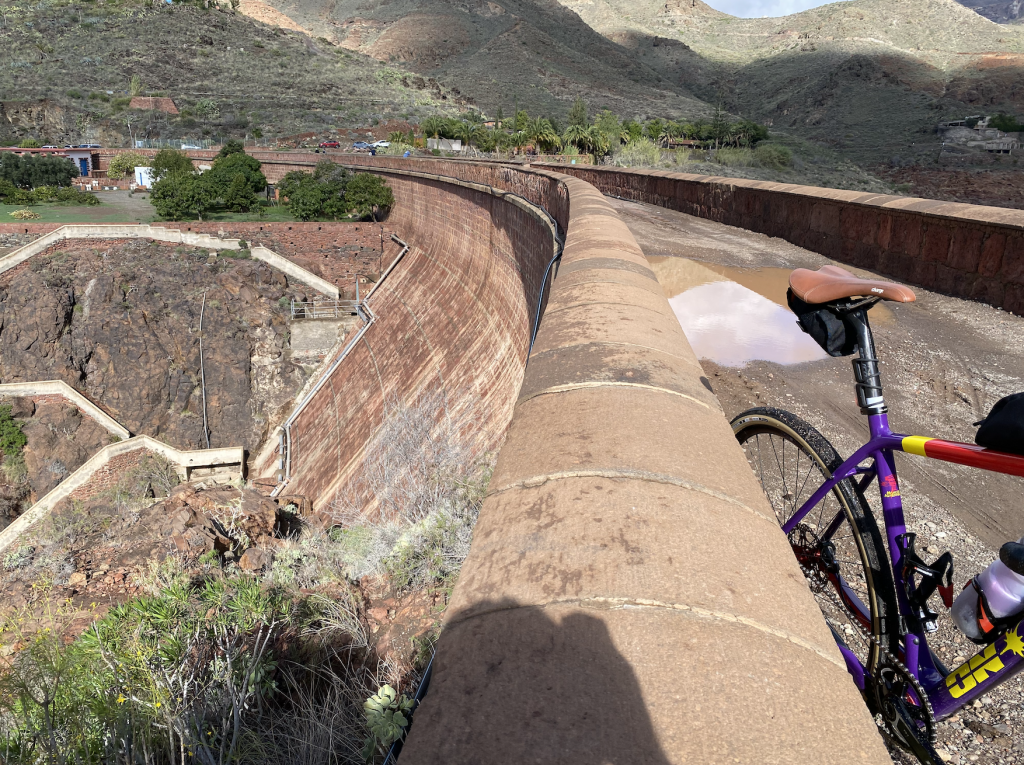
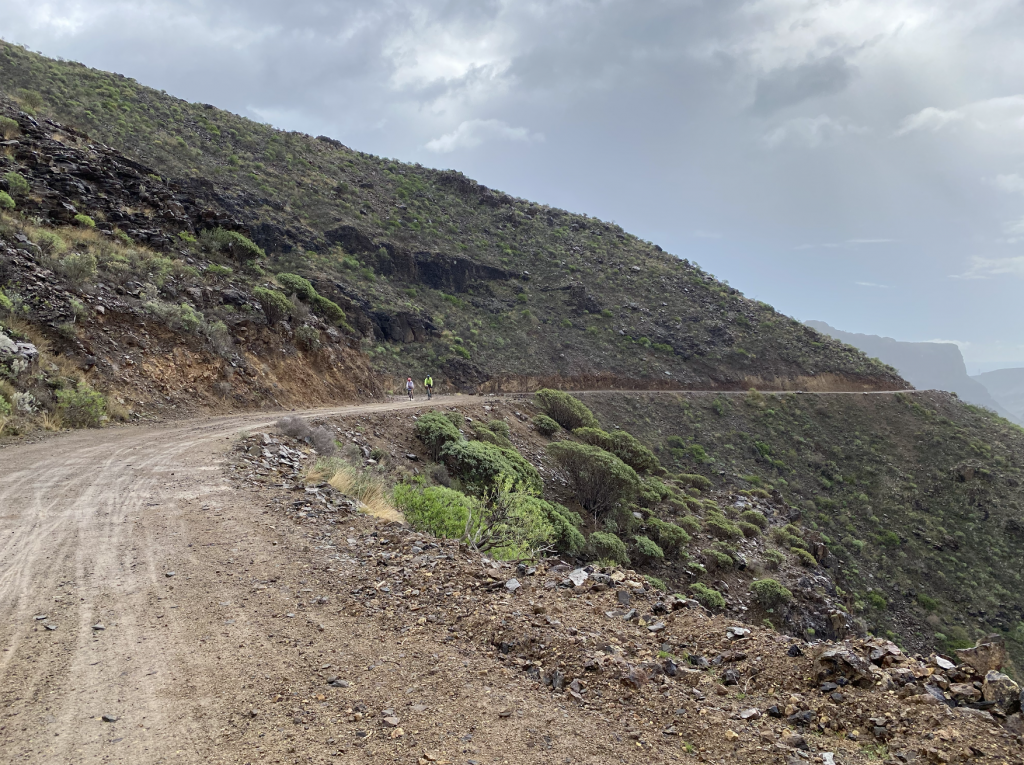
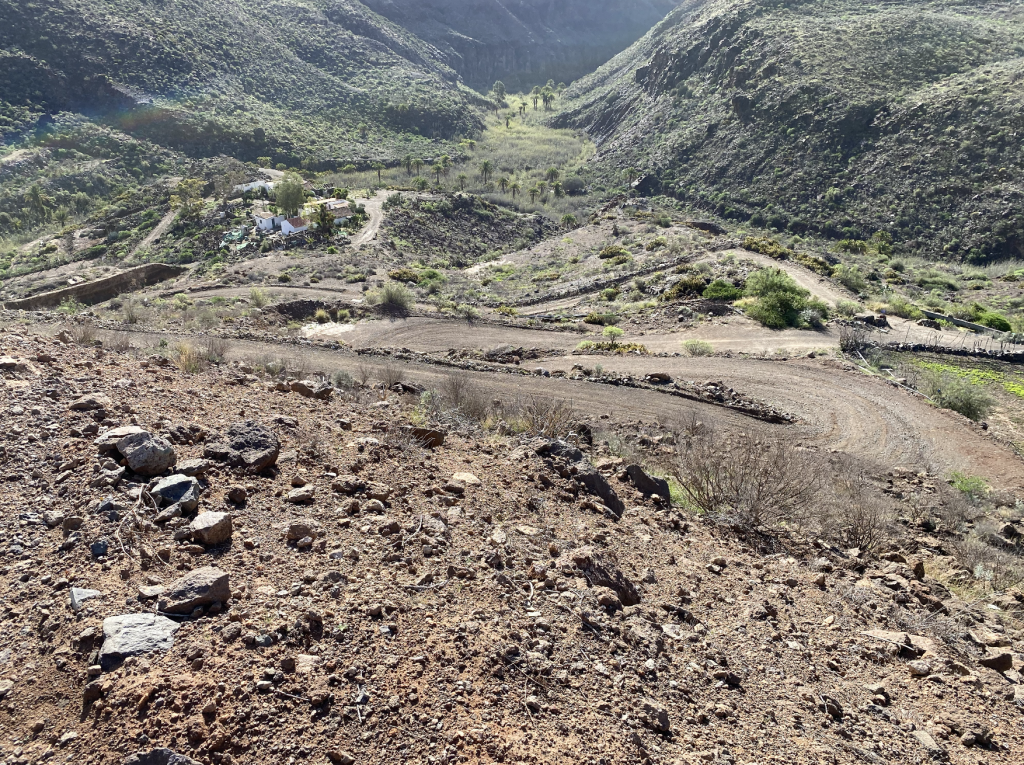
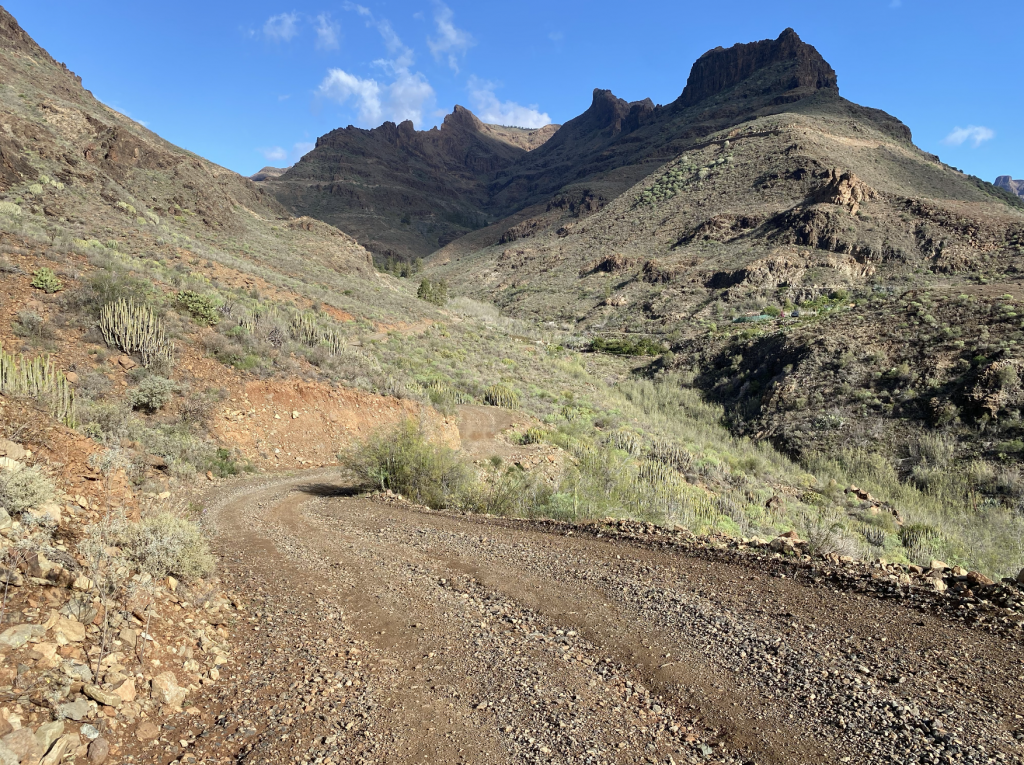
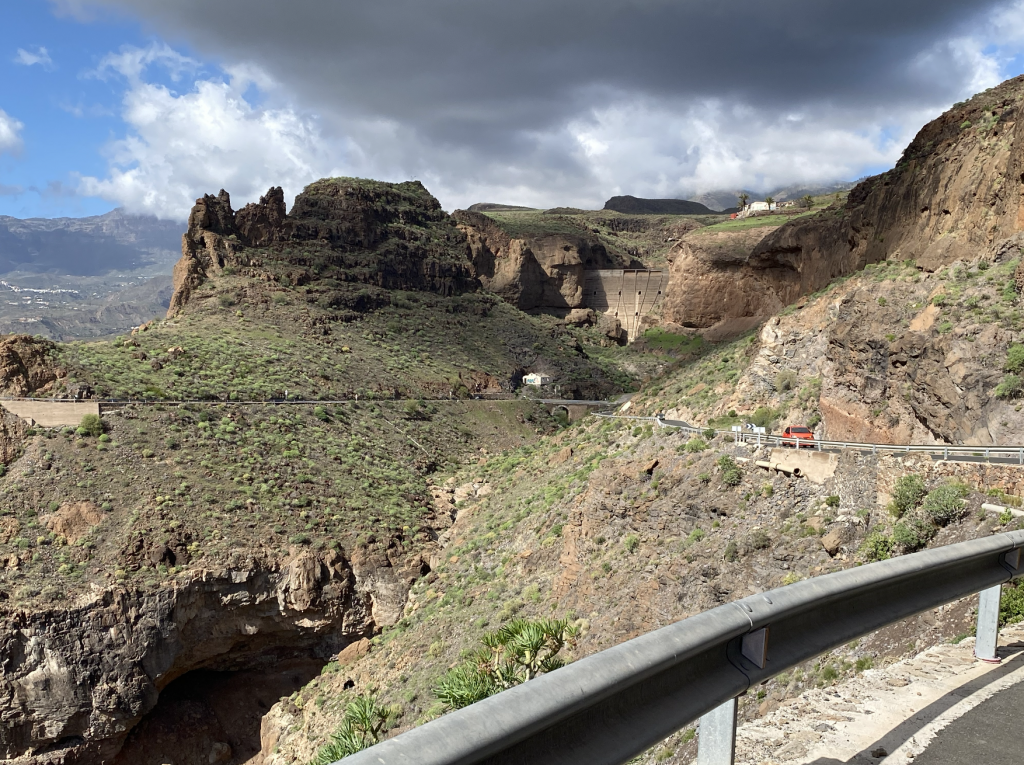
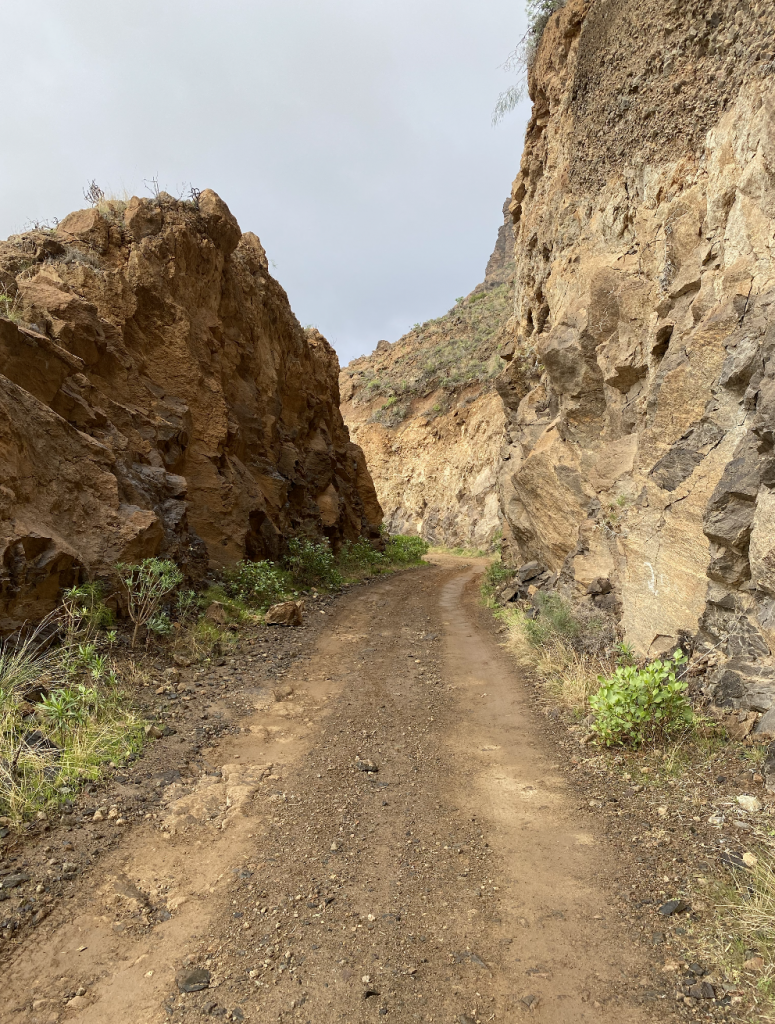
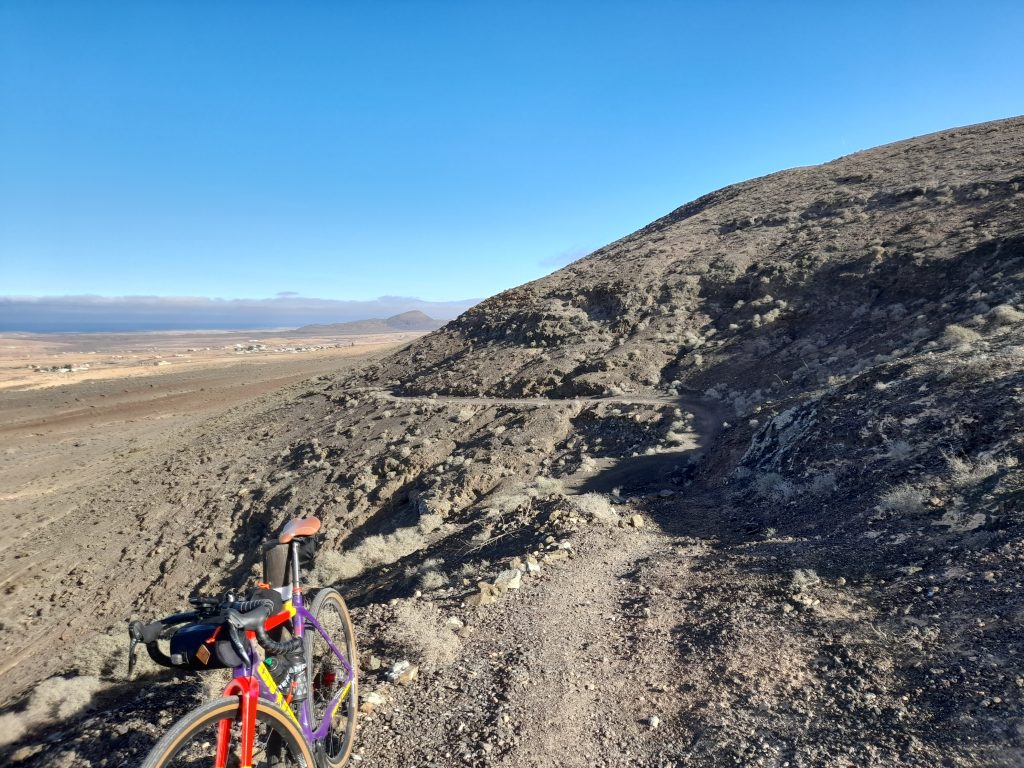
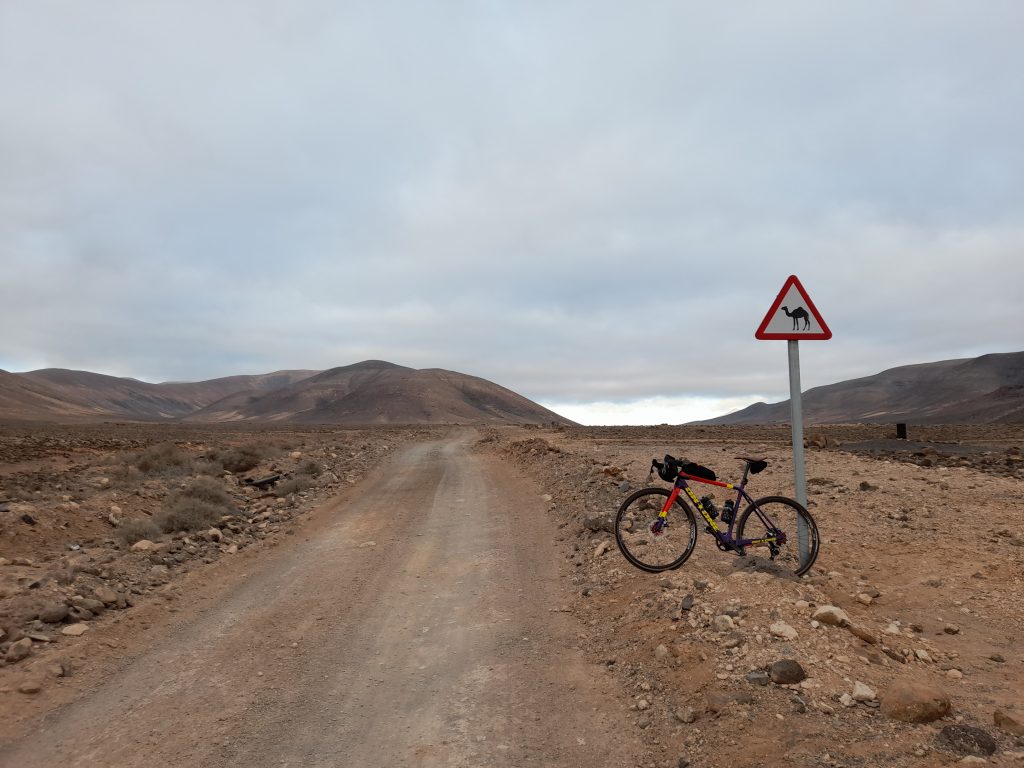
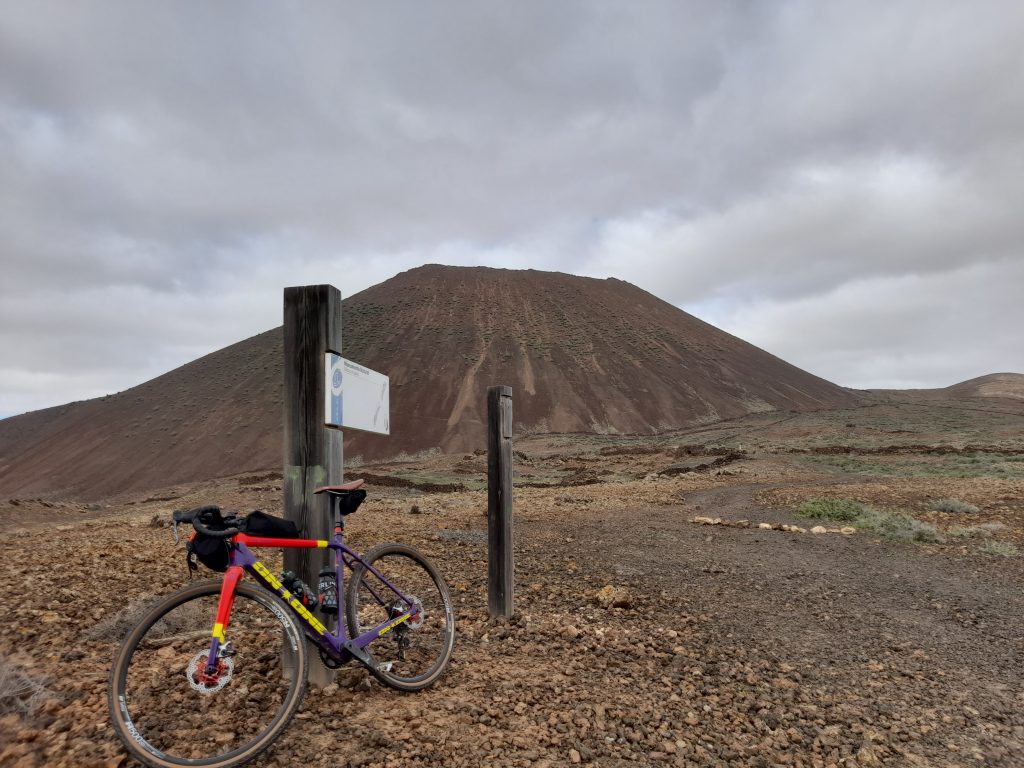
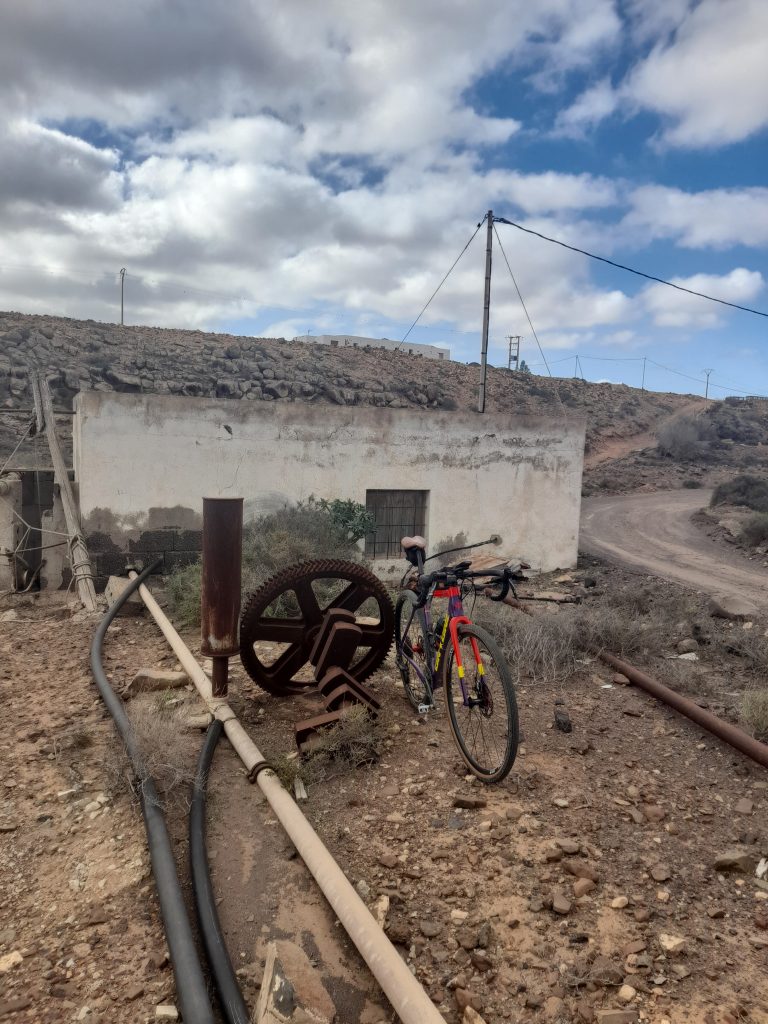
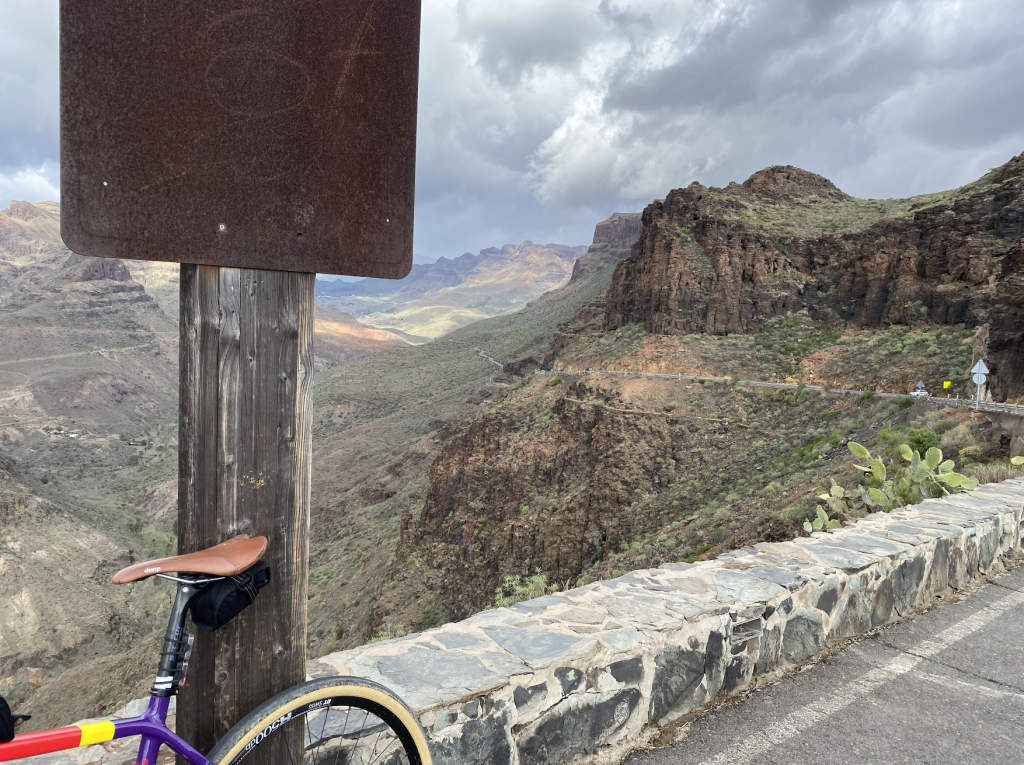
Before tackling the gravel on Ride 1, I made my way to Ayagaures to ride the tasty little road climb located there. It was for old time’s sake, a road climb I would undertake on my regular mid-week pre-work rides. I guess I wanted to see how much I had deteriorated since my last attempt in August 2021 when my Strava segment was 13.38. All I can say is either gravel bikes are very much slower or age is taking its toll, probably both. The GC-602 leaves Ayagaures village after the first few hairpins of the climb, taking a double right to cross over the top of the dam. It then climbs constantly but not brutally most of the way to the GC-60. The views are one of spectacular volcanic structures that were greener than normal due to the recent rains. Stopping at the first highpoint to take few pictures and eat a bar I was passed by a Swiss e-biker who stopped for a chat. After moving on the weather started to produce a few spots of rain requiring my rain jacket to be utilised. This was no matter as the vistas were amazing. Having ridden the roads in Gran Canaria many times I was not expecting to be even more impressed by the wonderful vistas but the gravel bike delivered an all new perspective of this most dramatic of landscapes.

At that point a met a nice couple from Hull also on a gravel cycling break who were agreeable to taking a few pictures for me (vanity got the better). Eventually I emerged onto the GC-60 south of Fataga with just one more climb, a rather challenging road climb to the Mirador Astronomico Degollada before chasing the sun on the final descent into Maspalomas and a left turn to my base for the week in San Agustin. The pictures speak for themselves.

Total distance: 58.44 km

Maximum altitude: 490 meters

Elevation gain: 1,174 meters
Ride 2: Gravel road from San Fernando
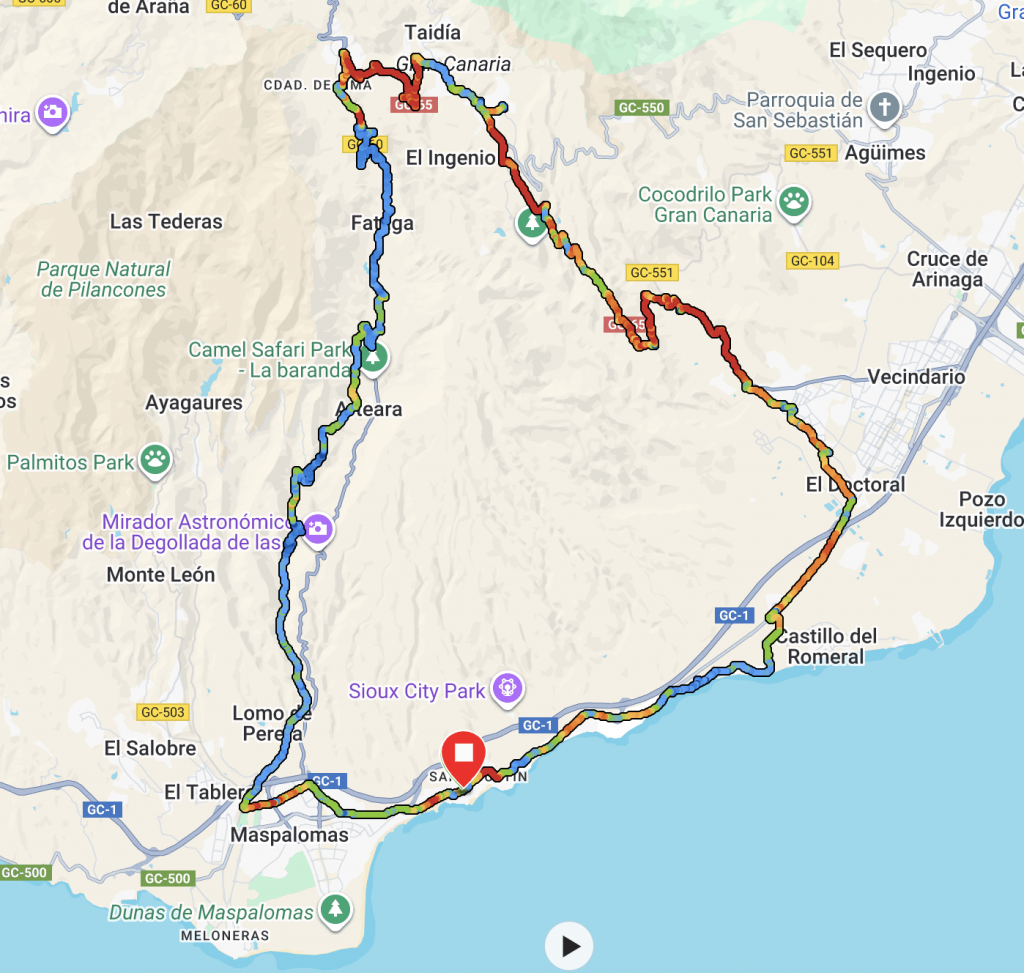
On Ride 2 I made my way from the resort to San Fernando passing along Avienda de Galdar where the numerous cafés where busy with locals taking coffee and breakfast. The route then diverted toward the local hospital, ‘Centro de Salud’ from which a gravel trail heads north along the valley before climbing out towards Fataga eventually joining the route ridden the previous day.

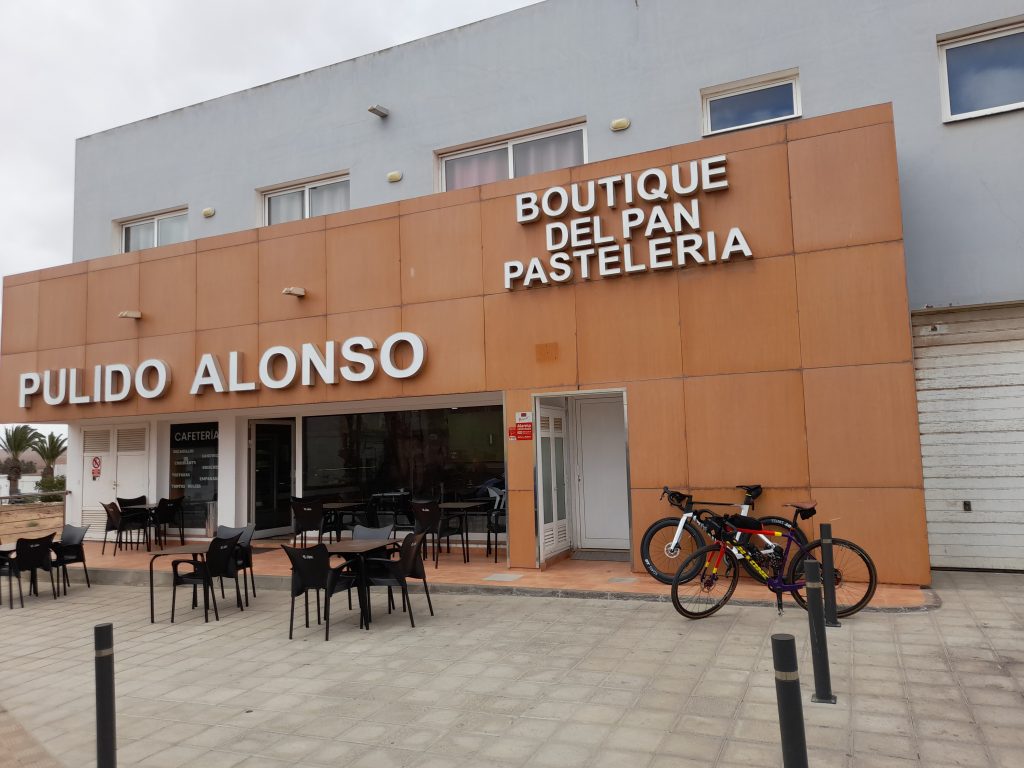
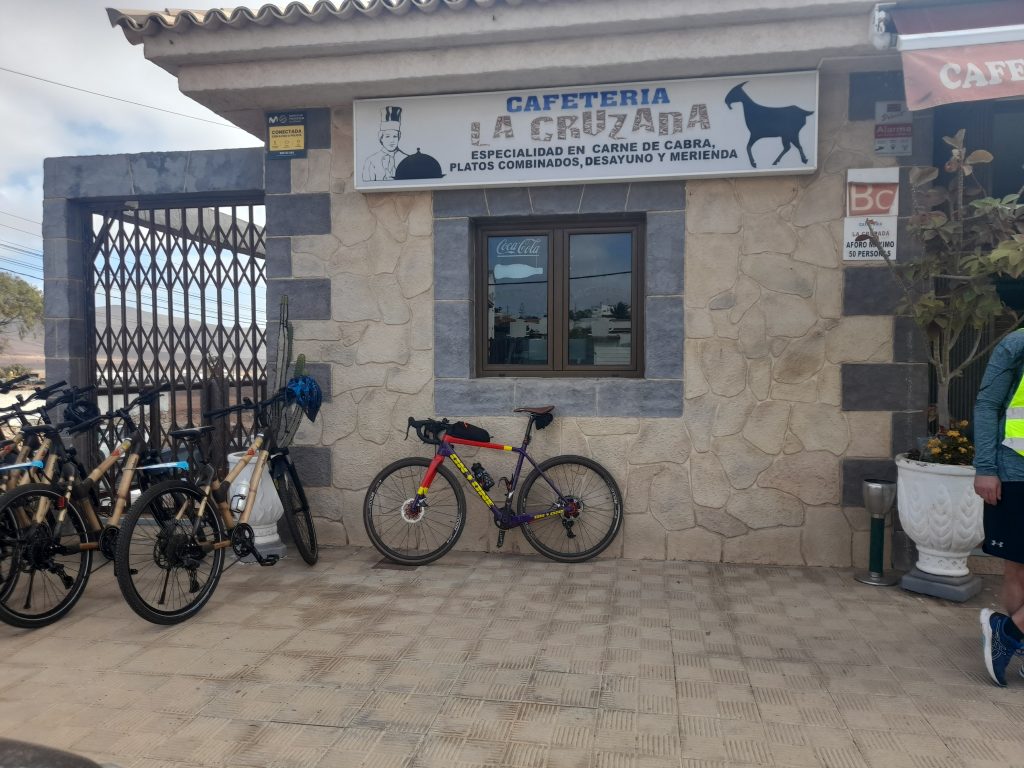
The first section was distinctively stoney making for slow progress. After passing through a fenced off section the surface improved and for a while good progress was made. Good progress that is until I began to ride out of the valley up towards the GC 60. That was the point where the gradients became challenging with a two Category 4 climbs averaging 11.3% and 8.4% respectively followed by a Cat 1 averaging 5.3%. Reaching asphalt, I then climbed onwards towards Fataga for a coffee and a chat with the multiple groups of cyclists gathered at the café . One of the great things about Gran Canaria is the diversity of cyclists from across Europe whilst not being swarmed by cyclists.

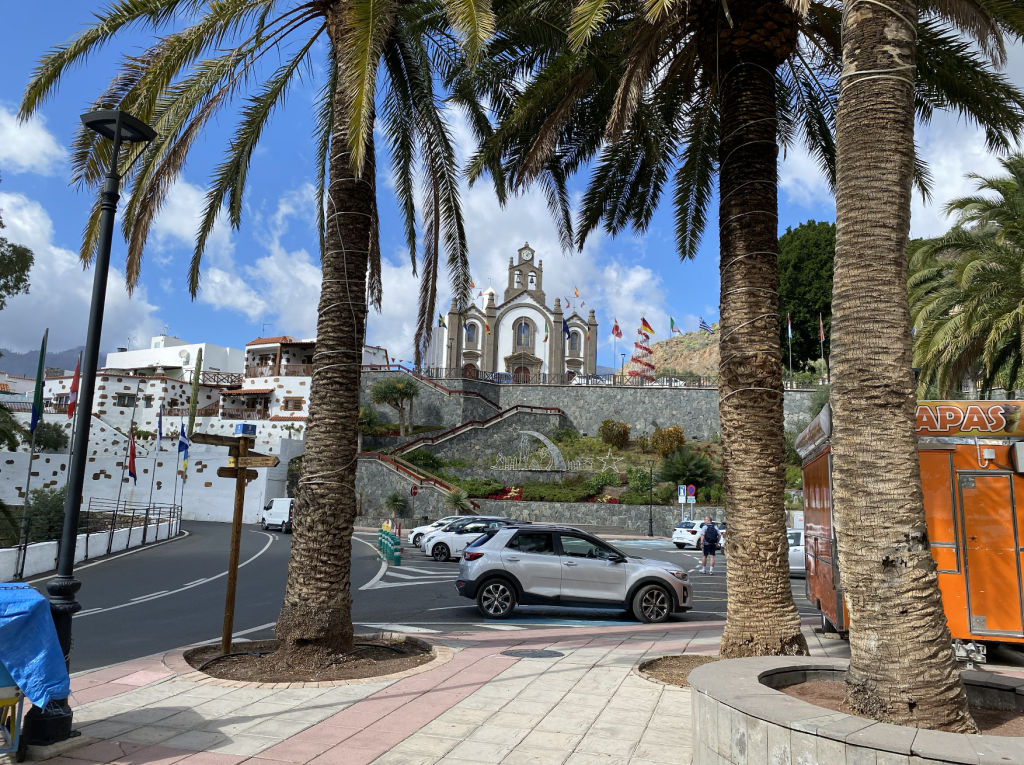
Riding onwards I’d made the decision to keep to the roads, mainly because I wanted to visit one of my favourite villages on the island, Santa Lucia. The climb to get there is special with endless hairpin bends on smooth tarmac. The slick tyres on my gravel bike were now in their element although that did not stop me from being caught in the climb. Towards the top I did however manage to catch one rider making the score 1-1. In all seriousness, as the riders gathered at the top of the climb to admire the view there was enjoyable banter by all. The chap I had passed telling me how he was in his 60’s, obviously my youthful looks lead him to believe I am much younger than he! The road from Fataga to San Bartolomé  provides 420 meters of elevation gain in 4.6 km but the rider is rewarded by a fast scenic descent into Santa Lucia and, after an undulating section, an even faster descent down towards the coast.

There is a gravel route that leaves the GC-65 before Santa Lucia with an end point on the coast but I was feeling nostalgic for the road descent so continued on the GC-65 all the way the outskirts of Vecindario before picking up a rather bumpy beach ride back to my base in San Agustin.

Total distance: 71.29 km

Maximum altitude: 931 meters

Elevation gain: 1,321 meters
GC 604
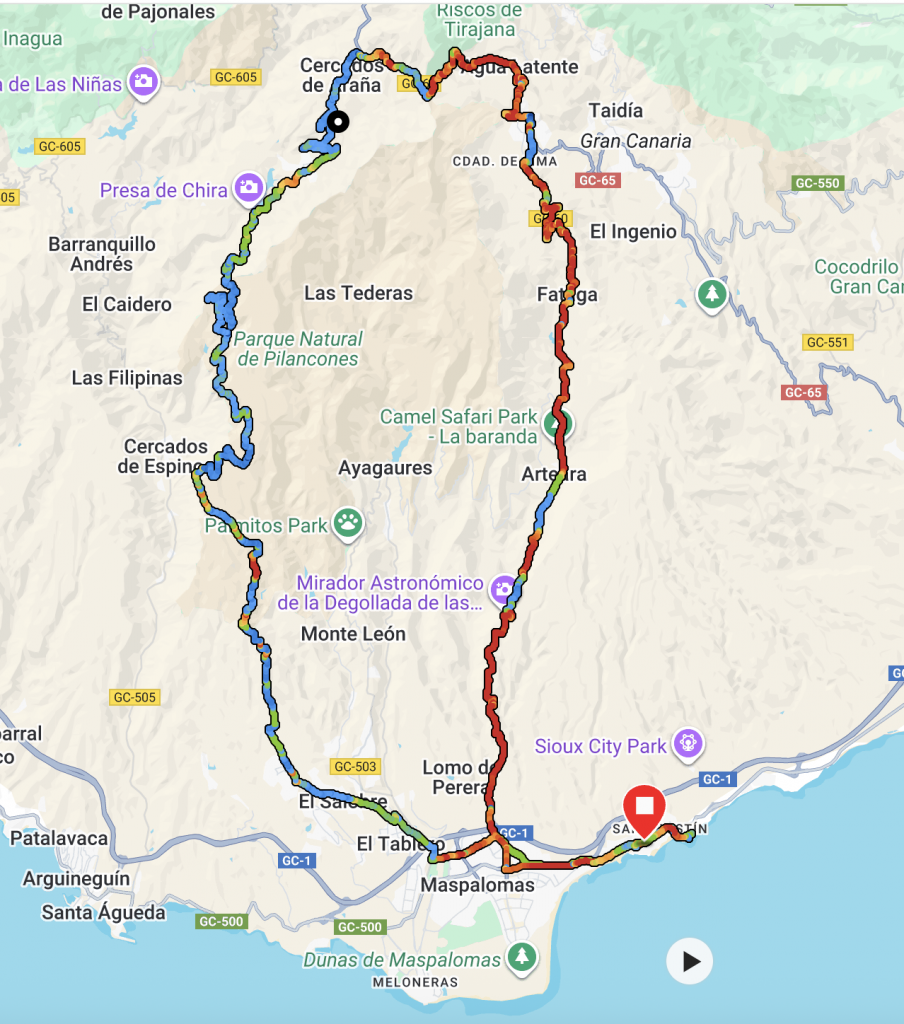
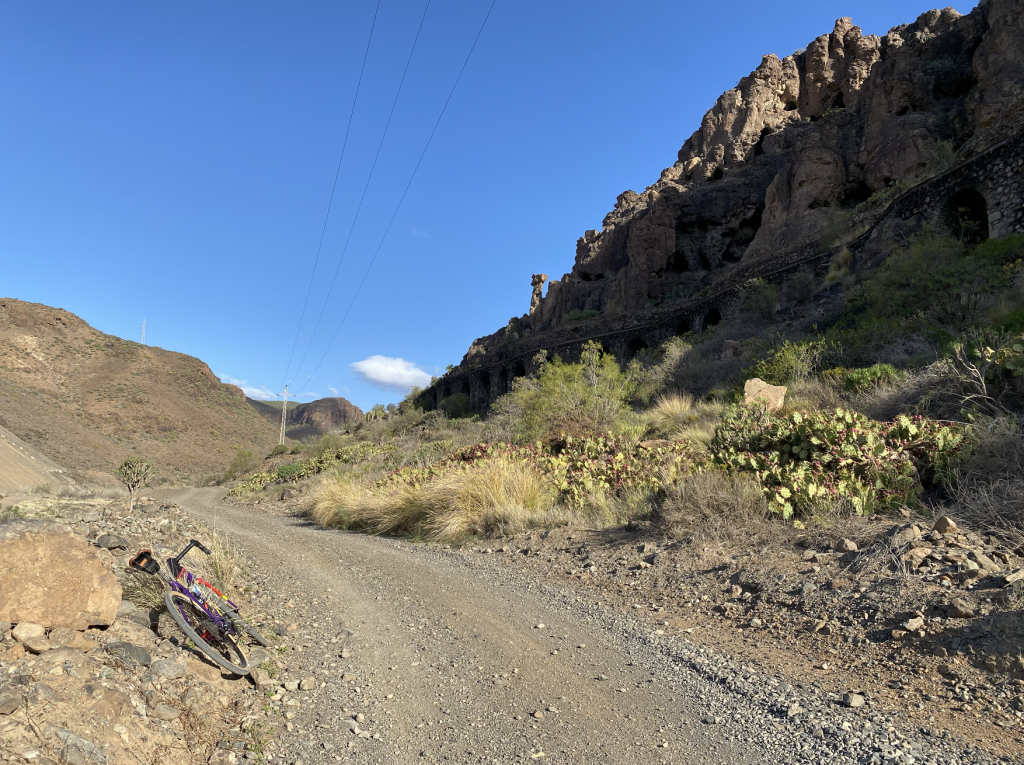
The GC-604 was unfinished business. A previous attempt on my road bike came to an end at the top of the asphalt section. It’s a brutal climb starting from the outskirts of Maspalomas through the villages of El Tablero and El Salobre before rising relentlessly to over 1,000 meters in altitude. With gradients close to 20% in places the asphalt section of the ride is a  ‘hors catégorie’ (HC), the hardest category of climb in cycle racing. It lasts some 17 km with an average gradient of 5% before giving way to the most amazing gravel road that itself includes a few Category 4 slopes.

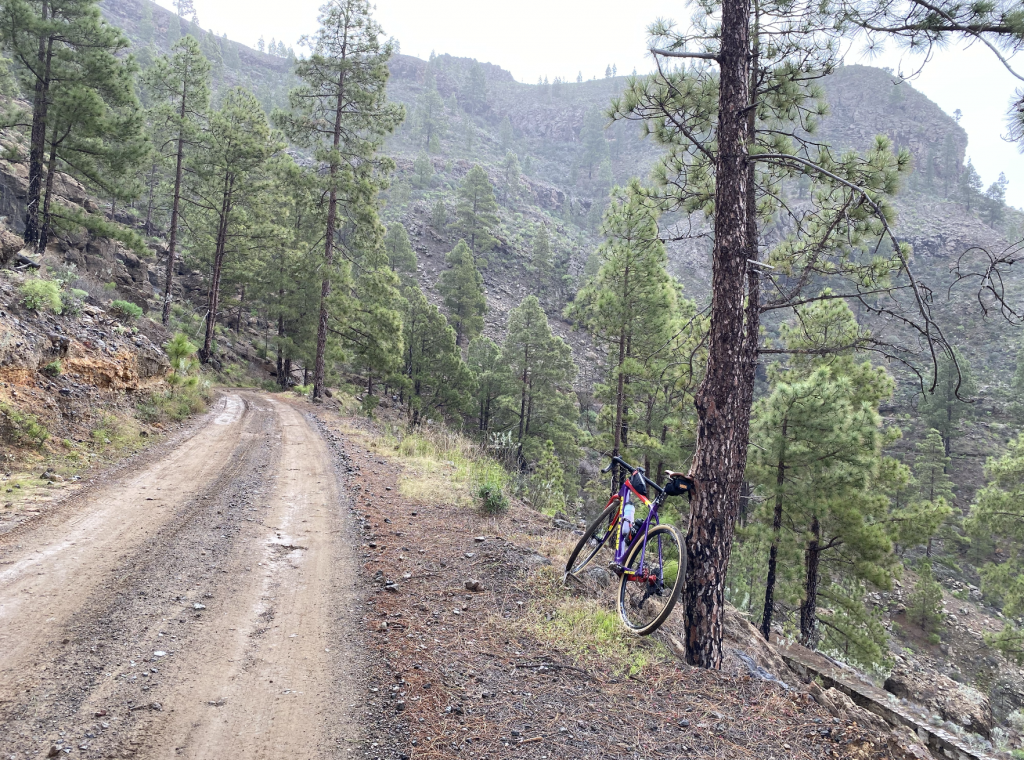
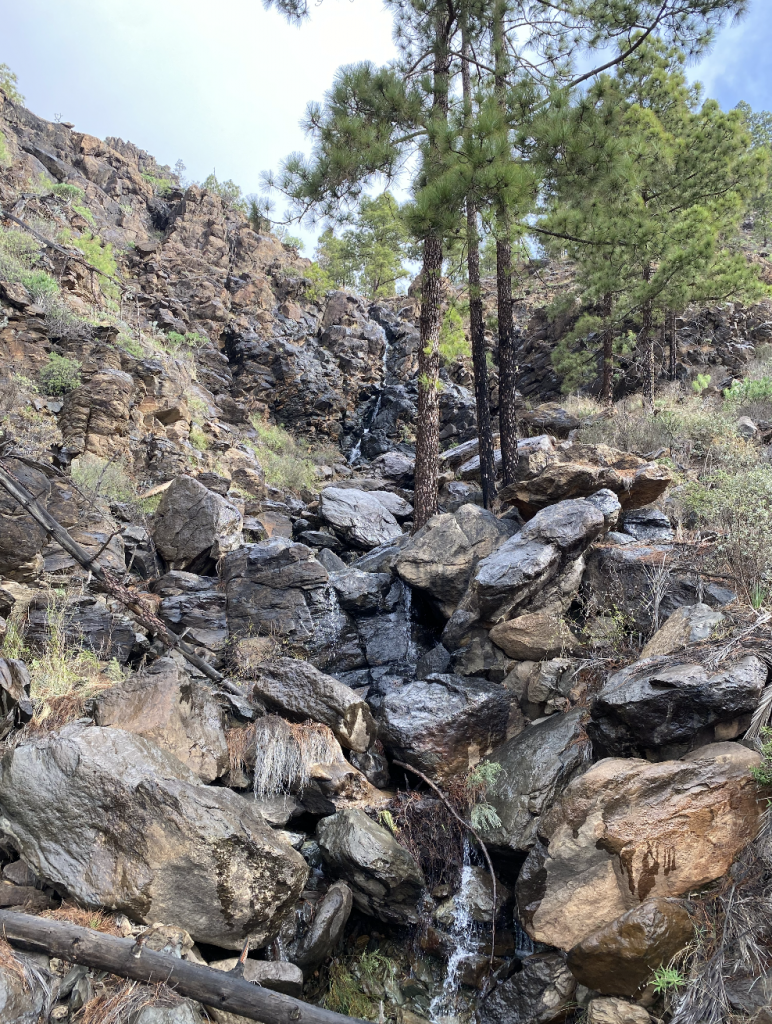
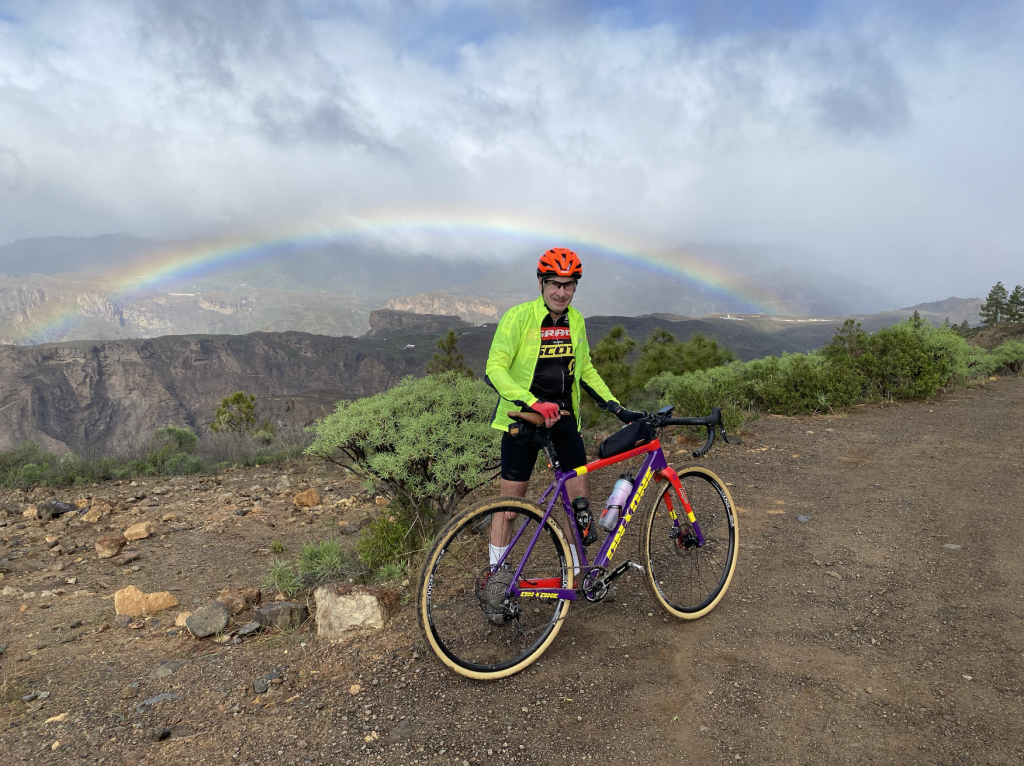
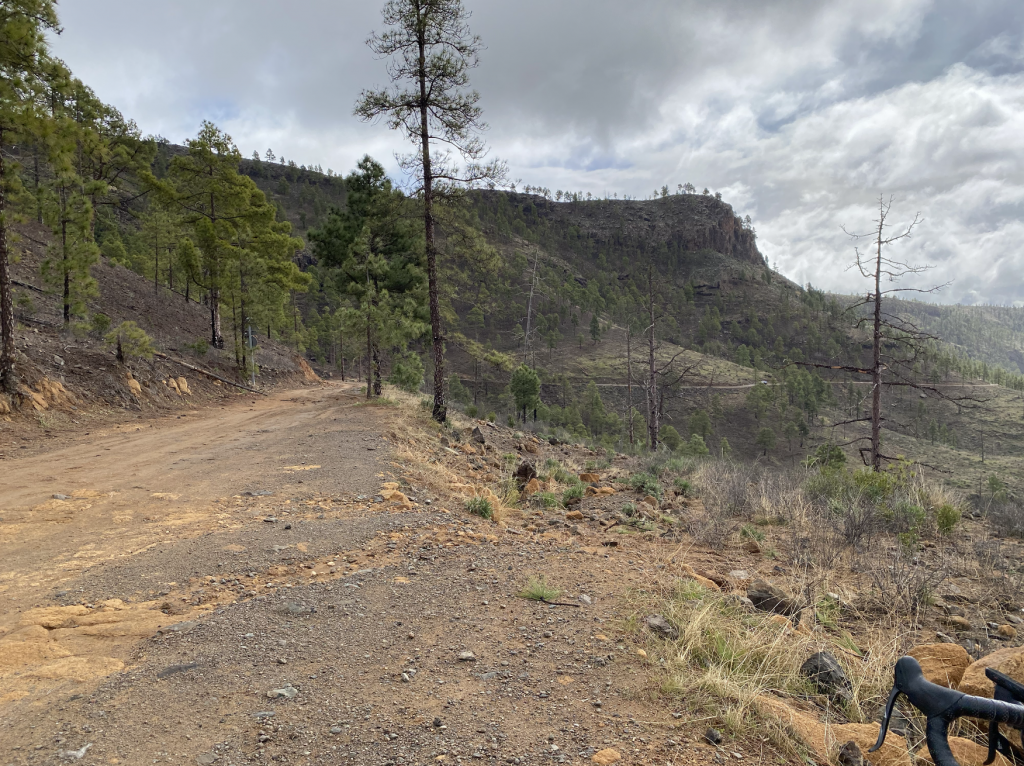
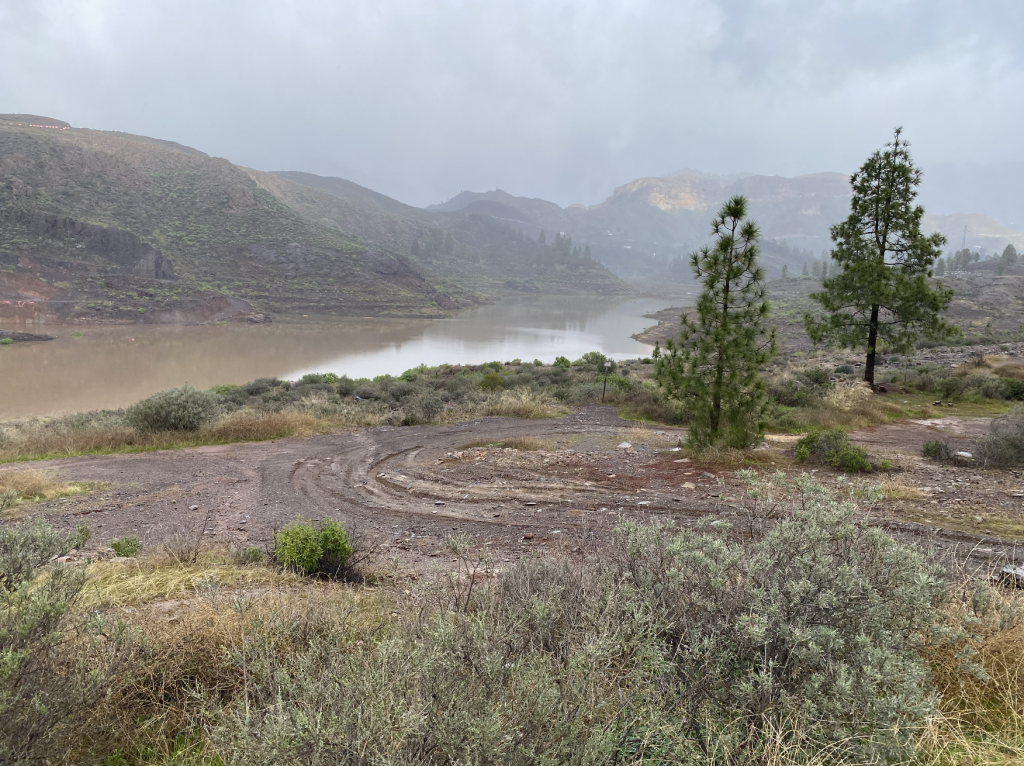
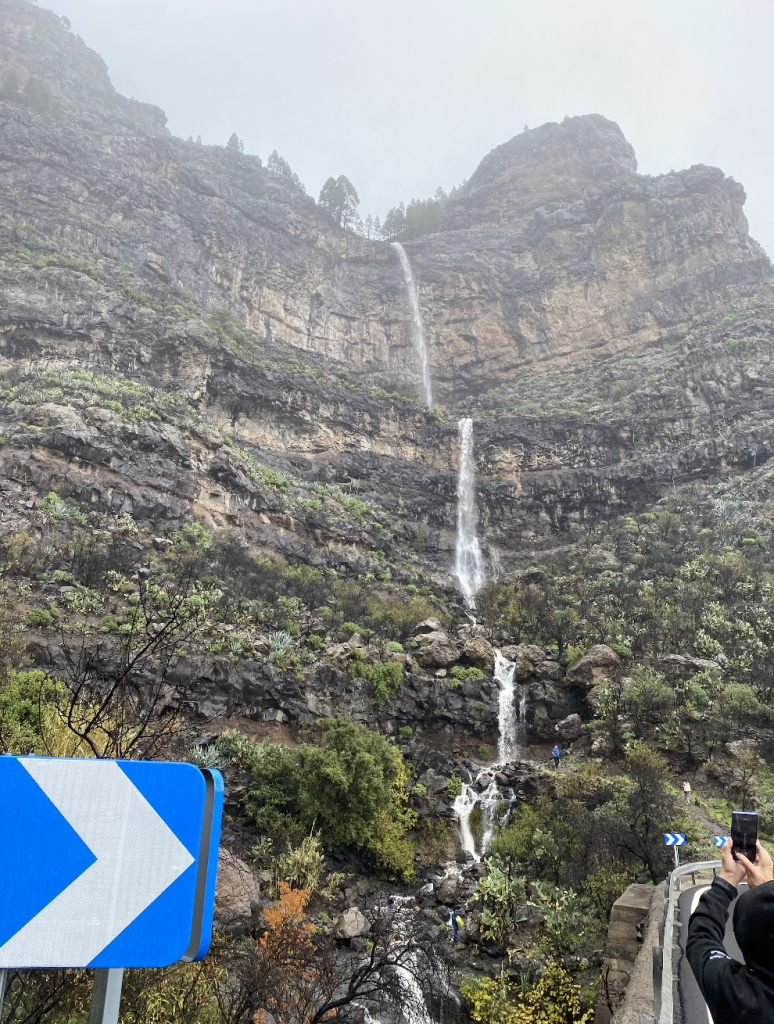
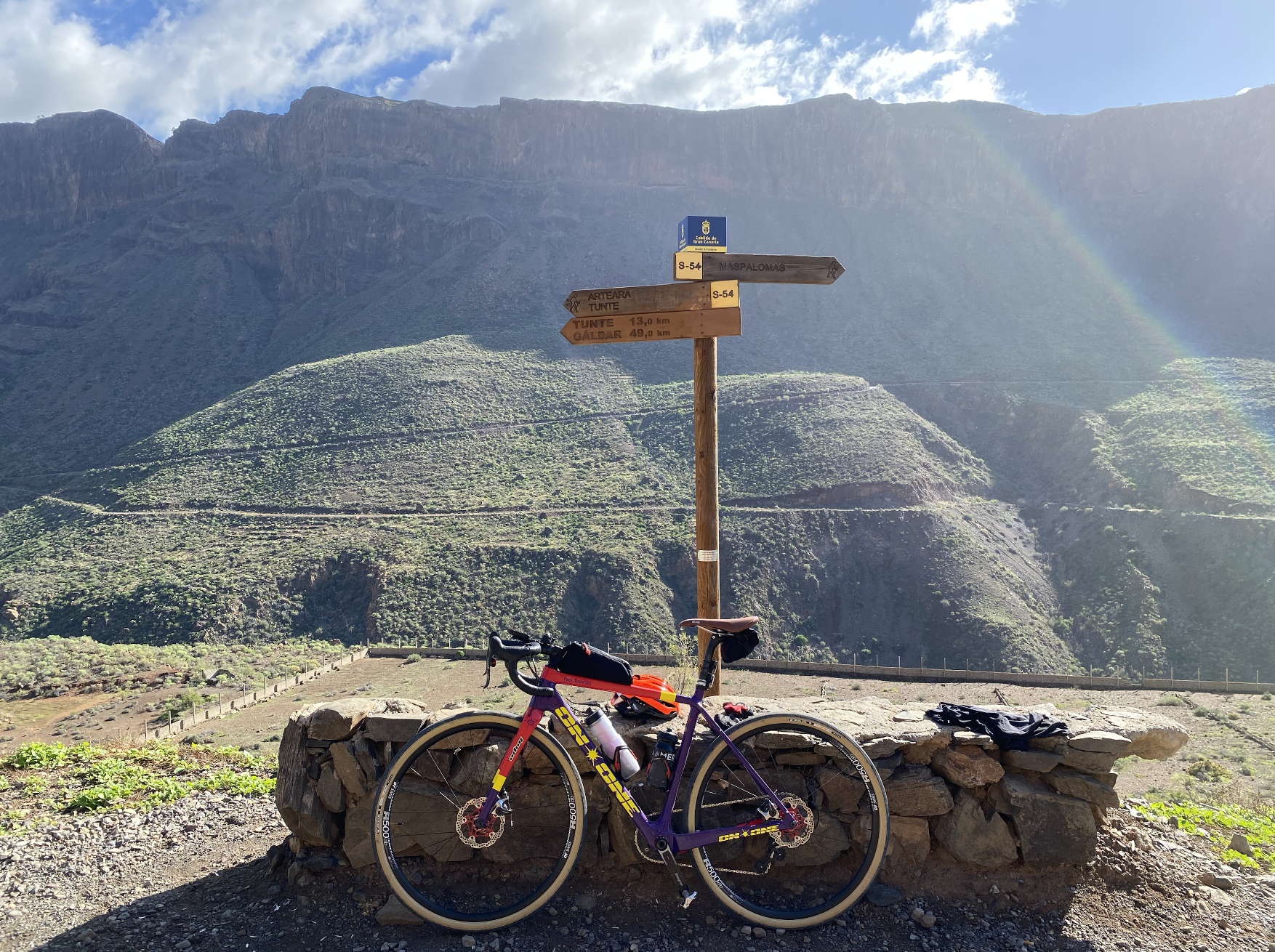
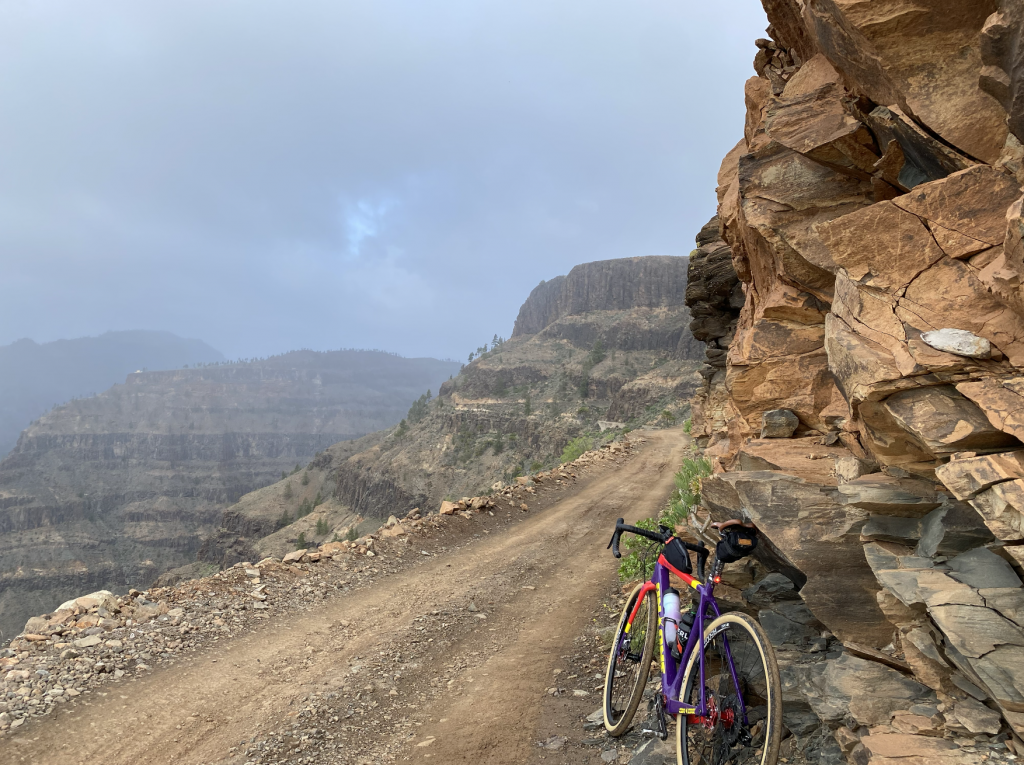
It’s a painful climb to get to the gravel, one could ride in the opposite direct but that is still a hell of a climb. Either way the rewards are there as the track winds it way around the top of the mountain, through forests, alongside waterfalls and simply the most amazing views. Stopping to eat my sandwich I was blessed with a rainbow straddling the valley. The track at times is a candidate for an episode of Worlds Most Dangerous Roads. As the trail gives way to road, as it meets the Embalse de Chira, I was left knowing that this ride was one of exceptional beauty, a special ride. Chatting to a local he explained how work is currently taking place to build a hydro-electric dam. Part of Spain’s drive for energy security through renewable technologies.

The GC-604 joins the GC-60 north of La Plata, high in the mountains at 1,238 meters above sea level. The rider is then rewarded with a 40 km descent of the mountain through breathtaking scenery. I’d picked a wet day in the mountains which actually increased the spectacle.  

Total distance: 80 km

Maximum altitude: 1,238 meters

Elevation gain: 1,967
And so

I have described the three main rides undertaken during a week long visit to Gran Canaria. There are many more options to include linking up the gravel sections of the three rides described increasing the total gravel content of each ride. And, I didn’t even touch the north of the island, although that would have been a little wet at this time of the year. Maybe a summer return? There were of course other rides during the week but a lot of those were commutes to meet friends from my time living on the Island. Even so, my first discovery of Gran Canarian gravel has left me with an appetite for more. Isn’t that always the case?

If you’ve enjoyed reading this blog why not try one of the Gravel Notts Publications:

Posted on

New Book Release – Gravel Cycling Spain

A thinking cyclist’s gravel tour of Northern Spain Barcelona to Bilbao

Charting the travels of two Nottinghamshire gravel cyclists and a friend for support, this book describes a gravel ride across Spain at its shortest and most accessible point. It takes in five iconic regions, all with their own distinctive cultures. The joys and suffering of an epic gravel ride are shared but also the places and people the riders meet. Gravel Cycling Spain takes the reader into inner Spain, away from the places tourists visit; the plains, hilltops, valleys and villages of Northern Spain.

Cycling brings with it a philosophy of how to travel and experience things at a deeper level with greater mindfulness. Not born out of a single tour but a lifetime of learning and evolving to a stage where the rider is given greater insight. In this respect the book highlights a life in cycling that led to the decision to ride across Spain. Not in too much detail but enough for context.

Riding a gravel bicycle across Spain exposes the rider to Iberia’s extraordinary history and cultural influences. The traveller cannot help but enquire of modern Spain, one of Europe’s strongest economies. Along the way the author explores his own ethical and philosophical thinking but most of all this book is about one of the greatest places in Europe to ride a bike, enhanced further by the plentiful gravel roads.

Buy now on Amazon – Part of the Gravel Notts series

Posted on Leave a comment

Peddars Way

Peddars Way is a long-distance route across Norfolk that begins near Knettishall Heath and runs for approximately 46 km to the coast near Hunstanton. It is thought to have existed as an ancient trackway prior to the arrival of the Romans who established it as a road in AD 61. The track was later used as a pilgrimage route.

It’s worth noting that Norfolk was a much wetter place when the Romans arrived. In fact, going much further back there was a marshland that extended all the way to mainland Europe. The Visit Norfolk website explains: “Norfolk used to be joined to the continent…. It was only the final thawing of the last Ice Age around 5000 BC that separated [Norfolk from the continent].”
To quote National Geographic; roughly 12,000 years ago, as the last major ice age was reaching its end, the area was very different. Instead of the North Sea, the area was a series of gently sloping hills, marshland, heavily wooded valleys, and swampy lagoons.” This area was known as Doggerland. Today the weather forecast includes an area of the North Sea called Dogger Bank. As the sea rose the land mass became submerged.

This rather long-winded explanation is my way of telling the would-be Peddars Way cyclist that much of Peddars Way is sandy and hard going.

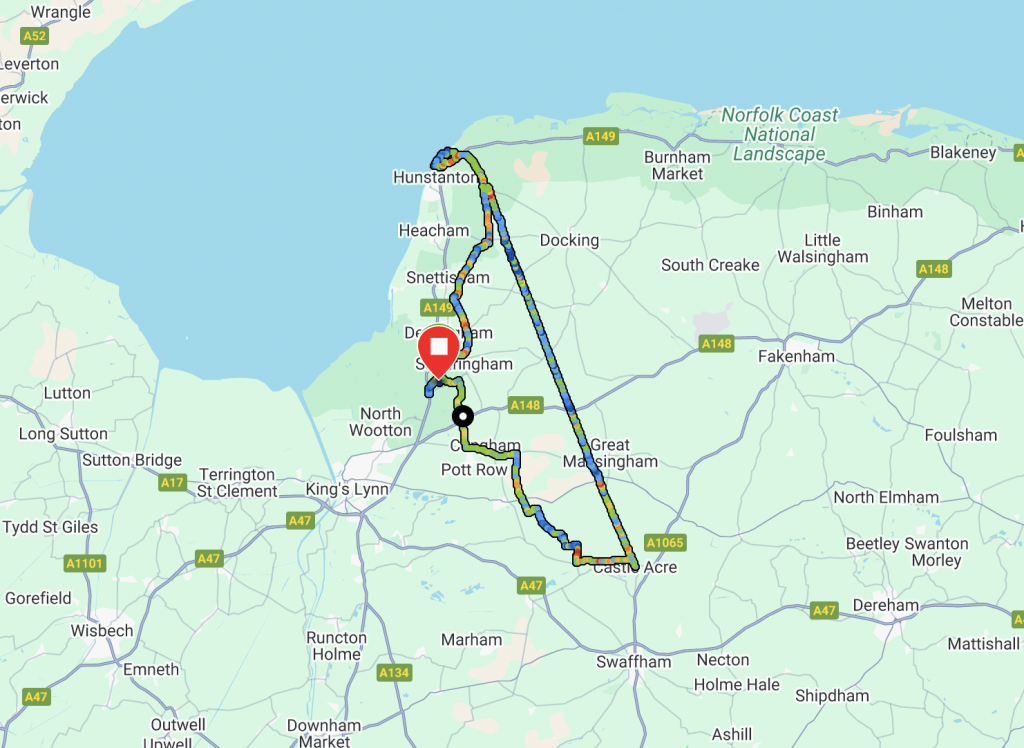
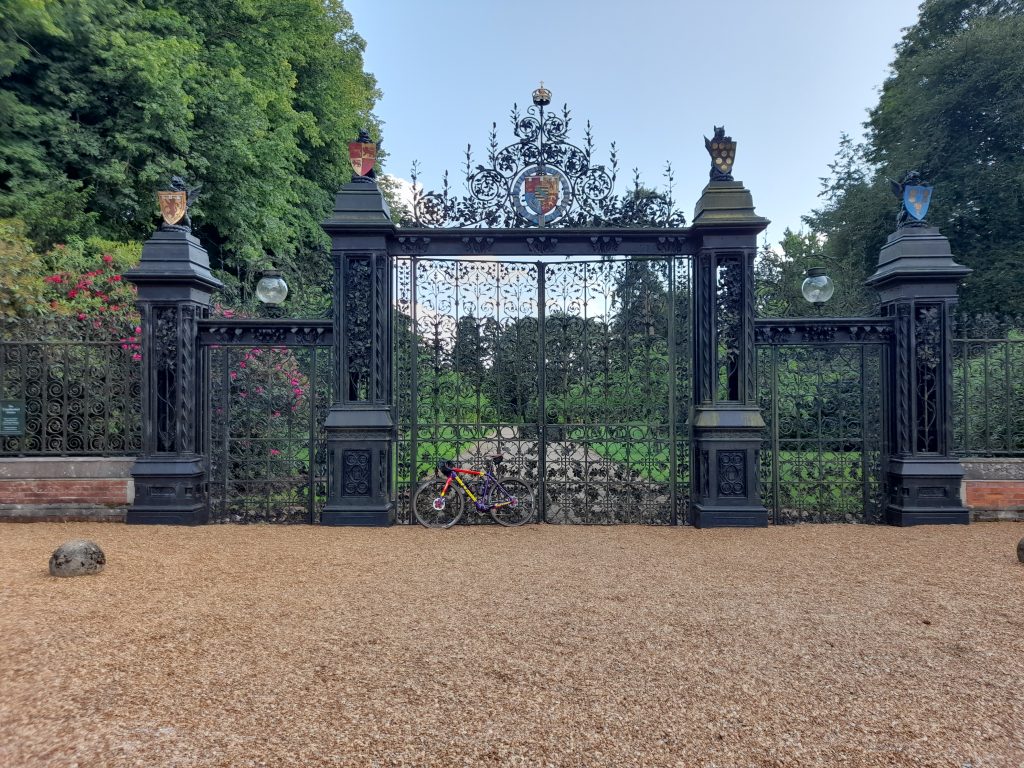
The route has been on my to-do-list for a while but in particular the largely unmetalled section which begins south of Great Massingham. So, on the weekend of the 14th June 2025 I based my tent in the friendly and picturesque Camping and Caravan Club site in Sandringham and set off early in the morning with a loop planned to head southeast to Castle Acre from where I would join Peddars Way north to the coast at Old Hunstanton before returning to my base camp in Sandringham.

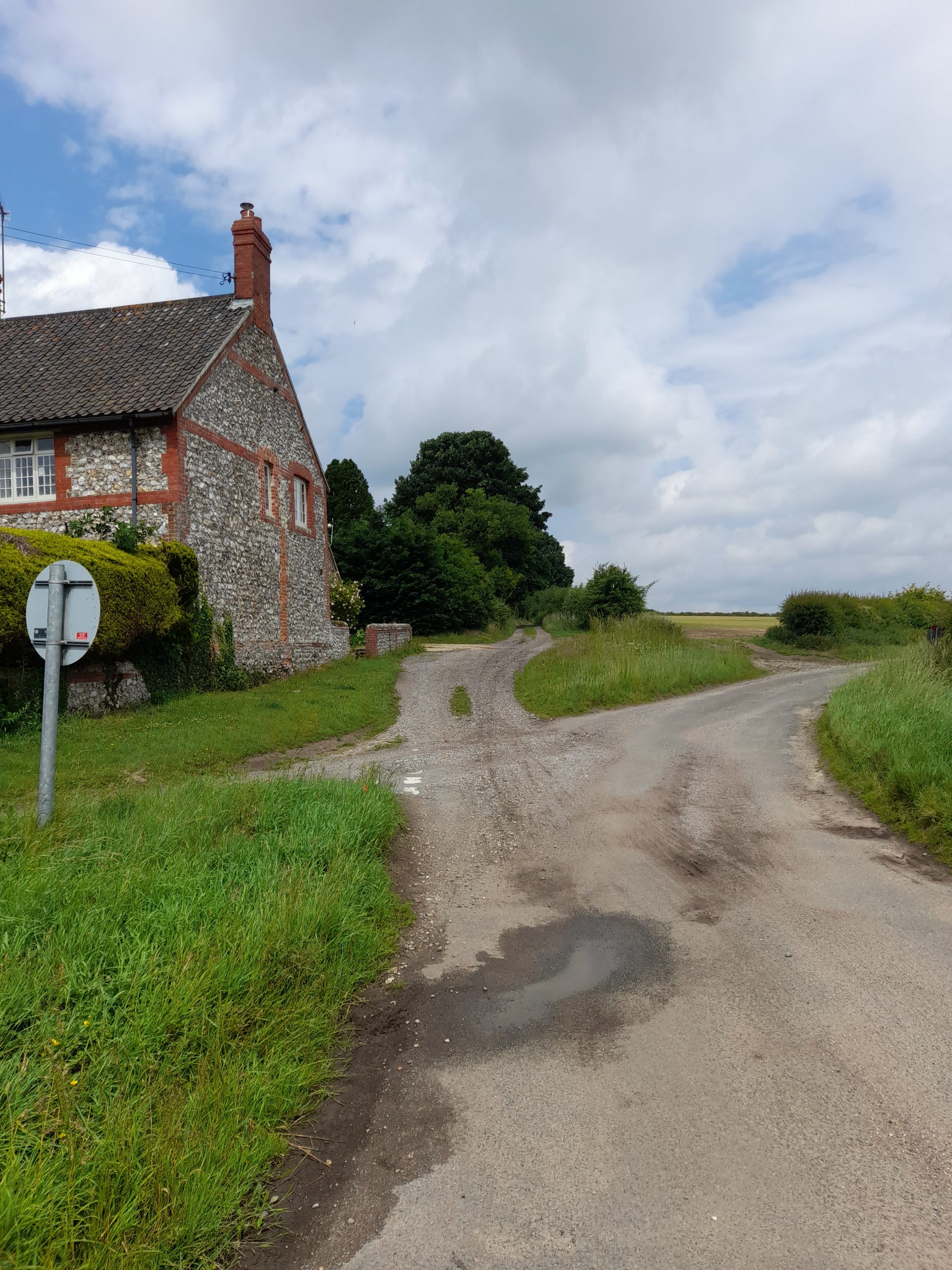
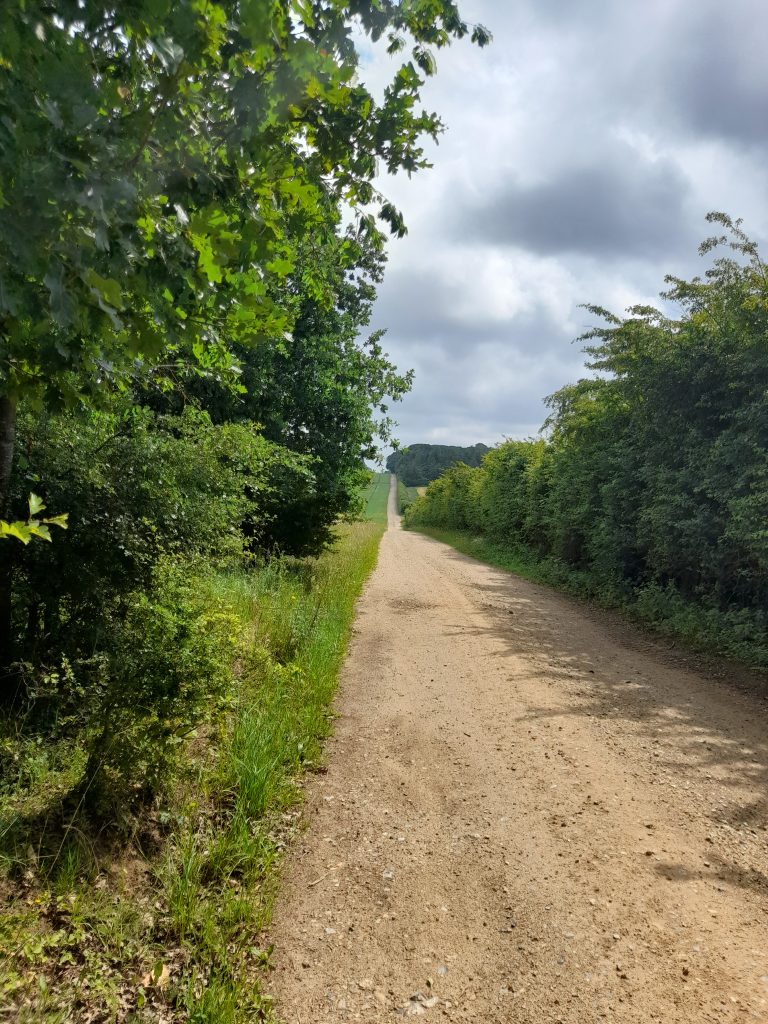
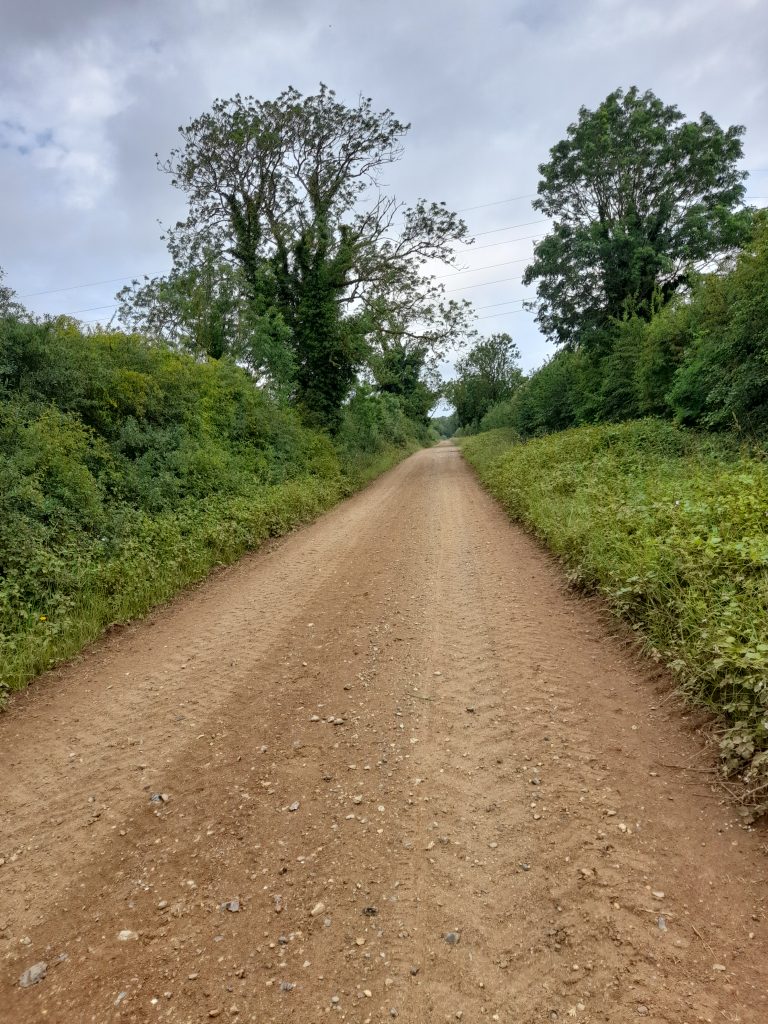
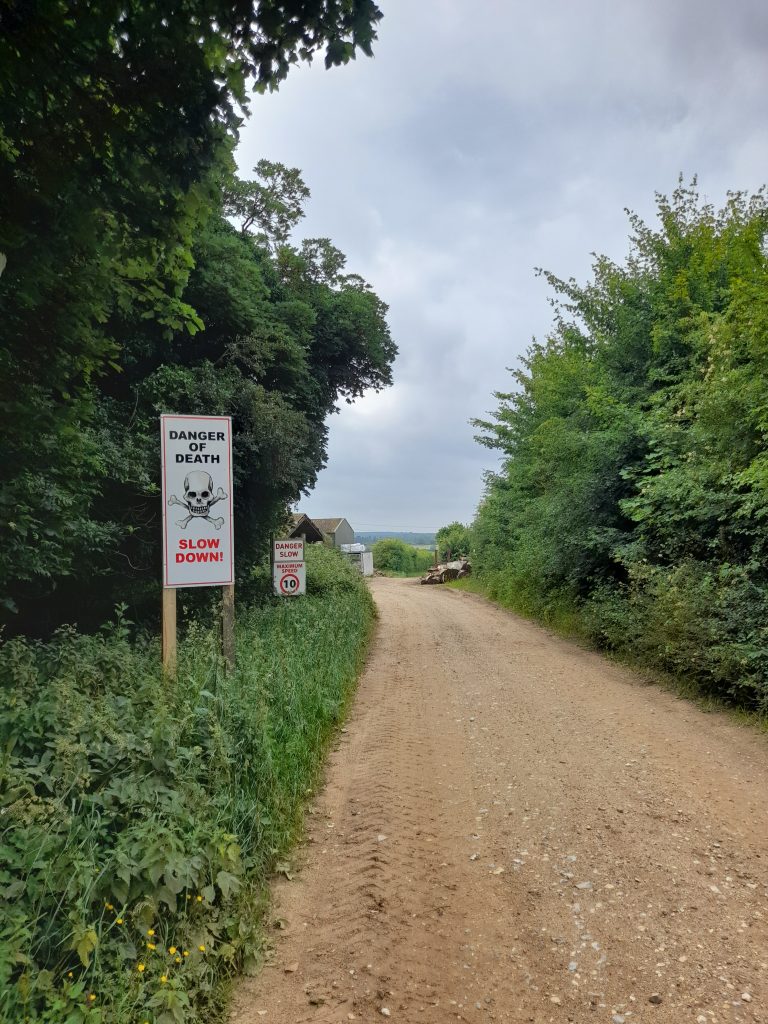
There had been thunderstorms across Norfolk during the evening before my ride.  Drizzle remained in the air as I made my way from the Royal Park. I obviously took ‘Common Road’ outbound. Within half an hour the weather settled into a drying track as I reached my first, and unexpected stretch of gravel road. Just after Grimston, Eastgate Drove provided 10 km of gravel that was wide but sandy and challenging at times with a noticeable sandy climb at one point. So, challenging in fact I recall a ‘Danger of Death’ sign as I descended through some S bends at a farmyard.

Leaving the gravel at West Acre it was only a short distance on a country lane to Castle Acre where, after a short detour to explore the village, I joined the Tarmac’d section of Peddars Way for 5 km before the first section of ancient trackway commenced marked by a slightly wonky triangulation post. There then followed 20 km of almost uninterrupted gravel cycling.

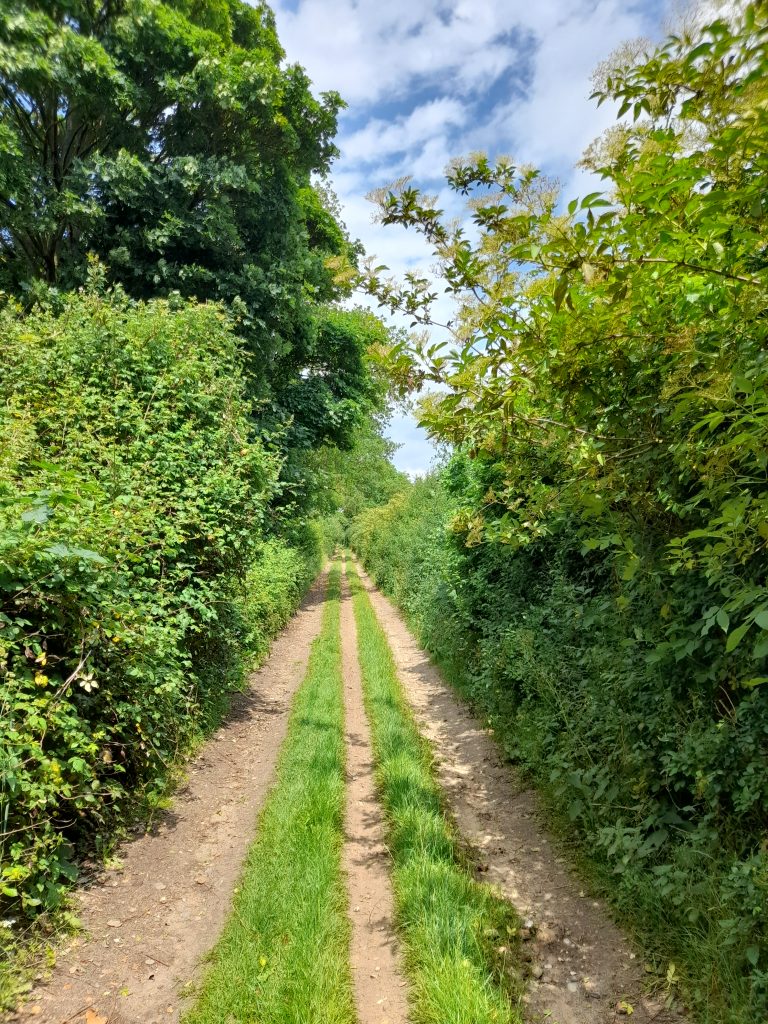
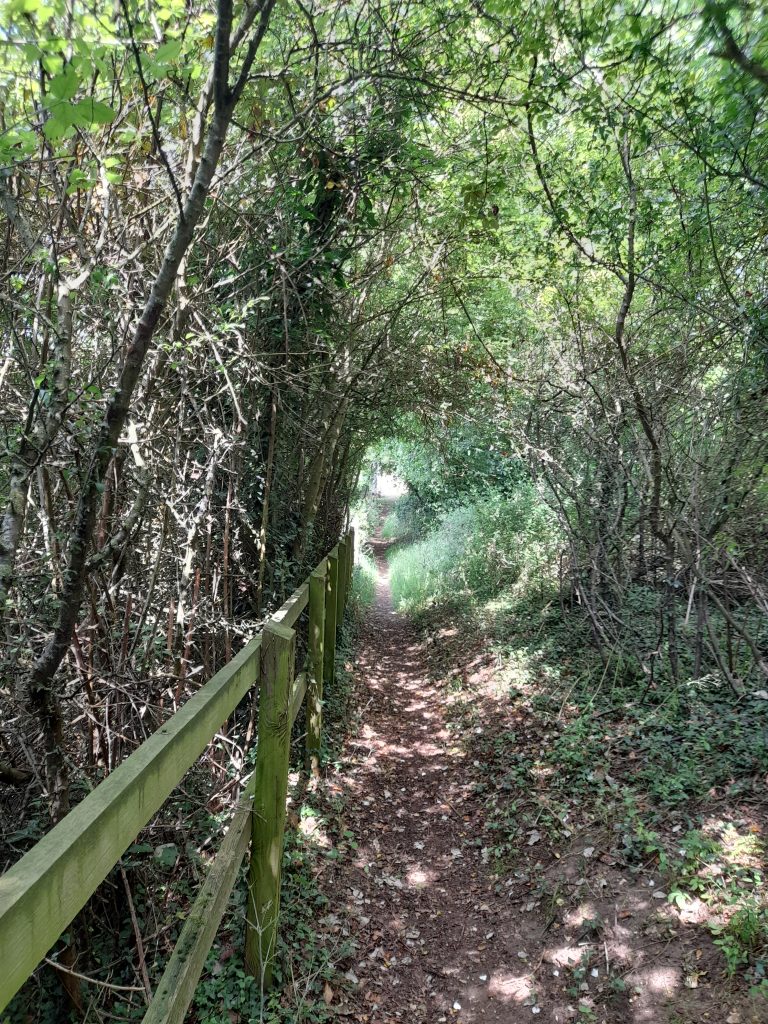
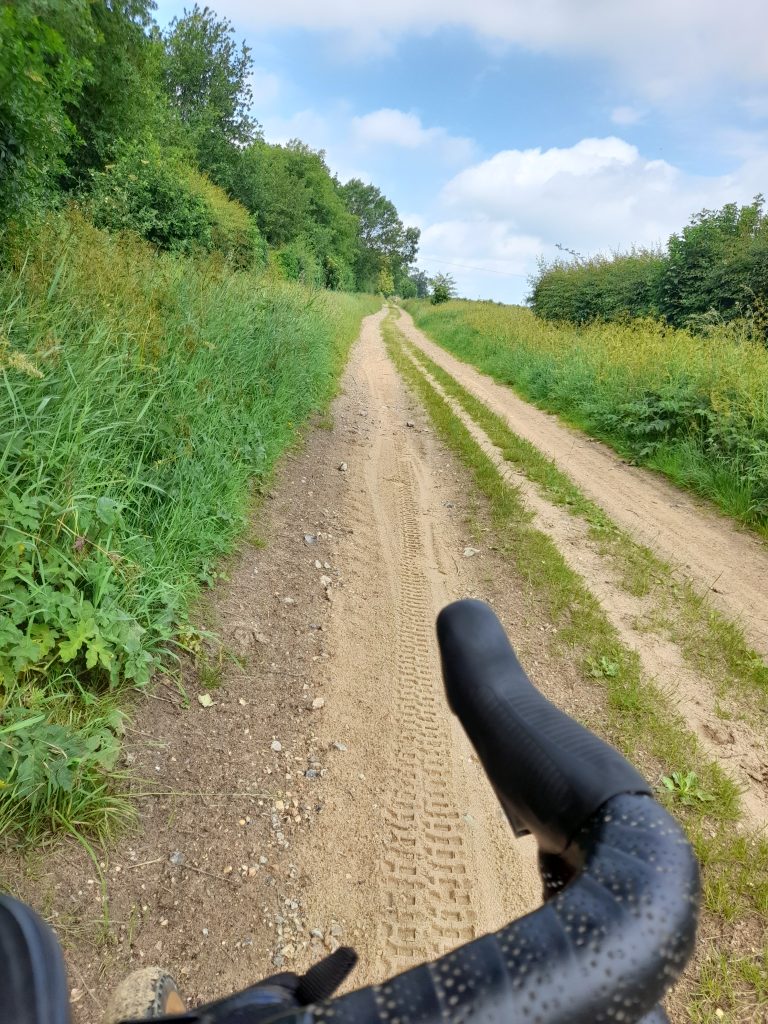
Peddars way from that point was made up of distinctive sections varying between sandy and shale gravel track, grass lanes with various types of surface and a few short sections that are footpaths. Some parts had clearly been used as a green lane route for off road vehicles resulting in a rollercoaster ride.

At a spot midway I decided to sit on the grass for a picnic of Quorn slice sandwiches and a banana. At this point a group of ramblers arrived, using the broadening in the track to regroup. As their stragglers caught up, we exchanged pleasantries. One interested member of the group asked about the introduction of disc brakes and we chatted further about his history of time trialing in the 60s and 70s. In the end I had to point out that his comrades were now about half a mile down the road and he made tracks. I wonder if he’s ever read this blog? Maybe I should have mentioned Gravel Notts but didn’t want to appear to be using the opportunity to market the website. I’m far too polite for that.

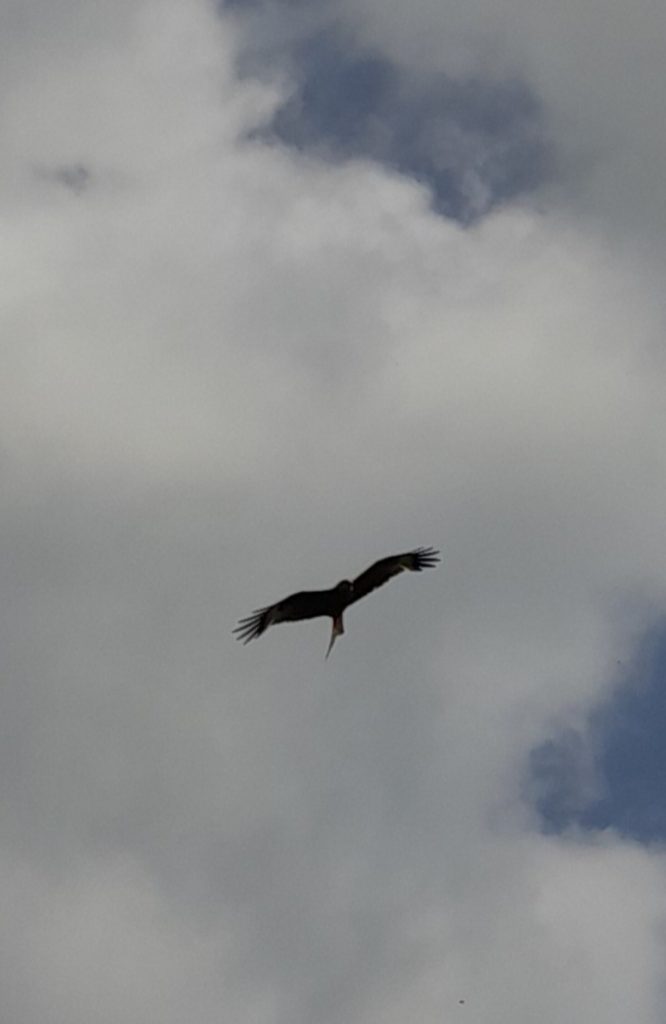
During the ride there was plenty of wildlife. Hares were abundant as were muntjac deer. Muntjacs were released both accidentally and intentionally in the wild from deer parks. They are now on the increase. Red Kites were also particularly common with a few hovering low enough above me to invite a photo opportunity.

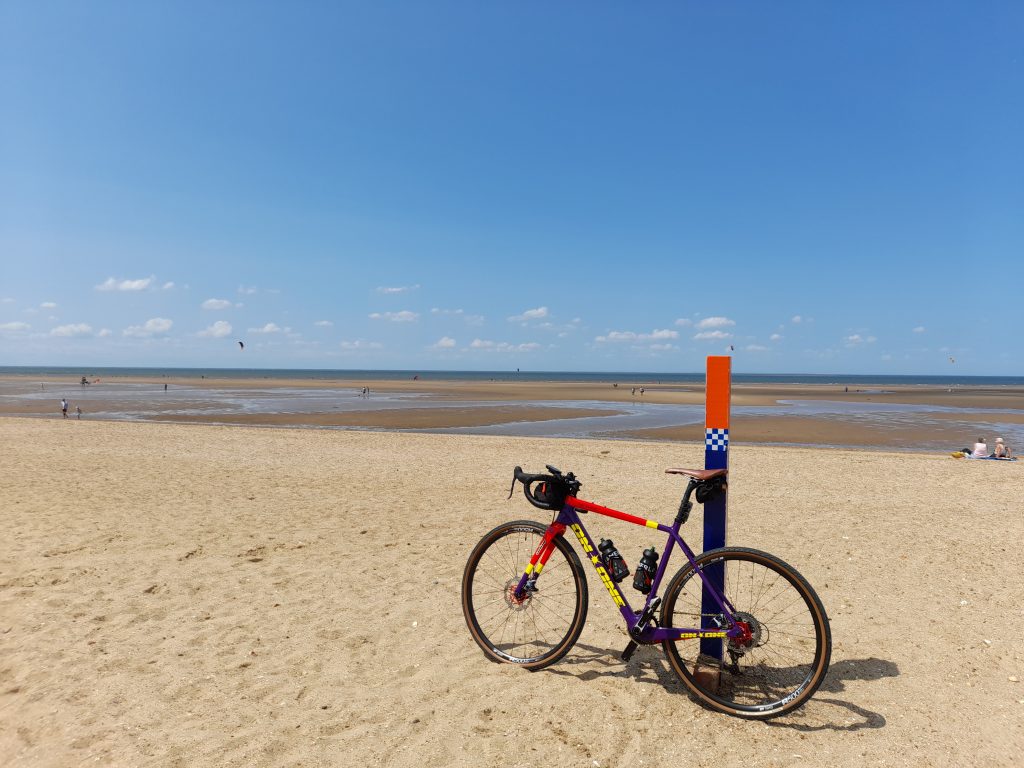
There is a deviation where part of the ancient track is now occupied by a private dwelling adjacent the B1454 at Sedgeford and again shortly afterwards. I then took the final gravel section until reaching tarmac at Ringstead and a short road section to my lunch stop at Old Hunstanton. Cycling to the seaside is something that gives me a child-like feeling of pleasure and comfort. Reaching the coast under one’s own steam is not to be sniffed at. There was also a bonus. The Old Town Beach Cafe served a large selection of vegetarian and vegan cafe options

Naturally I had to take my bike to the beach.

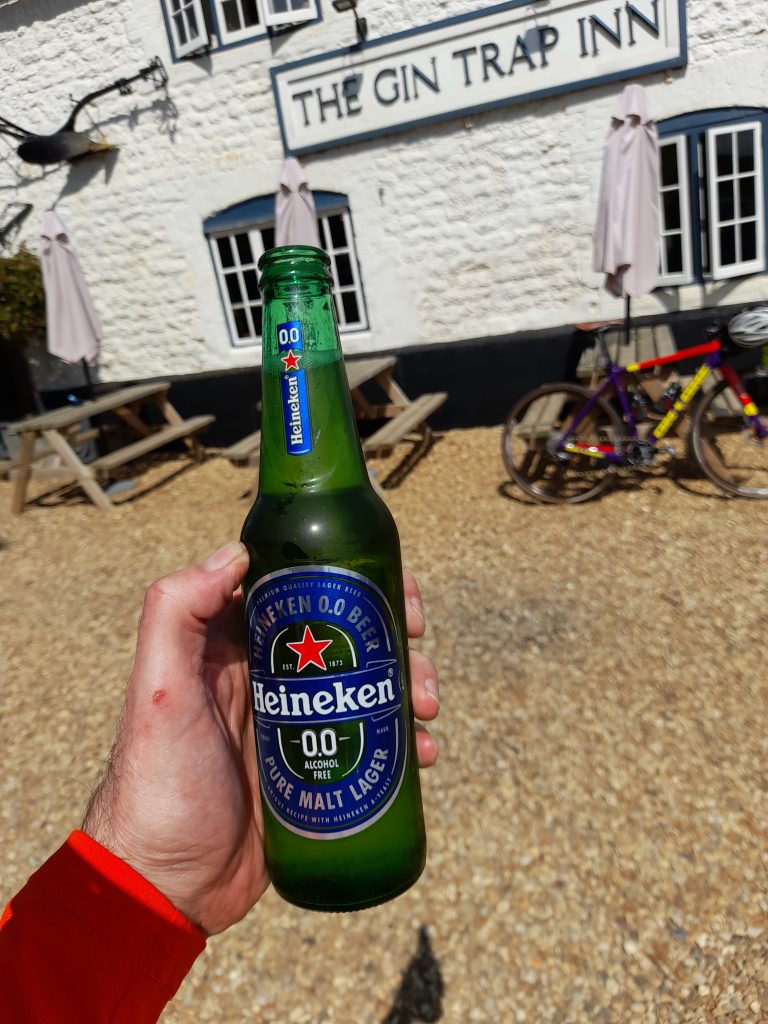
Having refueled I made my way back through the villages gaining a little back in terms of average speed, not that that was important to me. Spotting a picturesque village pub, I took a break and a 0% beer to celebrate an excellent day in the saddle. Basking in a warm summer afternoon with a cold beer that tasted better for having been earned.

Total distance for the ride was a little over 80 km with an elevation gain that was much greater than Garmin had forecast at 745 metres. We’ve had a very dry spring and I would guess the route would be something of a different proposition in periods of wet weather. I would conclude by highly recommending Norfolk for cycling but particularly incorporating Peddars way.

If you’ve enjoyed reading this short blog you may be interested to read more from Gravel Notts. The first book of a planned series of publications is available now. Visit our book shop for more information.

Posted on

Out of Notts – Fuerteventura

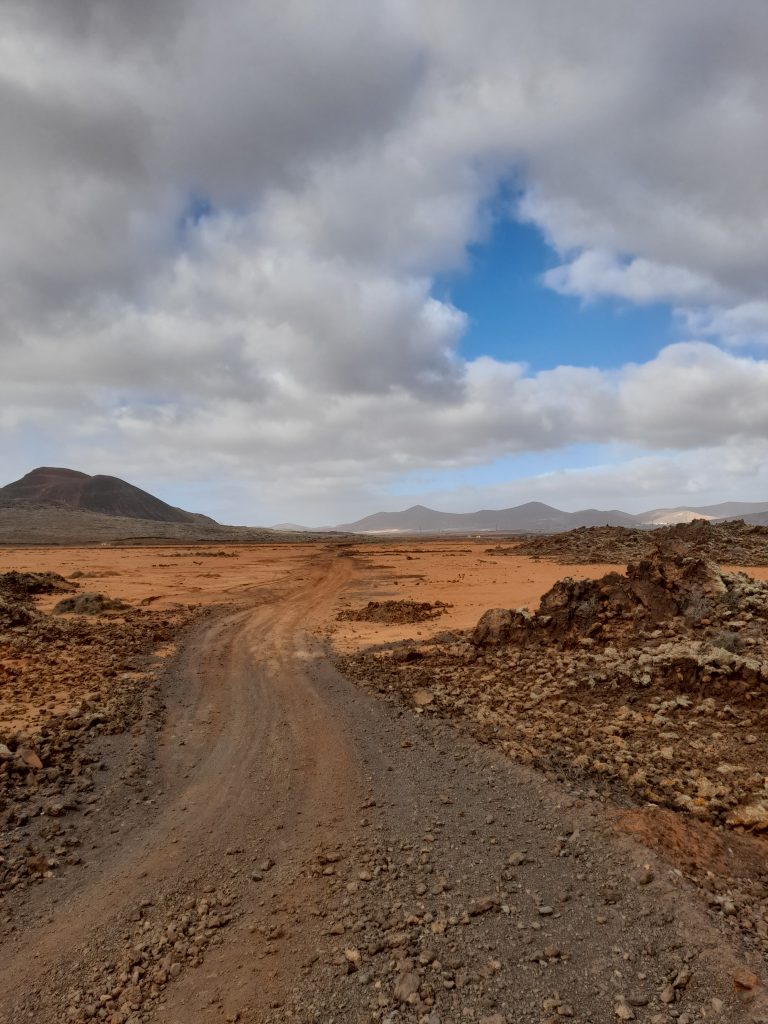
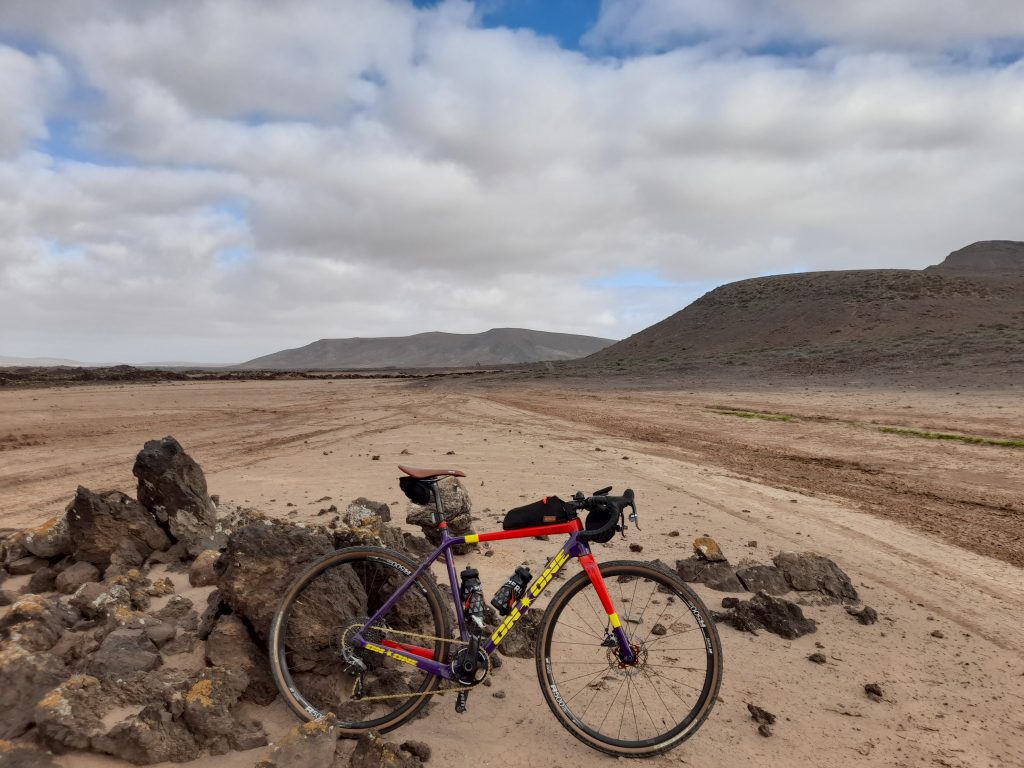
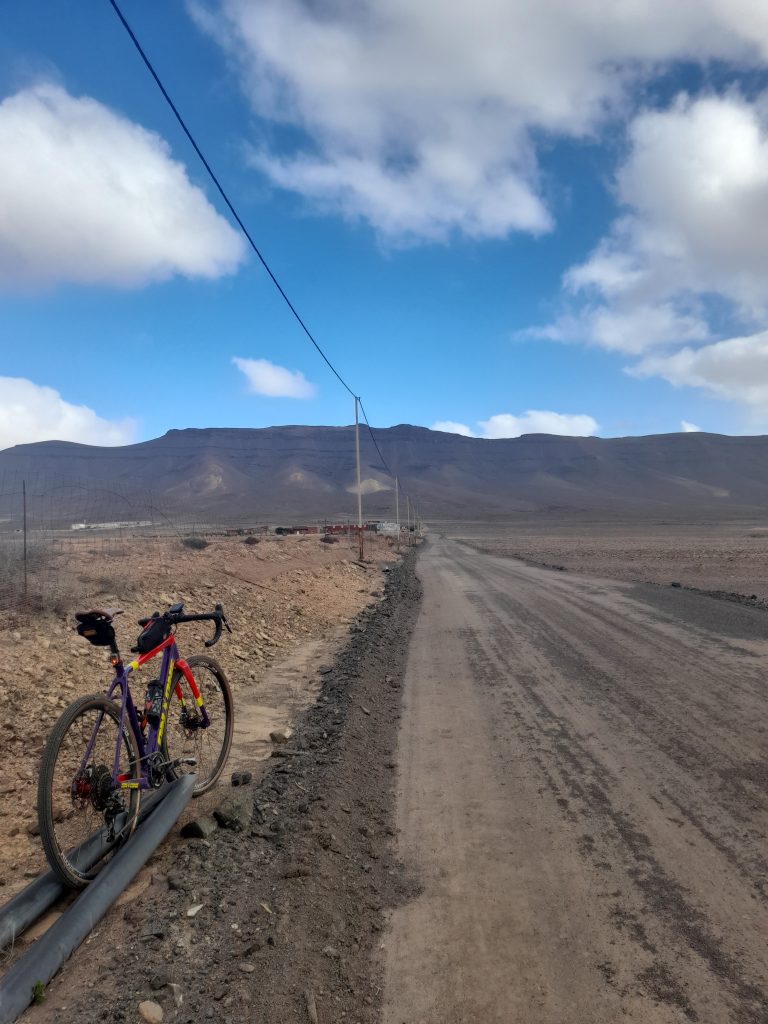
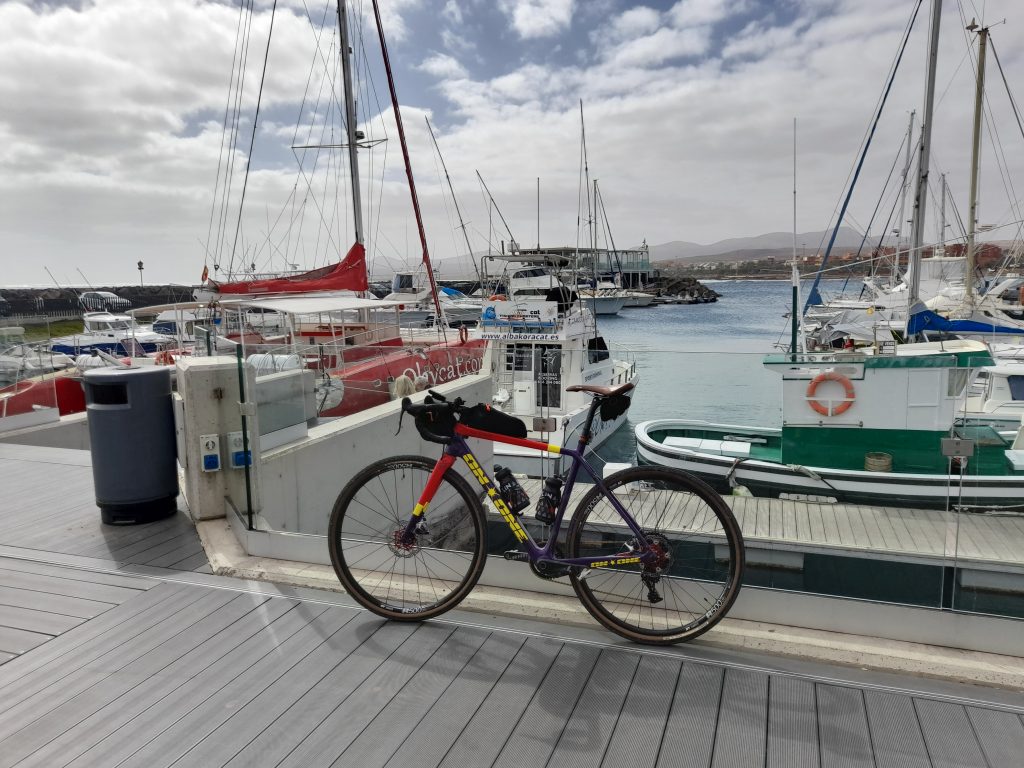
Having kept modest mileage going until the New Year I decided to book myself some warm weather exploration on the island of Fuerteventura, one of the Canary Islands. There were a number of reasons why I chose this location over the more regular destinations of Tenerife . It is relatively flat compared to the other islands but shares the same all year-round good weather, it is inhabited by a population of Egyptian vultures that I hoped to capture a glimpse of and there is an abundance of unmetalled gravel roads. All in all, apart from the four-hour flight, it all seemed perfect and to boot a non-cycling friend and neighbour, Ian, wanted to join me to, in his words, “keep my beer cool until I got back from the rides.”

My background work before setting off for Fuerteventura made interesting reading. Fuerteventura is the oldest of the Canary Islands, formed some 20 million years ago and first inhabited by native North Africans, the Majorero, before invasion by French knights (Jean de Bethencourt) and eventually in 1418 the King of Castile. Throughout this time the island had been persistently raided by North African pirates leading to the population being concentrated inland in relative safety before the current capital city was adopted. The full history of control is complex and includes incursions by the Moors, Portuguese and Spanish. Today the island, like all the Canaries, is part of Spain as an autonomous community and belongs to The Province of Las Palmas (Gran Canaria). The capital of Fuerteventura is Puerto del Rosario, just north of the airport but we stayed at the tourist resort of Caleta de Fuste.

The economy of Fuerteventura was based on wheat and cereals up until the 18th century. Low profits and famine drove many to a better life on the other islands. The main industry is now tourism but the population remains low at 124,00 (2023) given that it is the second largest of the islands.

Fuerteventura is a Biosphere Reserve and a special protection area of birds with endangered eagles, vultures, the African Houbara and stone chats to mention but a few. The Canaries share the same time zone as the UK unlike mainland Spain so there was no adjusting of clocks.

I set out to design some routes that were at least 50% gravel, my altered route to Antigua now falls below that target but for good reason. I utilised both my Garmin Connect app and Ride with GPS to formulate the two main routes. One coast to coast and back and another specifically to an area where I had a realistic chance of spotting vultures, something I have never seen in the wild before. The rest of the rides would just be random exploring to get to know the island.

I was not seeking to ride big miles, just enjoy myself and get a week of consistent cycling in. I figured anything up to 70 km in any day would be enough.

The outward journey went well, flying from East Midlands Airport with my non-cycling travelling companion Ian who decided to join me for a cheap break. Ian, whom I would rename Ian Soigneur was great company for evening meals and a few post ride beers. He was not the most dedicated ‘team soigneur’ failing to clean my bike or provide any training advice. His dietary support usually involved brands of whisky but on the positive side I think I’ve convinced him to have a go at cycling on his return to the UK. On a serious note, thanks to Ian for joining me.

Taking a chance not booking an airport transfer was the correct decision with the taxi charging €17 to our adequate budget accommodation in Caleta de Fuste. Even more impressive was that in my broken Spanish we discussed cycling on the island and the driver showed me his recent downloads to Strava.

So, with some supplies purchased and the bike assembled everything was ready for the following day’s ride, coast to coast.

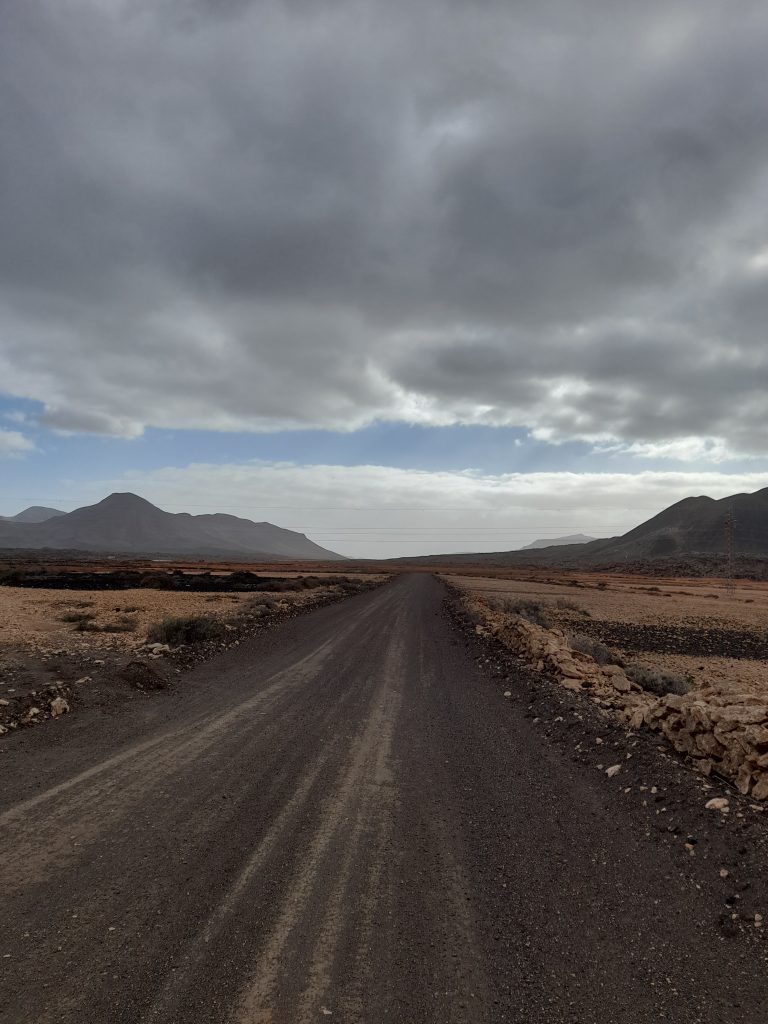
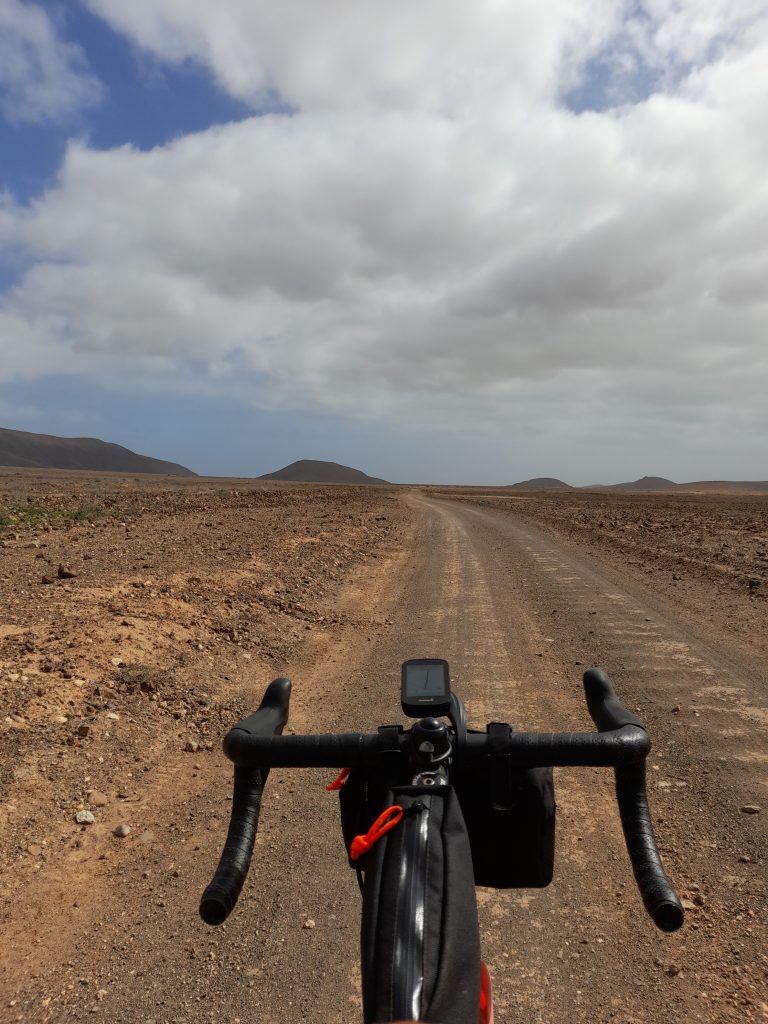
Setting off a little after 8 am the morning sky was overcast but the clouds soon dispersed. For convenience I followed the main road to the airport before swinging left at which point the ride was mainly gravel. The first few kilometres of gravel provided a challenging surface with short sharp hills past the ‘camel milk farm.’ It was however an improving track and a total joy taking me beyond mid-way at Casillas del Angel where the first cafe stop involved coffee and cake.

Heading further west out of the village the excellent gravel track left what little tarmac I’d experienced at that point. After a trouble-free ascent of the mid-island mountain range there followed a downward route that was more hiking trail than cycling track. It didn’t last too long before gravel cycling was restored. Keeping to the cautious side of things I walked the most difficult section of about 50 meters.

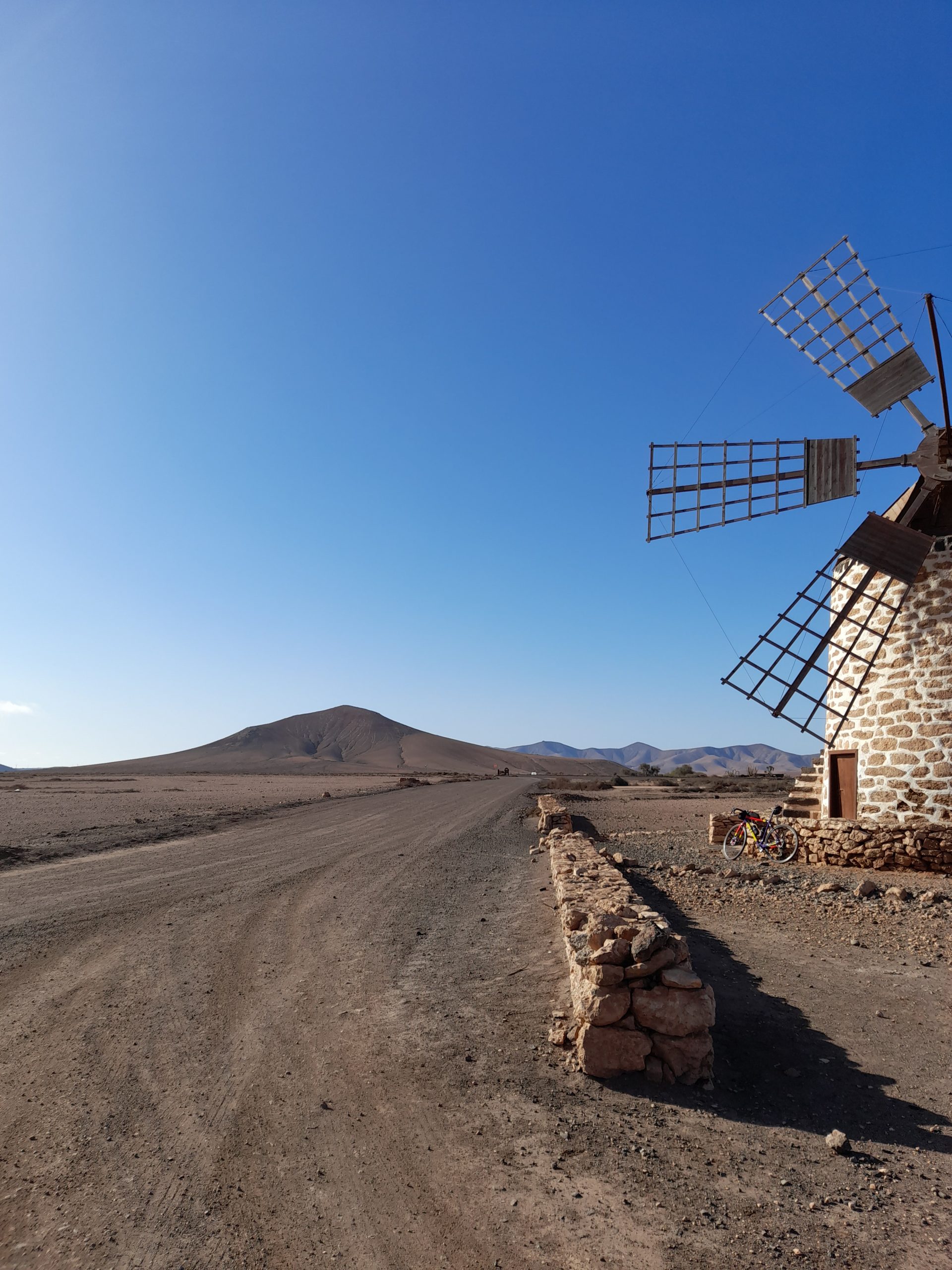
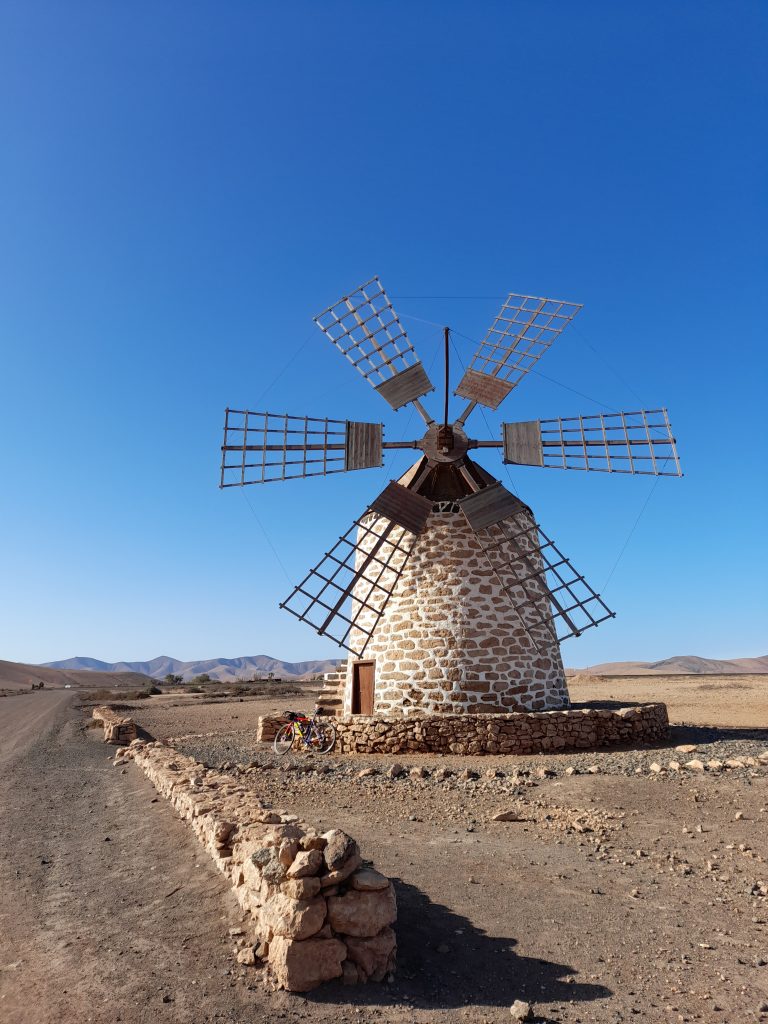
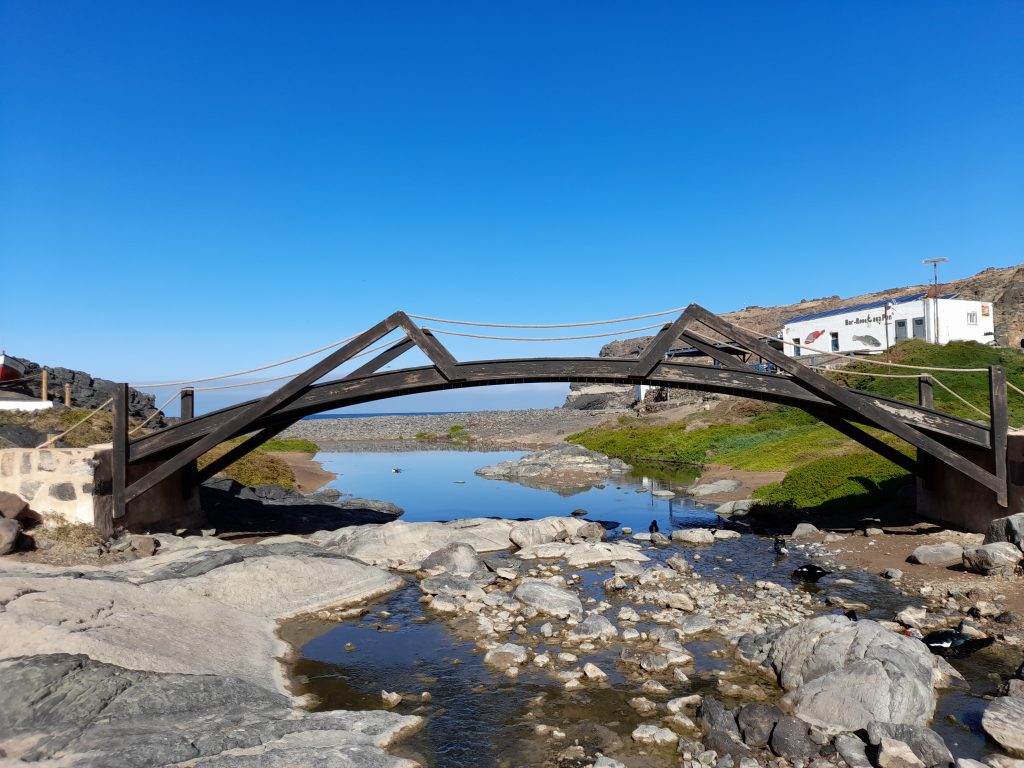
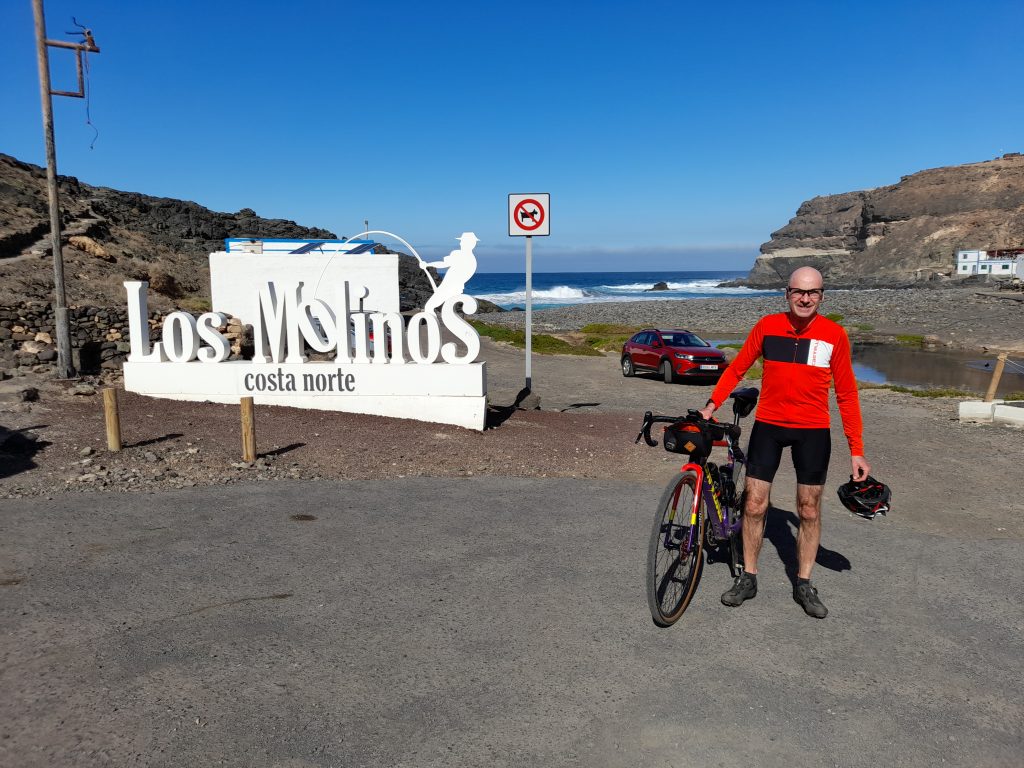
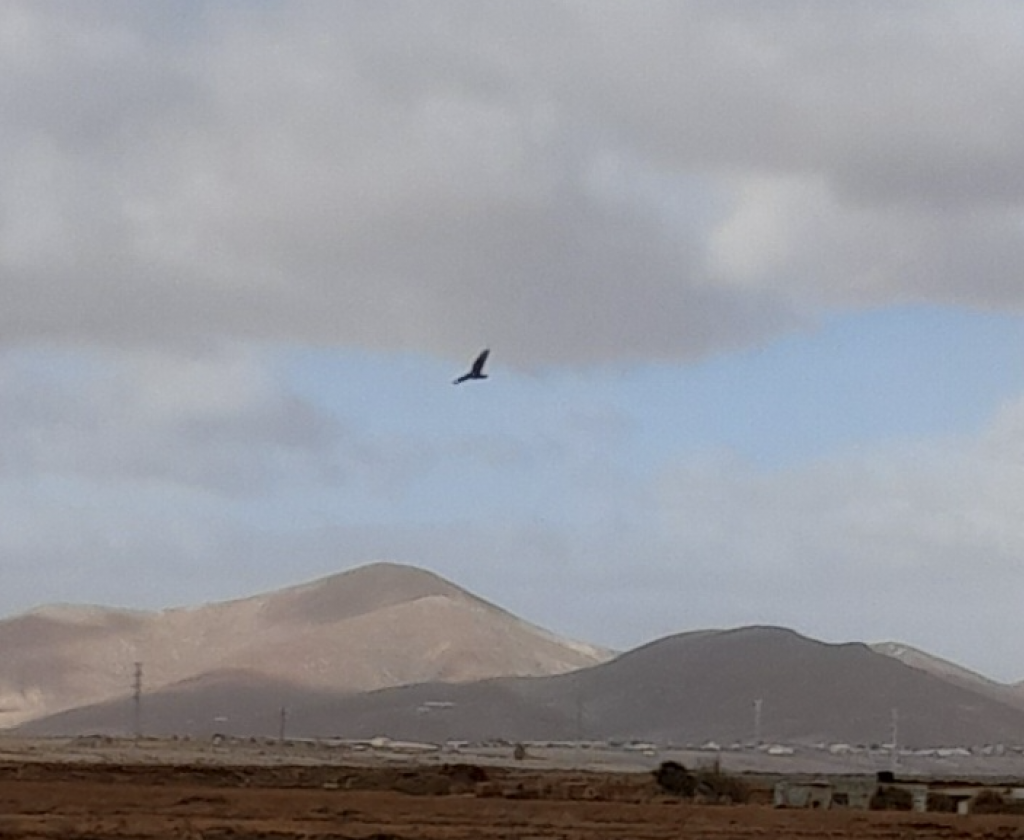
Before me the vast plain provided a clear view of the Atlantic Ocean. After passing a traditional Canarian windmill I picked up the smooth tarmac of the FV-221. It was at this point I caught my first view of Egyptian vultures soaring above in a perfect blue sky. Their distinctive wing markings confirming the sighting. As usual my photographic skills let me down. After a fast descent into the beautiful cove of Puertito de los Molinos and a sandwich stop it was time to repeat the journey in reverse. Four hours of cycling pleasure and my mate Ian waiting with a beer to round things off.

Day two’s ride was a bit of a recovery ride before I ventured back into the interior of the island. A run along the coast to a little bay called Puerto Laja. Heading straight to the shore in Caleta de Fuste and turning north along a dedicated cycle path I realised the force of the wind was going to play a part in the day’s ride. Leaving the resort also left me confused, the trail I had chosen was not rideable so some improvisation was required to get me to the next section of gravel that passed by the airport. This was the point where things improved and despite the strong headwind good progress was made to the capital of Fuerteventura, Puerto del Rosario. Approaching the town, I stopped to watch the barbary ground squirrels busy with their duties. It was also time to eat my warming sandwiches.

Puerto del Resario was a real treat with ferries and cruise ships docked in their mornings. I made full use of one of the many restaurants for a cana (small beer) and patatas fritas. Not my usual cycling fair but I was on holiday.

I then plotted my way further north taking two wrong turns out of the town before picking up yet more coastal gravel to the destination at Puerto de Laja. After a quick break it was about turn and a return to my starting point. The tailwind making the journey back pass in the blink of an eye.

Day three was a rest day to celebrate my birthday and recover for a big day (by my current standards) on Thursday.

On day four normal service was resumed with a loop of the interior and a half way stop in Antigua. Being propelled along the initial coast stretch without many turns of the pedals was an indication of the wind speed I would be riding against later that day. Garmin registered the wind speed at 43 kph but it felt much stronger in places. As I turned inland along the FV-2 I was grateful for the consideration shown by drivers giving me plenty of space as I leaned into the crosswind.

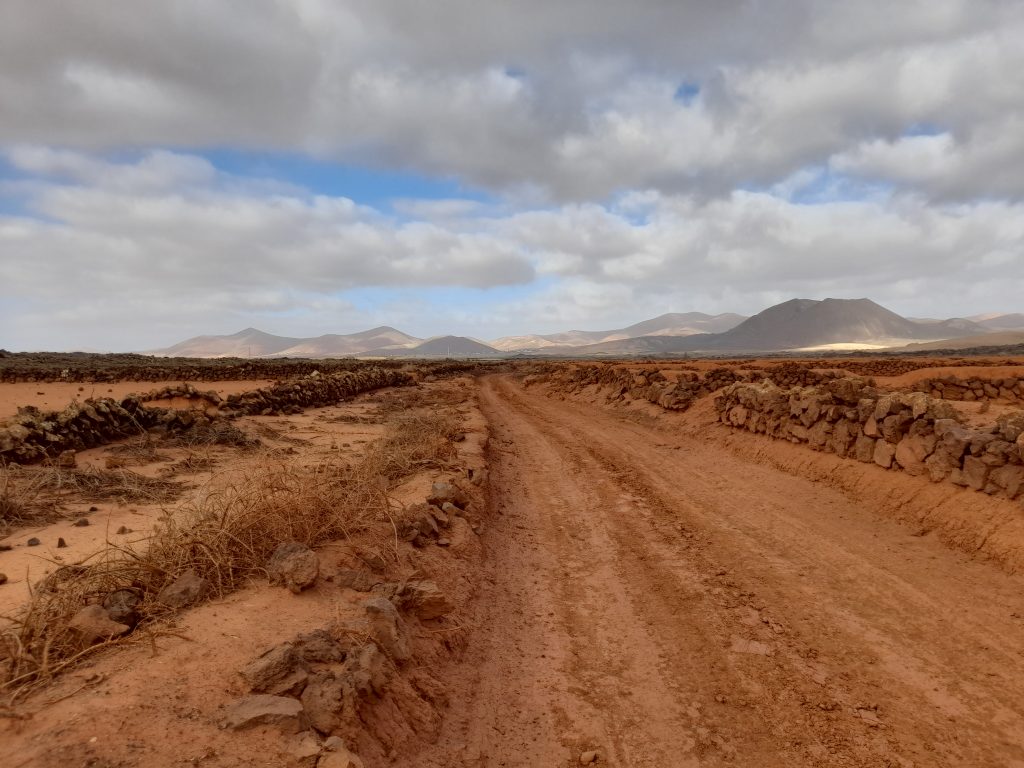
I was also grateful to turn off the tarmac heading towards Tiscamanita passing goat farms and a lunar landscape that was breathtaking. It was at this point I spotted an Egyptian vulture perched on a disused stone tower. As I stopped to get a photograph of this massive raptor it took to the air and made a circular maneuver to glide directly above me about 10 meters high. Once again, my photographic skills let me down by taking a picture before it was at the closest point and then totally missing the bird at the crucial moment. The sighting was a real privilege with the bird’s distinctive wing markings clearly visible unlike the adolescent vulture that was also present yet to acquire it’s adult plumage.

Carrying on I took the planned right hook before Tiscamanita which in hindsight was an error. The trail of large volcanic rock was impossible to ride resulting in me walking for over one kilometre. I’ve changed this on the Ride With GPS provided so that the route continues into Tiscamanita. This quiet road reduces the percentage of gravel but is advisable.

Eventually I was able to remount and make progress against the headwind towards Casillas de Morales, Valley de Ortega and then my lunch stop at Antigua.

Post lunch the gravel and road mixture took me to Triquivijate after which there was a continuous 10 kilometre gravel track towards the coast and then back along the coast for a wind assisted ride back to base completing the 59 km ride. The revised route is a little less.

Day five was a shorter ride out to Triquivijate of about 40 km. Once again blasting along the coast on the way out before turning right for a thankfully shorter stretch on the FV-2 and the deadly cross winds. Turning right to leave the main road towards Los Alares I became confused for a while as the track looked like it had been obliterated by a large digger. Eventually I found my way onto the Cam.Buenavista and past the animal sanctuary. The gravel was good and smooth enough to make progress.

Arriving at Triquivijate I found a pleasant small town with an excellent coffee stop that I had spotted the day before. On arrival I was met by a large group of tourists from a cruise ship docked at Puerto del Rosario. They were on an excursion on bamboo bikes made by Myboo. After coffee and cake, it was back to a mixture of trails and the FV-413 back towards the coast to complete my winter cycling adventure in Fuerteventura.

In summary the island is a great destination for gravel cyclists and I could have planned much longer routes. However, be aware that this is a windy place and the crosswinds were very challenging at times, maybe I was just unlucky. My most enjoyable day was the coast-to-coast ride of about 70 km. The enjoyment was helped by this being the least windy day. There was a section that required me to walk for a few hundred metres but all in all a great route.

Day four was my other major objective. As stated, I have amended the route to take out a very long unrideable section whilst retaining the fascinating and isolated track that provided a close encounter of the vulture kind. This ride offers the least percentage of gravel but the sections that are will take your breath away.

If I were to return, I’d probably base myself in Puerto del Rosario that has a much more Canarian feel to it than the mainly British resort of Caleta de Fuste but remaining close to the airport. Having said that, the accommodation was cheap and acceptable, there were plentiful restaurants to choose from and located midway along the east coast the resort was an ideal base for cycling adventures.

All in all, I’m glad I did it.

Coast to Coast (and back)

Antigua Circuit

Posted on

A summer tour to Lincoln

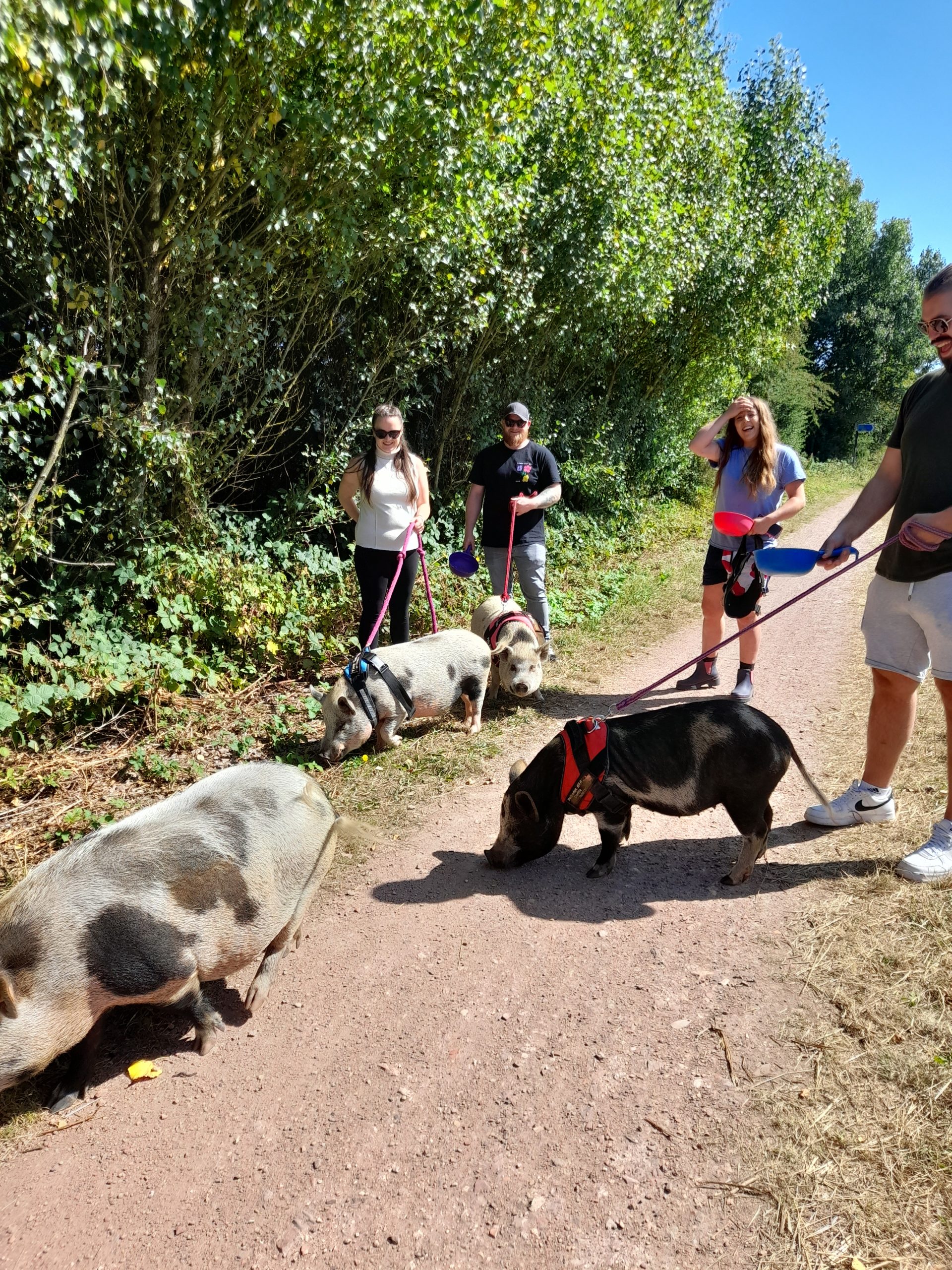
Setting out on a warm summer’s day in early August for an overnight stop in the City of Lincoln was no hardship. I was buzzing at the prospect. The first part of the ride will be familiar to followers of Gravel Notts. The ride out of Hucknall or Nottingham if you are based there utilising NCN 6 through Newstead Abbey, Blidworth and north to take National Cycle Network (NCN) 645 east towards Bilsthorpe is regular and delightful ground. The forest cover providing shelter from the early morning sun was appreciated as I knew there would be little shade after crossing the border into Lincolnshire. The only unfamiliar sight was being greeted by three ladies and a gentleman walking their pigs as I approached Bilsthorpe village. They were all well behaved and happy to pose for a photograph. This is Nottinghamshire so expect to expect the unexpected. The conversation started with, “I saw you guys on East Midlands Today” (a local TV News Programme). To which we discussed how well behaved the pigs where and thanking them for their time.

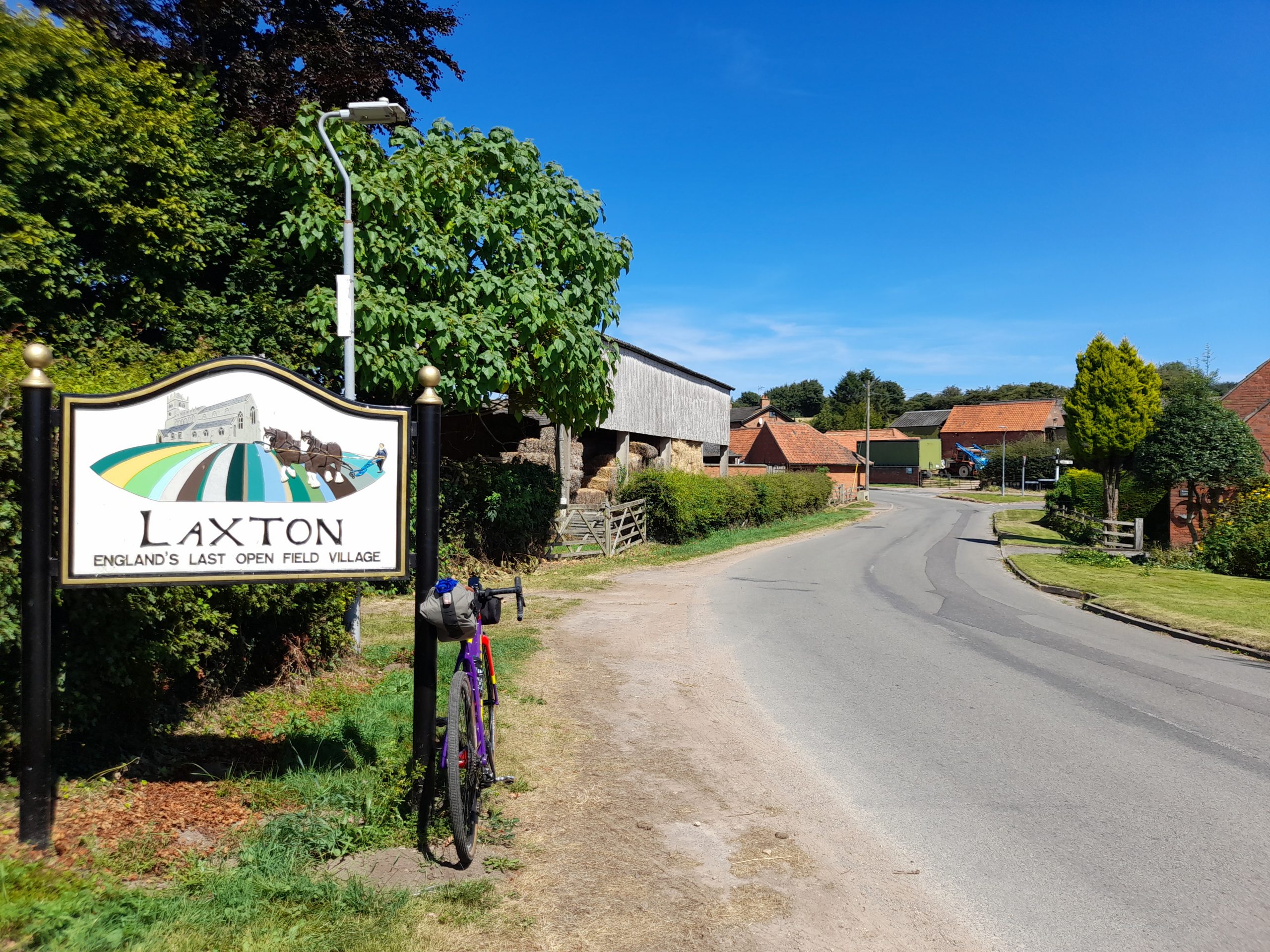
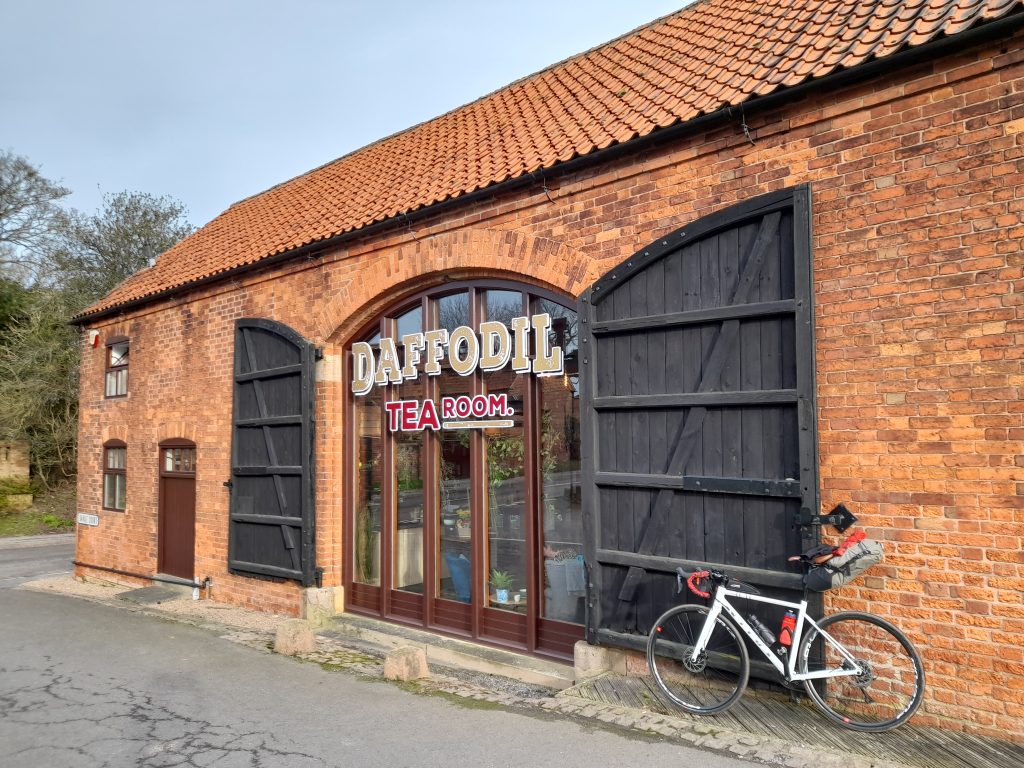
Having admired the drove, I had to look up what you call a group of pigs, the route continued until a planned refreshment stop at the delightful Daffodil Tea Rooms in Eakring. Having fuelled up I then headed northeast, on the quiet lanes through multiple villages, Kneesal, Laxton, which claims to retain the only open field system in England and Egmanton before heading directly east avoiding Tuxford on this occasion.

The addition of the town of Tuxford would have provided plentiful cafe stops but, on this occasion, I was still feeling full from my visit to the Daffodil Tearooms. I was also enjoying making good wind assisted progress along the unclassified lanes so a visit to Tuxford can go on the to do list although I have visited it many times before.

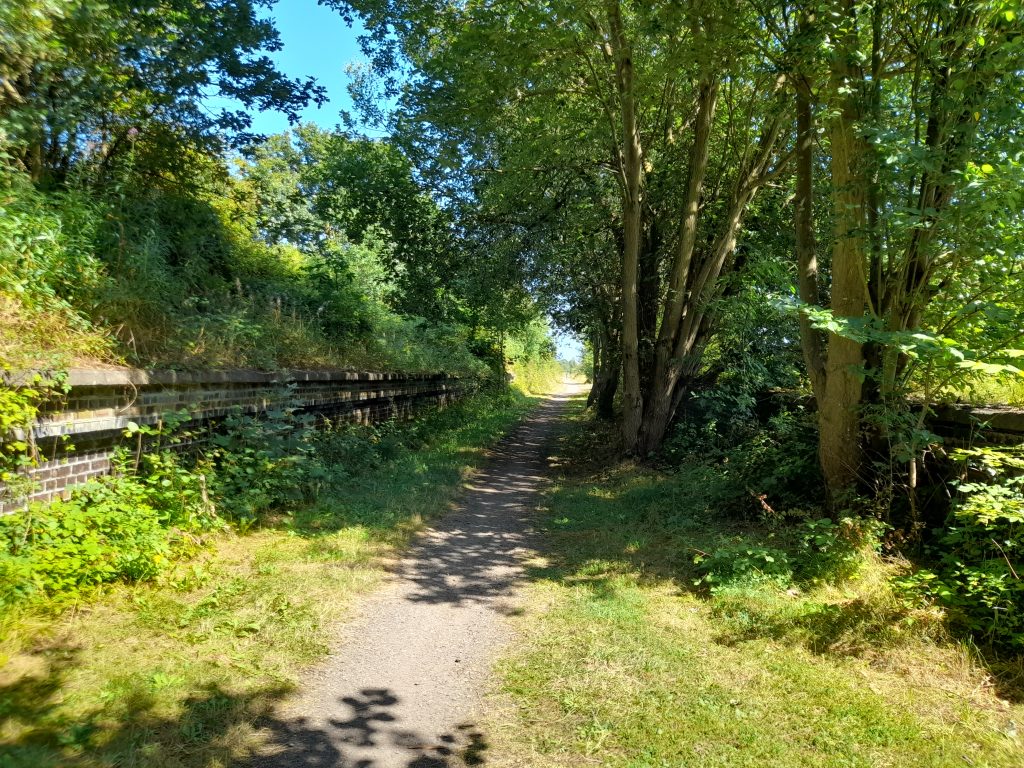
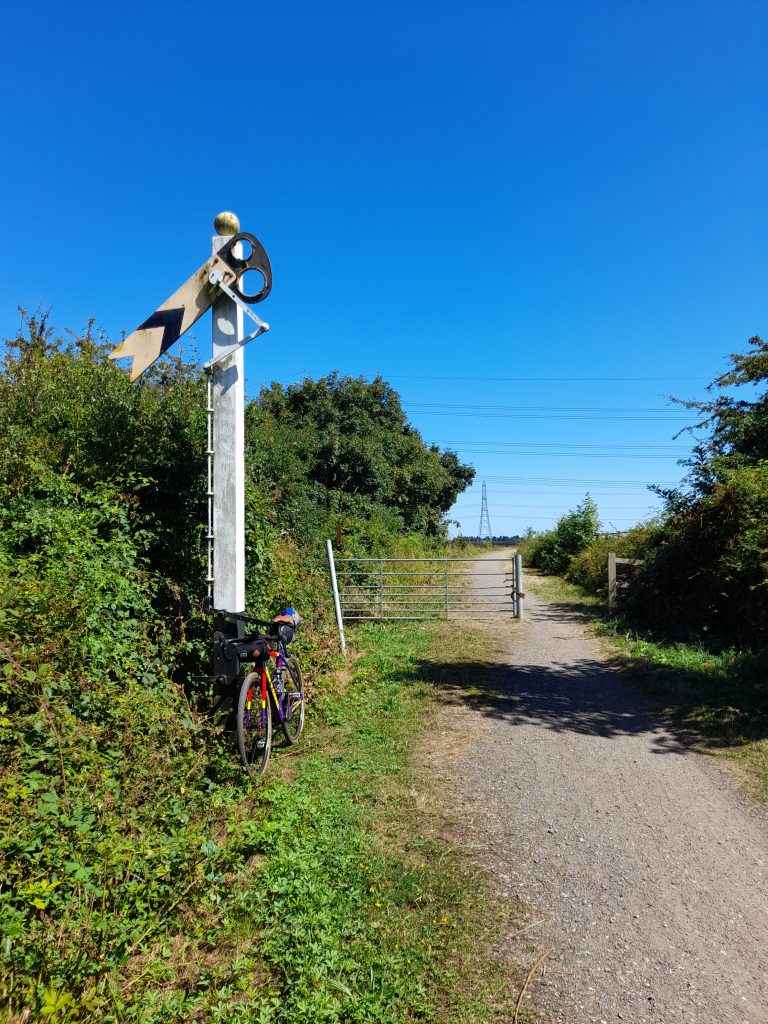
The last village before crossing the River Trent at Fledborough was Skegby followed by a slightly bumpy section of NCN 647. This then gave way to a gravel track heading towards the Fledborough Viaduct. This abandoned railway line that once ferried passengers to the historic City of Lincoln is littered with ghost railway platforms. The first is situated at Marnham which feels a little eerie now it is nestled in woodland that has taken over the platform. I stopped for a while to take a photo and enjoy, probably the last shade of the day.

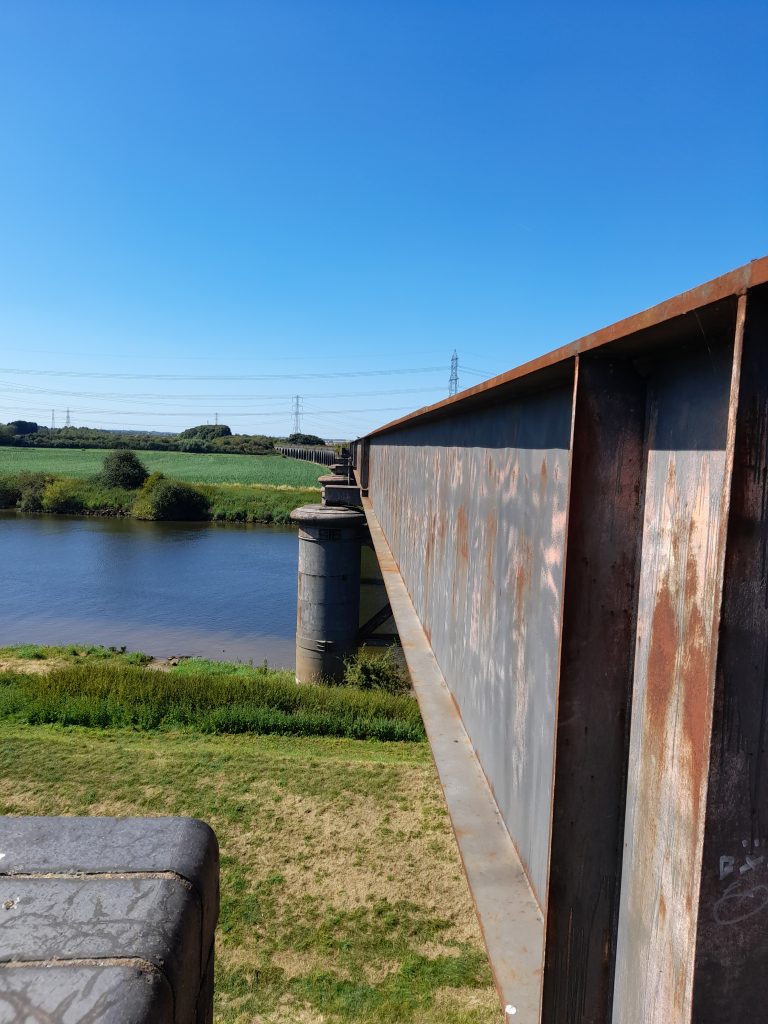
As the Viaduct passes over the great River Trent, I was surprised at how little of the River I could see but grateful for the excellent gravel surface it provided. The opportunity to snap a quality photograph of the viaduct (that I will save for the book) could not be missed however and so it was then that I found an exit path on the east bank from which I was able to find a vantage point to view the viaduct’s vast expanse across the water. Fledborough Viaduct is an interesting structure of brick and iron. It not only stretches across the river but also the extensive floodplain that lies on each side of the Trent at this point.

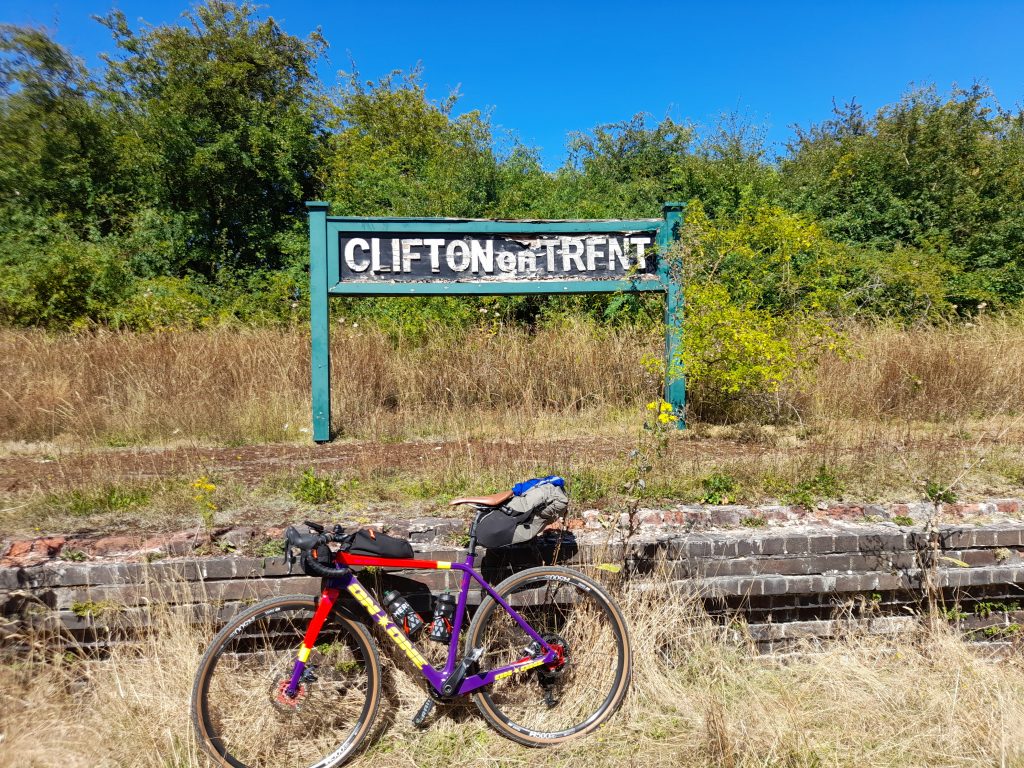
At this point the River Trent is nearing its destination to the Humber and is deep and wide. I too had a destination to reach so it was back to NCN 647 that meets NCN 64 north of Harby and onwards towards Lincoln. Once over the border the going is flat for the remainder of the journey. North Nottinghamshire’s undulating lanes give way to flat gravel. On this occasion, with a tail wind to boost progress. It’s not long after passing over the river that I approached the second abandoned railway station at Clifton on Trent. The platform sign still remains but I had to straighten the letters for photographic purity. In hindsight wonky letters may have been more authentic.

And so, the journey continued, perfect dusty gravel until the next notable settlement of Skellingthorpe. Passing through the village only brief glimpses of the habitation are noticeable as I rumbled on along the 16 km of straight gravel until I finally had to take a right turn under the A46 to pick up Foss Dyke taking me directly into the heart of Lincoln and the vibrant Brayford Pool area. The last section of the route into Lincoln is also interesting as Foss Dyke is a navigation with boats moored up of differing type and size.

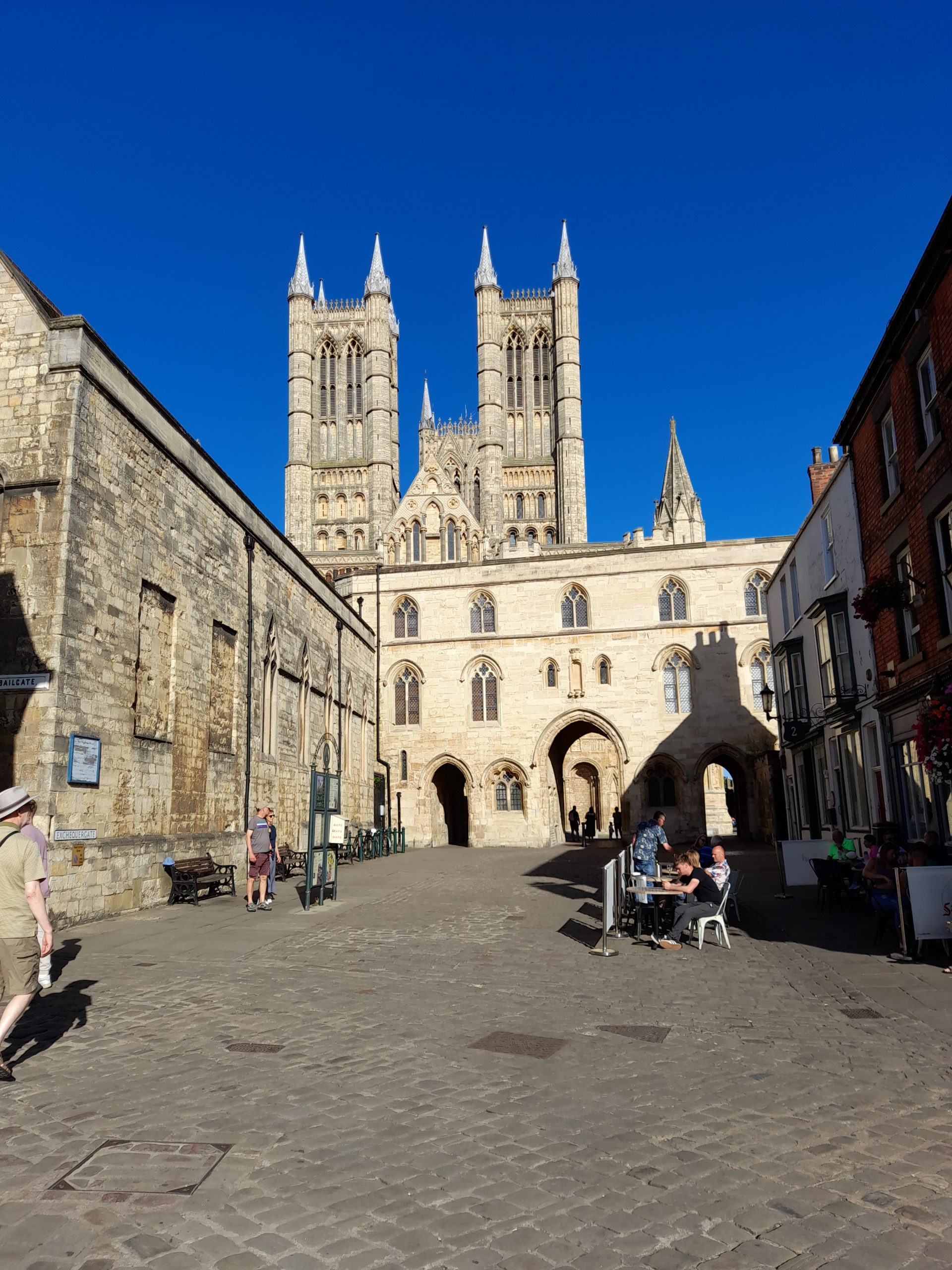
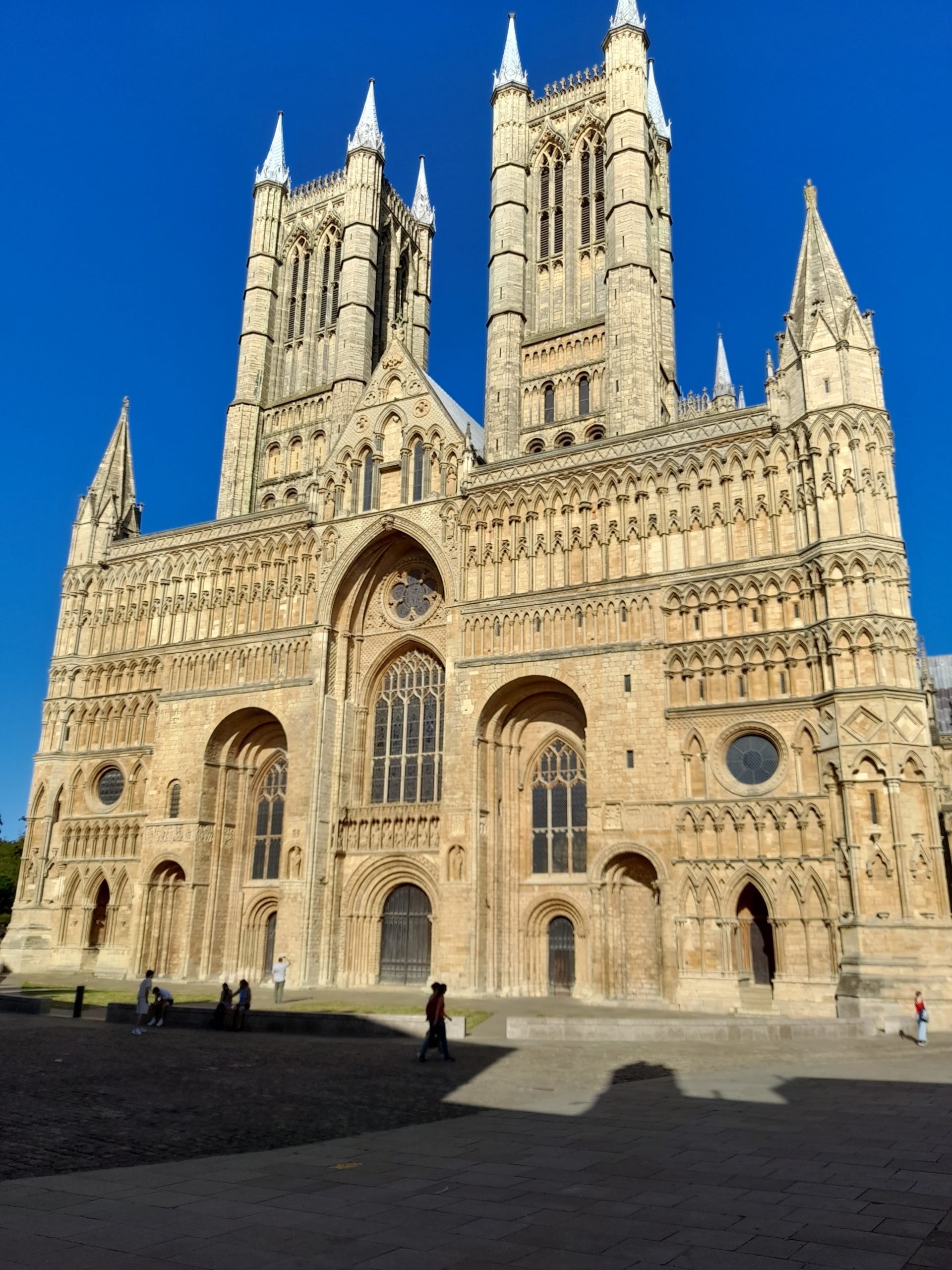
After finding my accommodation for the night, unpacking and a quick shower it was time to wander around this beautiful city, take a look at the cathedral and admire the remains of the city wall, oh and find somewhere to eat which wasn’t difficult. The sunlight made the historic buildings seem even more picturesque. A walk around the historic part of Lincoln is challenging. I guess Steep Hill acquired its name for a reason. It is claimed to be the fourth steepest street in the country. I have cycled up it before and watched the Lincoln Grand Prix riders race up it but this evening walking the steep cobbles was enough of a challenge.

Whilst eating my evening meal I was able to reflect on the 65 km ride. I enjoy cycling with friends, sharing a beer and banter in the evening but there is also something to be said about being a solo traveler. It gives me inner peace and satisfaction. This route was an absolute joy, definitely one I will choose to take again.

The evening was also a time to relax and consider my options for tomorrow’s return journey. Maybe the long way back via Newark on Trent?

And so, the morning came. As I often do, I made a journey on foot to the local supermarket to buy supplies for the day and a makeshift breakfast to eat in my room in the well-known hotel chain, which was very nice and central may I add. The main bonus is being allowed to take your bike into the room itself.

Setting out it was another warm humid day with severe thunderstorms forecast for the afternoon. I had made a decision that evening. Given this was my first overnight ride since surgery early in the year, and I ‘d only recommenced cycling in mid-June I was going to take the train to Newark and ride back home from there.

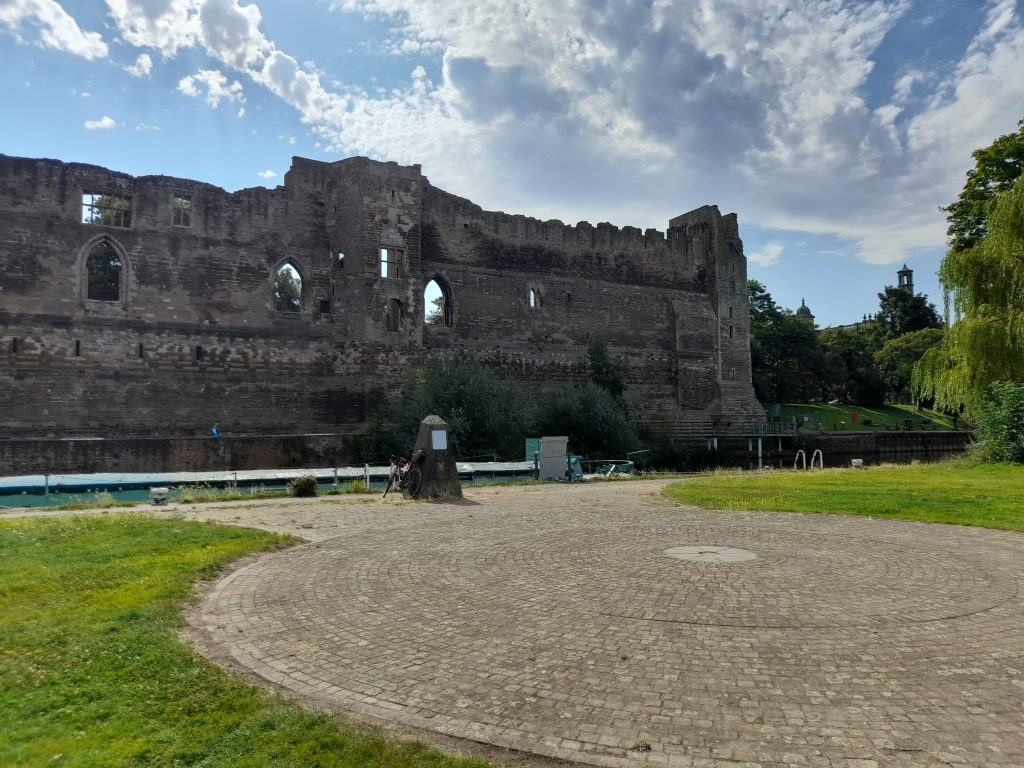
The train ran smoothly and I was able to get a seat next to my bike, perfectly. Alighting the train at Newark I decided to eat my provisions in the gardens facing Newark Castle before heading initially north along the banks of the River Trent before crossing over to pick up NCN 64 (south) and head west towards Nottingham. The NCN 64 is a tarmac traffic free surface from Newark Northgate Station and follows the abandoned railway line until Cotham. At that point I diverted from the NCN route and made my way through the lanes until I was pleased to join a gravel byway by the name of Baxter Lane that provided the day’s first meaningful stretch of gravel until the village of Hawksworth.

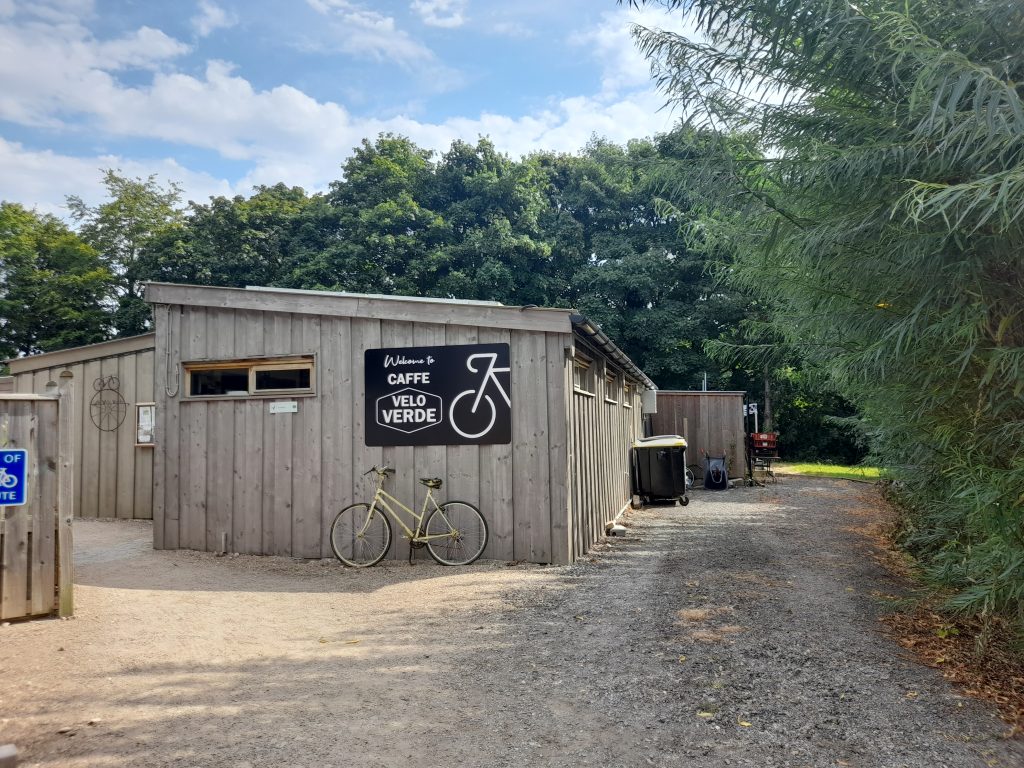
Now at this point my plan was to stop off at Screveton for a refuel at the cycling mega cafe that is Cafe Velo Verde. Unfortunately, this was a Monday, the only day they don’t open in the summer. Luckily, I had saved some of my supplies bought in Lincoln and made do with the snacks I had preserved and a drink from my biddon.

Setting out from cafe Velo Verde I could see that the thunder storms forecast was threatening. The rain visible in the distance along with forks of lightning and loud claps of thunder progressing ever closer. I prepared myself mentally for a soaking. Any cyclist knows the feeling, there is no way out of this one, nowhere to shelter of any meaning and a long way from home. It’s summer, you have your lightweight shoes on, a flimsy wind jacket, short sleeves and bib shorts. However, as I neared Gunthorpe bridge to cross the Trent for the third time on this tour I was becoming hopeful that I had, somehow, dodged the storm. This was confirmed as I rode through Lowdham and Epperstone where the roads had clearly had a soaking before my arrival. As cyclists sometimes we just get lucky!

All I had now to do was to climb the north face of Bonner Hill, descend into Calverton, up and over Gravelly Hollow and, after cutting through Burntstump Park I was cycling over Papplewick Moor and home. The route was a mere 50 km on day 2 but I had completed my first post-surgery tour and felt pretty happy about it. However, my first reaction was not to philosophise but to say to myself, well done chap, now, what’s next?

As for the route, I can highly recommend it, especially the Nottingham to Lincoln via the Fledborough Viaduct. Such long stretches of good gravel are rare. It flat and deposits the rider into a beautiful historic city with plenty of options for onward travel or a return loop. What more could a gravel cyclist ask for?

Posted on 2 Comments

Gateway to the next stage of a cycling life

So you’re a cyclist, just about to turn 60 years of age and your friends from the north of Nottinghamshire invite you to join them for a celebratory curry. You of course accept but how do you get there? Obvious really, turn the whole occasion into a three day gravel tour of the county. OK, it’s winter so best keep it short but having started cycle touring in the gloriously warm summer of 1976 cycle touring seemed a fitting way to mark my milestone, even a very short one. It’s just a shame I wasn’t born in June or July! Even more a shame that I currently can’t get travel insurance for medical reasons, otherwise I’d have made Spain a winter tour of my choice.

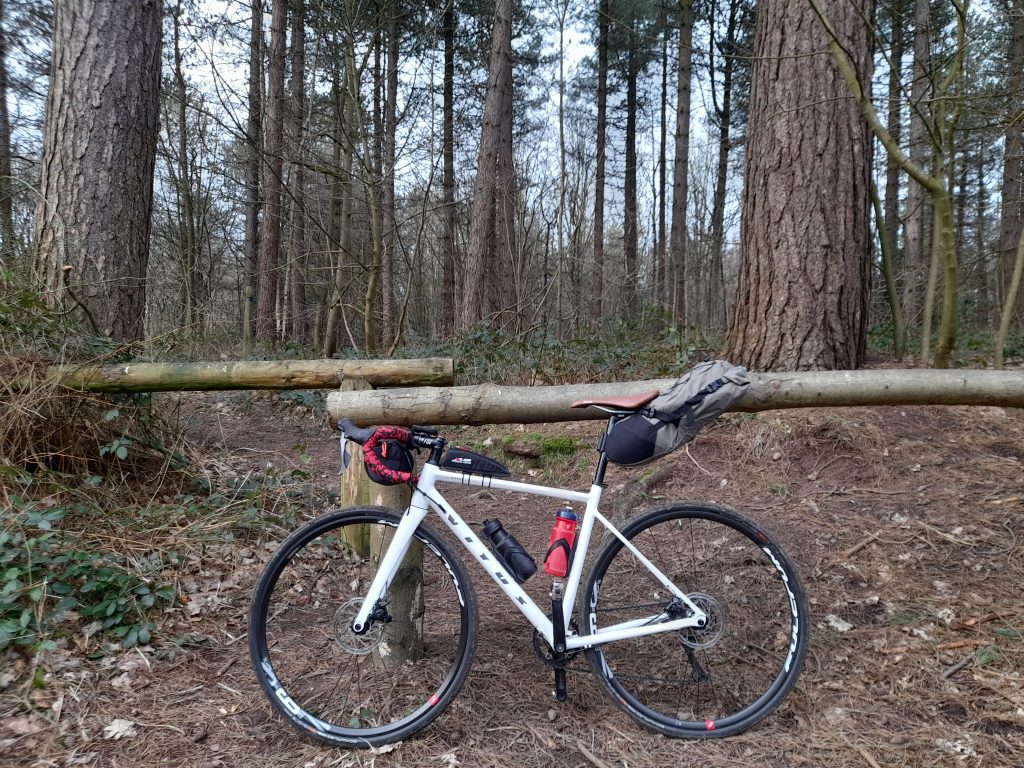
The chosen tool was not based on suitability but simply the bike I ride in winter to save my more expensive steeds from the punishment of a British winter. The main downside of this is a bike fitted with road tyres, albeit 35mm maxing out the road orientated frame form the bargain end of the Vitus range.

So with Travelodge hotels booked I have one duty to perform before setting off. That was to visit my father and wish him happy birthday also on what was his 87th such occasion. This is where the problems started, with winter bike packed and the roads dry I decided to pop up to see father on the recently refurbished ‘best bike.’ On the way back and almost home out popped another cyclist from a side path, with quick thinking I managed to dodge a head-on but not enough to stop a shoulder bump that sent us both flying. Now, I’m not going to get into the blame game but if you’re pulling out into a road check both ways. I was just giving a pedestrian a wide birth as there is no footpath on this particular stretch. This positioned me more to the right than I would normally have been and into the path of the other party to the crash. Anyhow, no injuries were evident, only a scratched derailleur but that still pained me as I like things to be perfect.

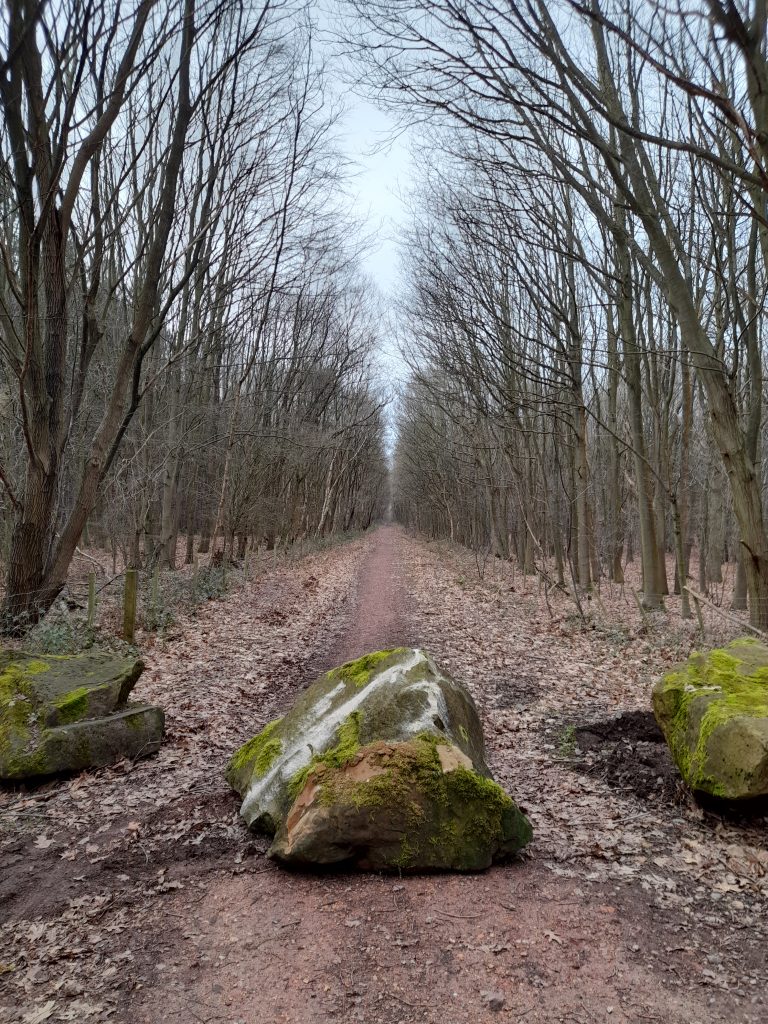
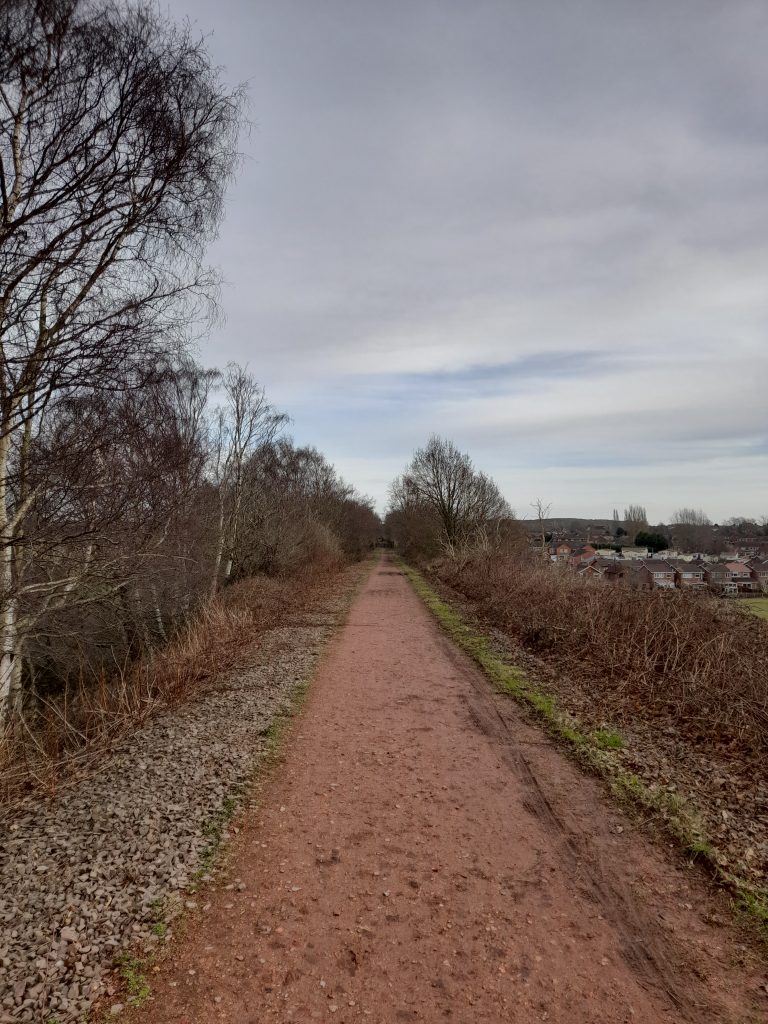
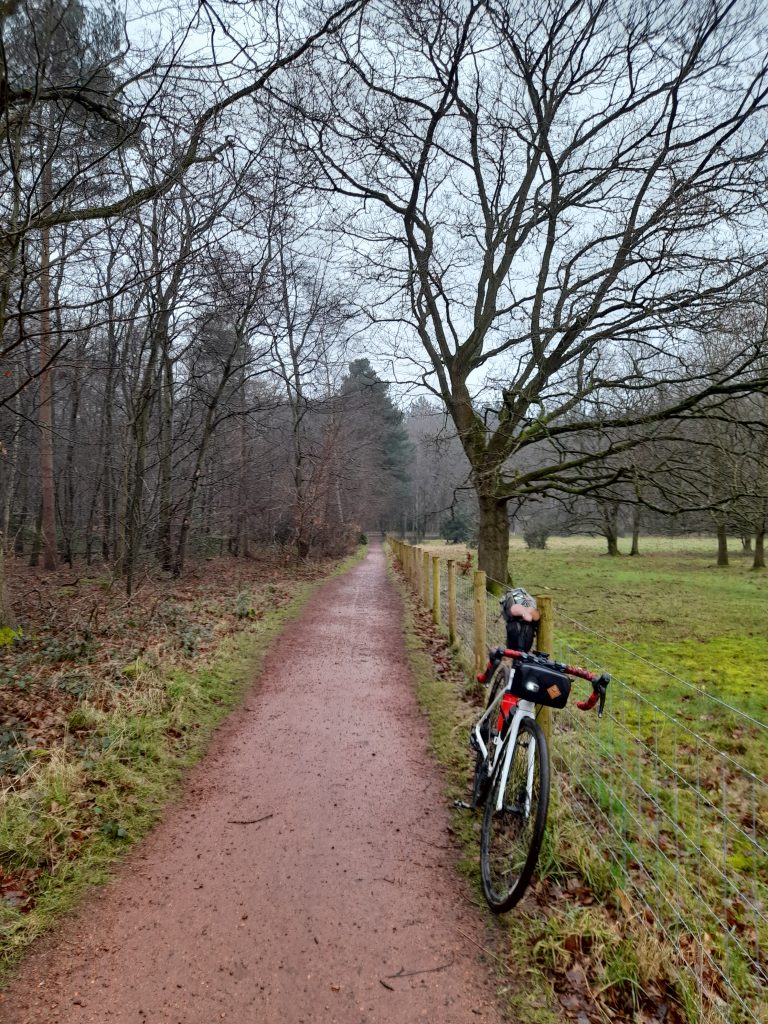
Day 1: So on a slightly downbeat note I set off on the first leg. As soon as I left the main road and made my way across Papplewick Moor the feelings of angst melted away, there’s always a joy about setting off wondering what the journey would bring. my first goal was to reach the Daffodil Tearooms for a refuel. The route there was via Blidworth then joining National Cycle Network (NCN) Route 6 followed by NCN 645. This is a course made up made up mainly of disused railway lines, the latter with a distinctive crushed red brick and perfect for fast gravel riding and good drainage in winter. At the end of NCN 645 a short road section from Bilsthorpe to Eakring saw me arrive at my halfway destination and a warm welcome. There’s one thing about being born and bred in the town of Hucknall, wherever you travel you’re bound to meet someone else from Hucknall. Whether in Spain, at an M25 service station or a village in a remote part of the UK I have often had a conversation that turns out to be with someone from Hucknall. We’re a bit like the Irish, there’s some of us in every corner of the globe. OK, I’m milking this one, it’s only 25 km from home.
Anyhow, today was no exception and the delightful member of staff (from Hucknall) chatted with me about our shared knowledge of the home town and how the tearooms were popular with cyclists, including large club groups (large groups please phone ahead). I can see why the location is popular and went on my way refreshed with food and faith in mankind. I do recommend this as a stop-off for any cycling tour of Nottinghamshire. Not only is the food good but the location is very nice and conveniently placed close to the National Cycle Network as well as surrounded by quiet lanes.

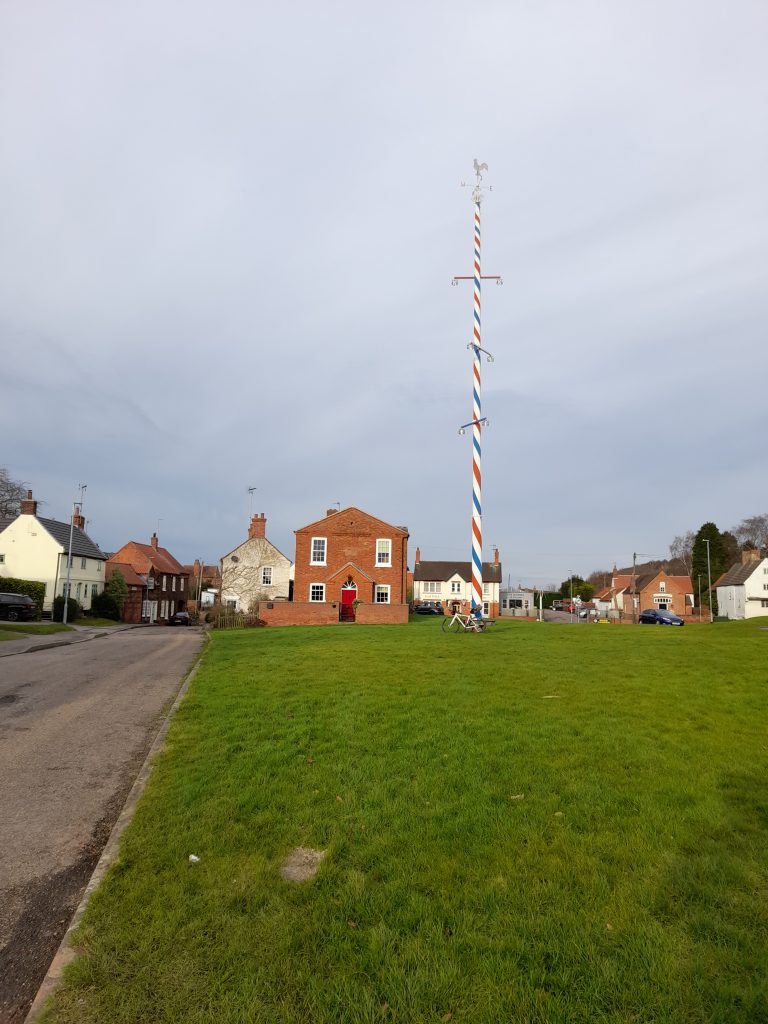
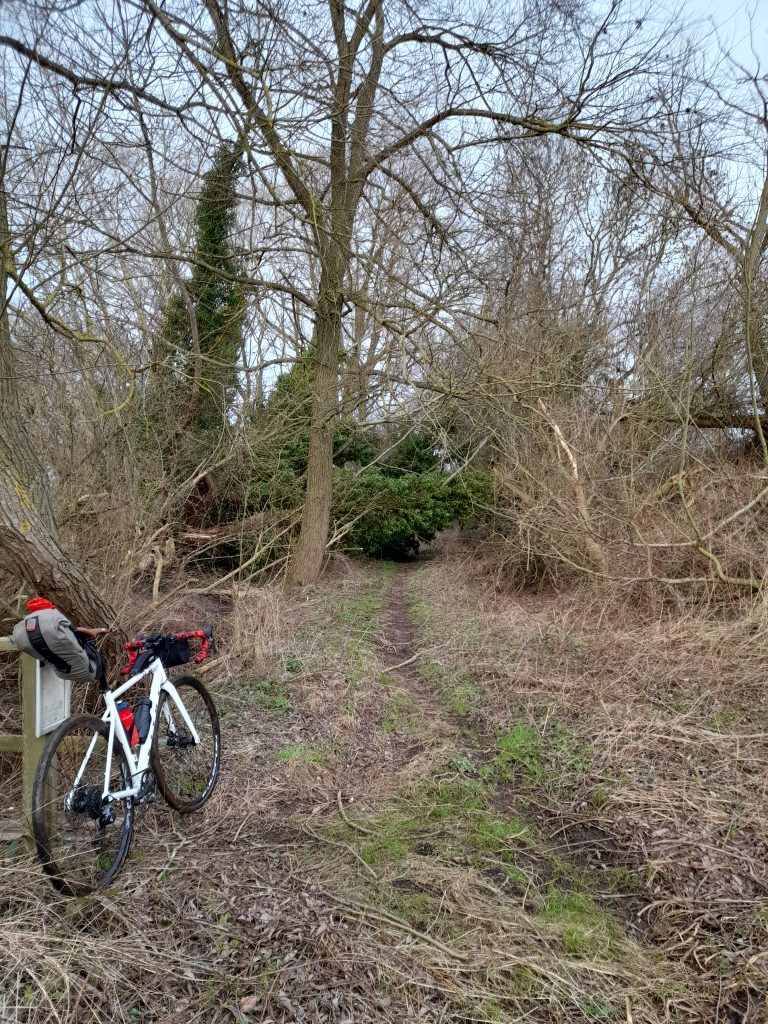
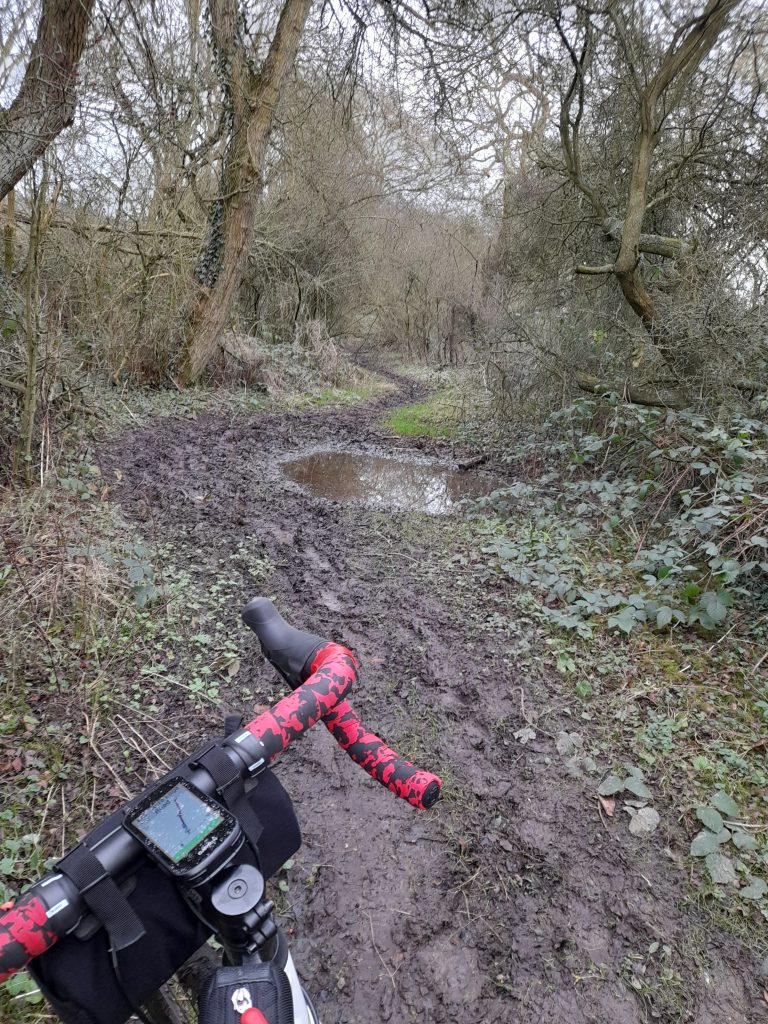
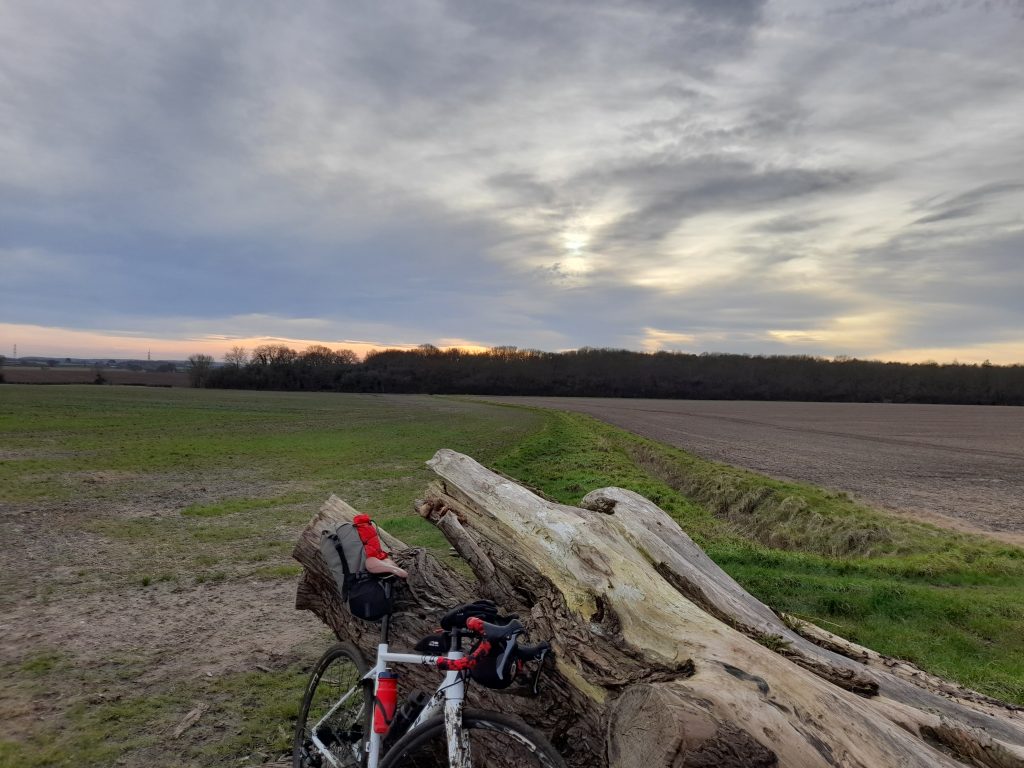
The second stage of my journey also seemed to be going well as I progressed toward the delightful village of Wellow with its tall maypole. This must be one of the tallest maypoles in the country. Passing the village green that is so typically English I took a right onto the main road before locating the intended bridlepath. This is where the route went a little off message. It was obvious from the moment that I turned into the bridleway, just east of Wellow that this was going to be a challenge. The fallen tree across the path was a fair indication of that. Having hauled my fully laden bike around the tree things started to get boggy, and then things became a little boggier. There was hope a gate followed by a gravel farm track. A few hundred meters that allowed me to remount and ride for a short while. But that did not last and having resorted to pushing once again even that became impossible. I had to fight with the stickiest of sticky mud on sticky mud lane, you get my point. Mud was jammed between fork crown and tyre, chain stay and tyre. I guess there was over one kilometre of pushing and lifting and unblocking before I finally emerged on a lane just west of the National holocaust Museum. Where I rested my bike on the truck of a fallen tree.

After a clearing off excess mud, by this time the bike was more muddy brown than white and eating a energy bar I set off on the final leg that thankfully was quiet tarmac lanes towards the Travelodge at Markham Moor. The relative ease of perambulation with a brisk tailwind was appreciated to the extent of cycling bliss. I now had a concern that the hotel would not allow such a dirty bike into the room so after surveying the petrol station opposite managed to employ their screen wash dispenser to clear away the worst of the mud.

The tidy standard room of a Travelodge, shower, enjoyable meal at the Eastern Dreamz restaurant and a good nights sleep prepared me for Day 2.

Day 2: Leaving the Travelodge on Day 2 I was greeted with a damp day. There was no rush, I had a very easy day planned reserving energy for a night out with friends in Worksop. I did however have the goal of visiting the new footbridge at Hardwick village before exploring Clumber Park.
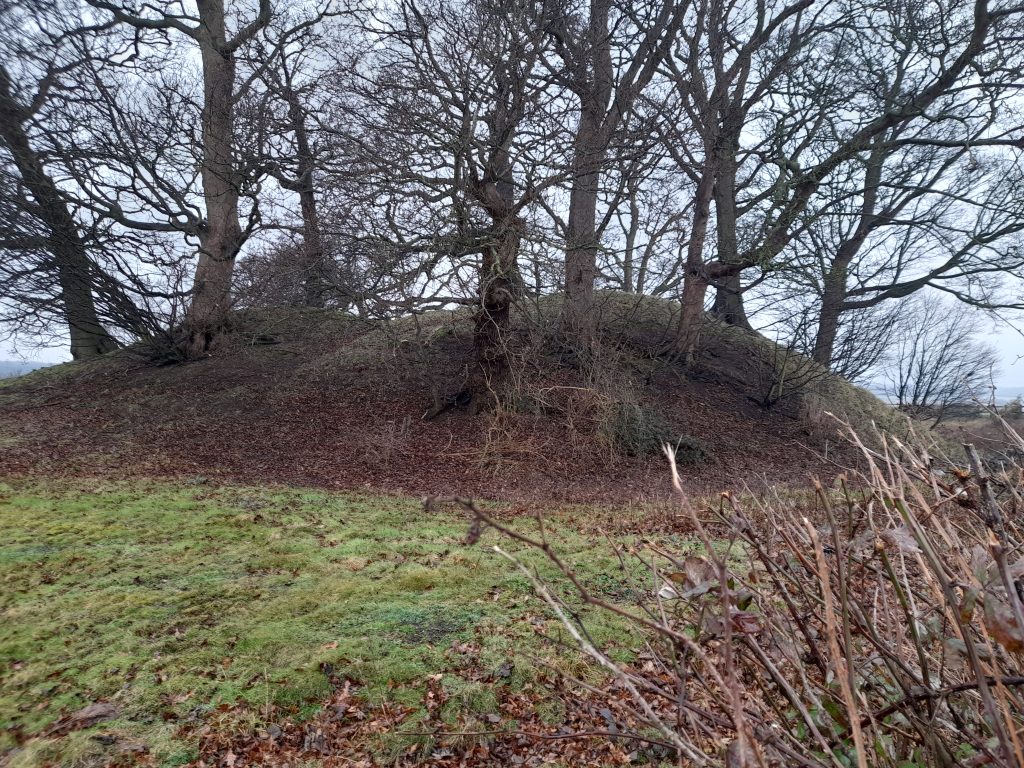
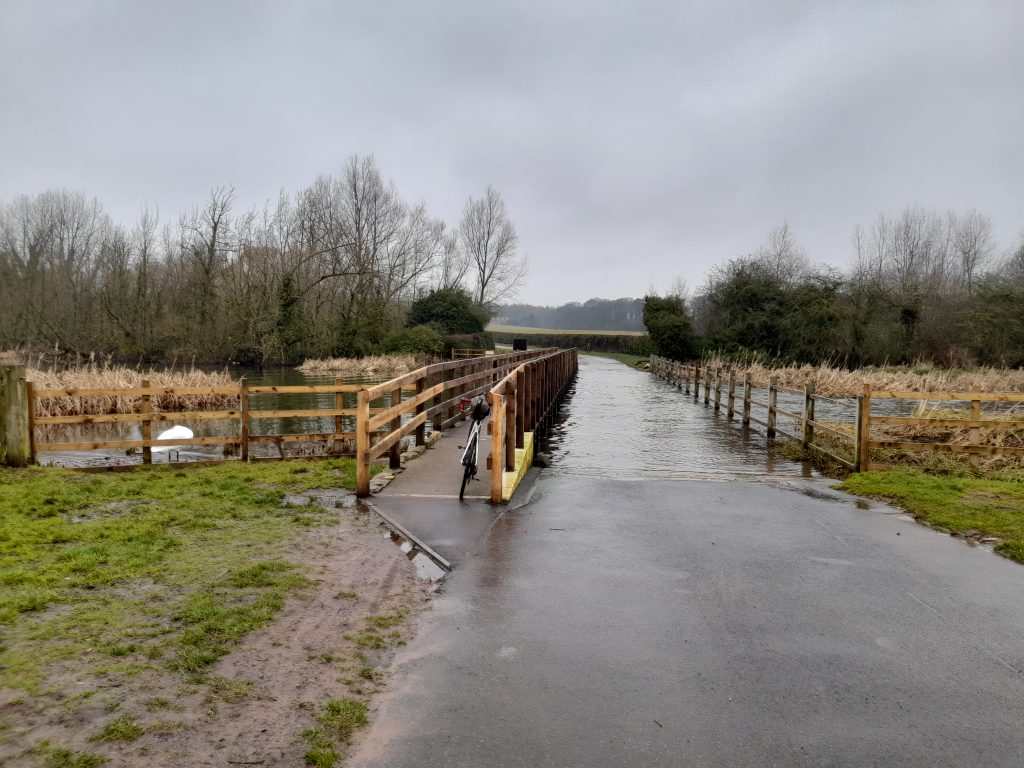
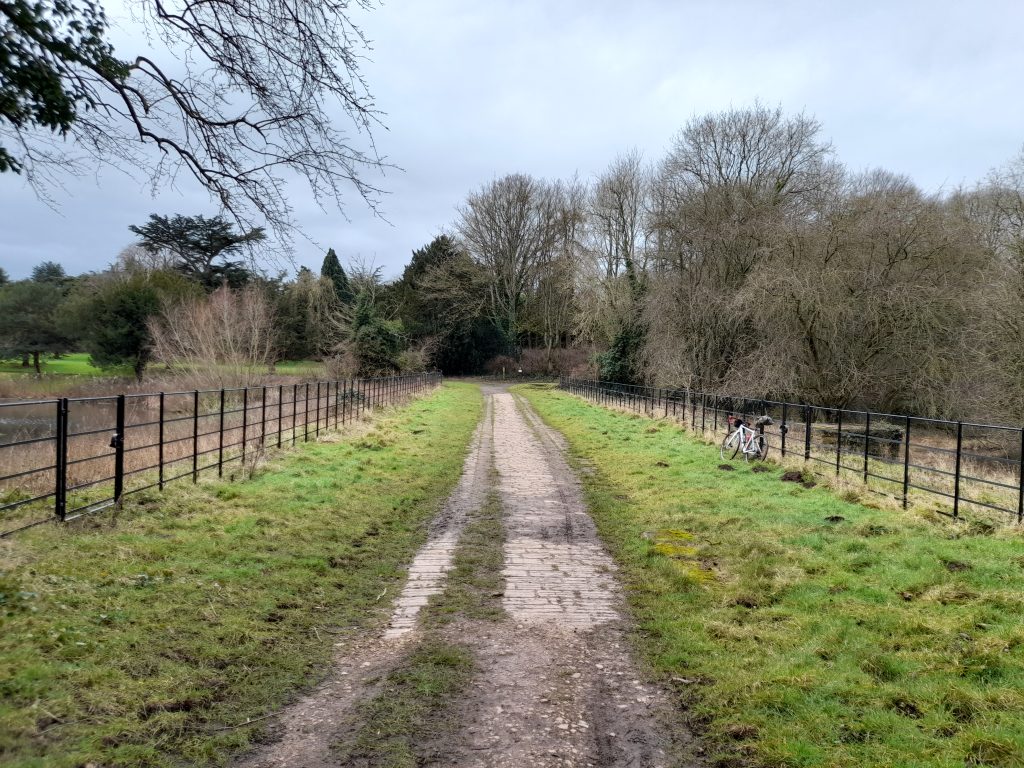
The first section was via quiet lanes through Milton and the old road of the now demolished Bevercotes Colliery. After a few miles I arrived in Bothamsall and a stop to view Castle Hill, the remains of a Norman earth and timber works fortress. The ride from Bothamsall is also a quiet affair that emerges on the A614 Blyth Road where it is possible to cross directly onto a pleasant track that brings the cyclist or walker onto the road into Hardwick Village. Harwick is a residential village built to serve the workers of Clumber Park and established in the nineteenth century. The point of interest for me was the recently reconstructed bridge over the River Poulter. The last time I had crossed the old bridge was at least 10 years ago or longer. I recall being mesmerised watching a pike directly under the bridge. Since reconstruction much of the reed cover has been cleared leaving less cover for fish so this time the bridge felt more clinical but of course safer.

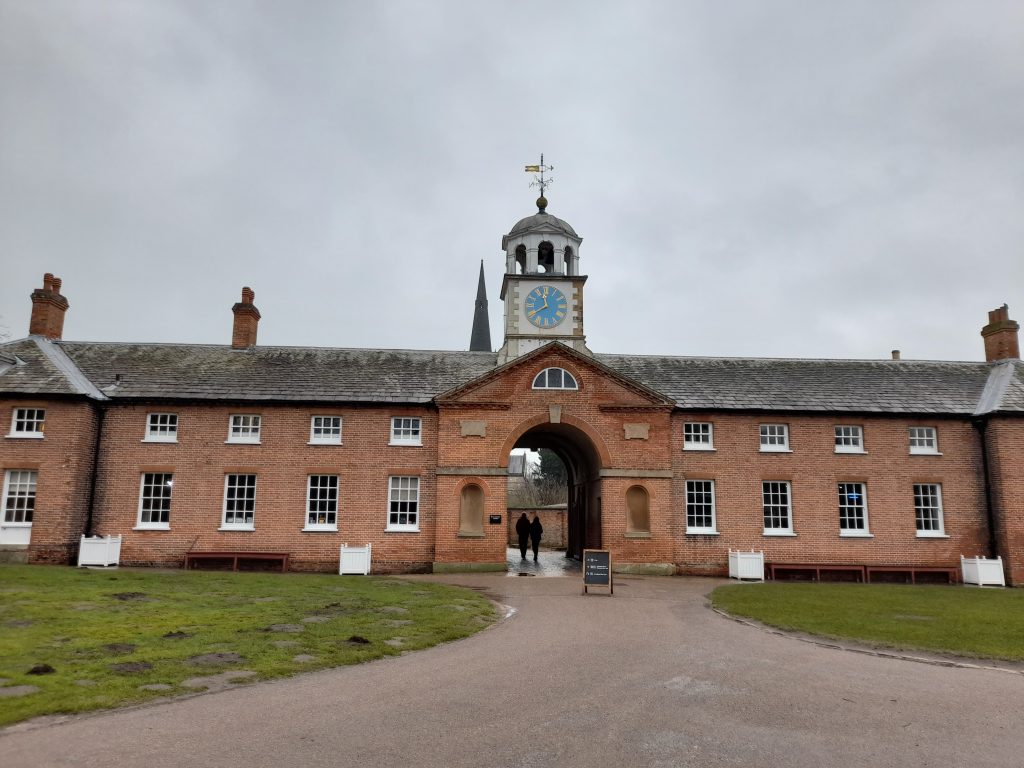
Clumber Park was established as the country estate of the Duke of Newcastle although the house itself was demolished in 1938. There remains the most incredible church that gives an indication of the wealth of the family, along with stable blocks and other buildings that now serve as visitor facilities. A born & bred socialist I’m always torn by the incredible inequity of such grand places whilst at the same time marvel at the architecture. Having such a grand church that could pass as a cathedral is a clear nod to the feudal system. It’s possible to spend hours in Clumber, now owned by the National trust. Although it can be busy on sunny summer weekends there are plenty of trails for the gravel biker to get lost in. So, after some lunch at the cafe and plenty of meandering I headed away from the park towards my destination in Worksop. NCN 6 takes one directly out of the park and into Worksop.

Worksop is a significant town with plenty of shops. It’s clearly still suffering from the economic and social impact of colliery closures and more recently the closure of the Wilko’s distribution centre that employed some 260 staff. I understand that there are plans to regenerate the town centre . The town, has rich heritage being the location of Worksop Manor, prison to Mary Queen of Scots. It was an important point on the Chesterfield Canal, it has rail connections to Sheffield and Nottingham. A proud mining district it now serves as a distribution centre due to its central location and the excellent rail and road connections.

And so, after relaxing in the Worksop Travelodge, a wash and brush-up I was ready to meet my friends from the north (Notts) for a curry and a pint. Even better that there was a surprise visit from a cycling mate of many decades who had travelled all the 65 miles from Lichfield to join us. I think I could write a whole book on my adventures with ‘Mapo!’ The night was made even better by the typical things that happen in a pub. After been mistaken for Mark Strong, whom I’d never heard of until looking him up on the internet the scenario was milked for all it was worth in school boy fashion. I shall retain the policy of anonymity rendering you, the reader unable to make your own judgement on this one. I would however pay thanks to the friendly people of Worksop for providing a source of laughter.

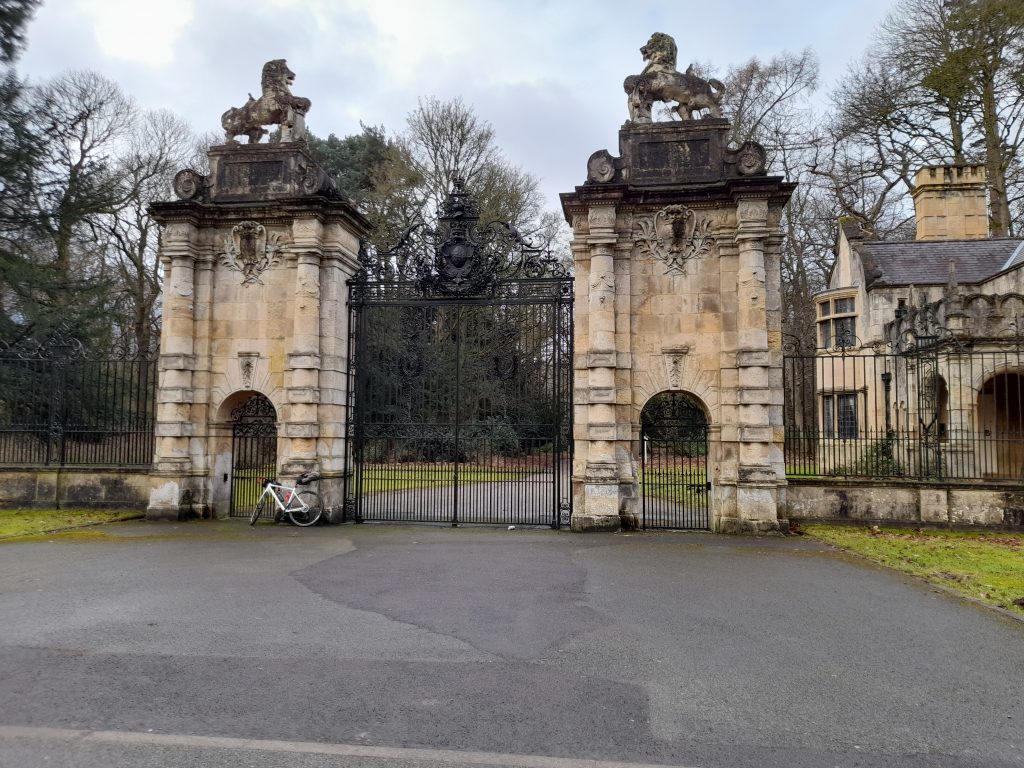
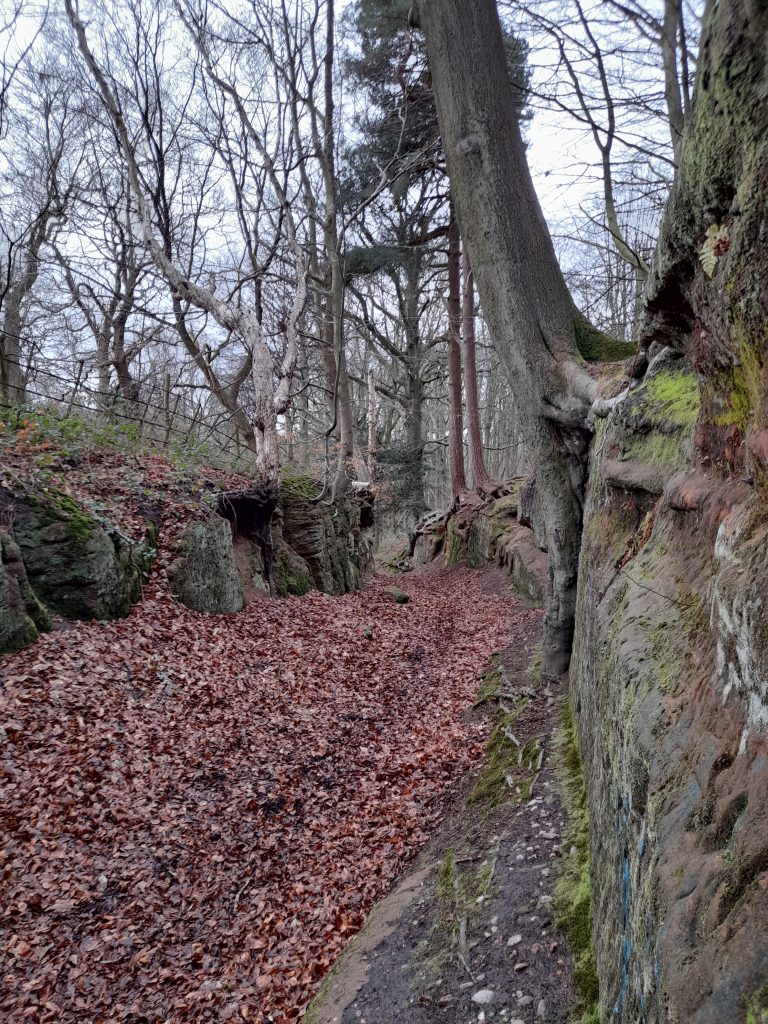
Day 3: The last and final day was back home to Hucknall from Worksop. It’s a route that I am mainly familiar with retracing my steps along route six and then heading east onto the outskirts of the Welbeck Estate. This is another grand estate that was the seat of the Duke of Portland. Unlike Clumber it remains in the private ownership of Welbeck Estates Limited and the residence of the Duke of Portland. This means that there is no public access beyond the established rights of way. Despite this denial of access to commoners the route through Welbeck that includes Drinking Pit lane is one of unquestionable fascination. It’s possible to imagine the countless travellers who have cut a path through the sandstone hollow. Many more have left their mark carved into the sandstone, something I would advise against. On this occasion the deep hollow was part filled with fallen leaves, protected from the elements by the steep sides and tree cover.

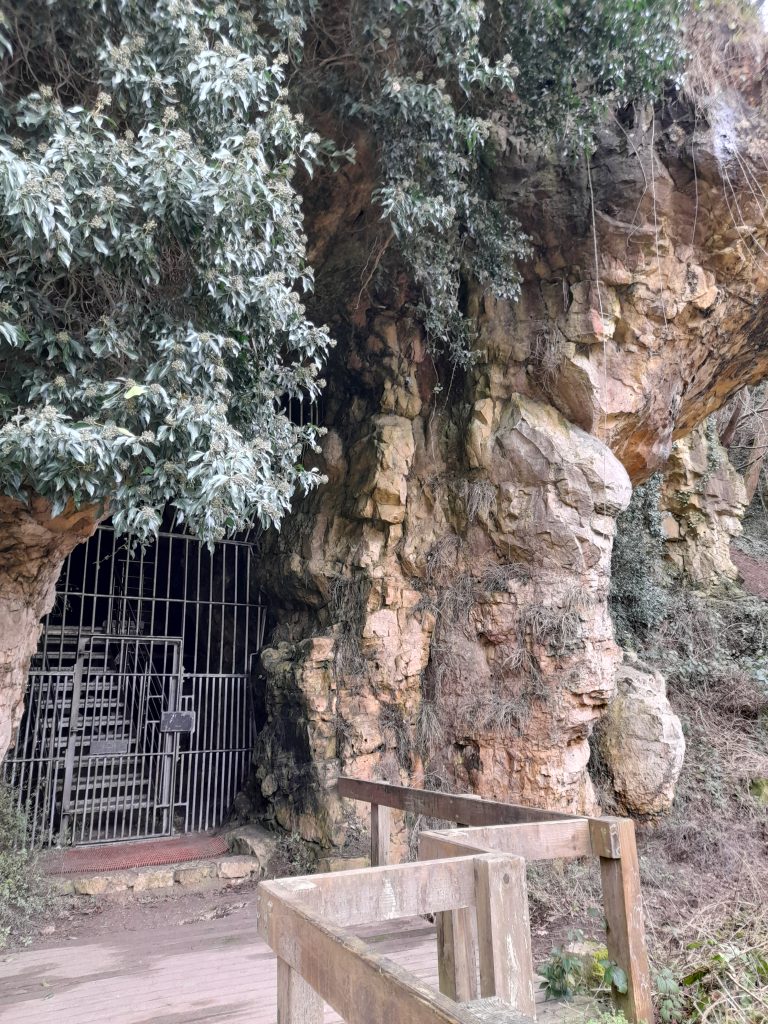
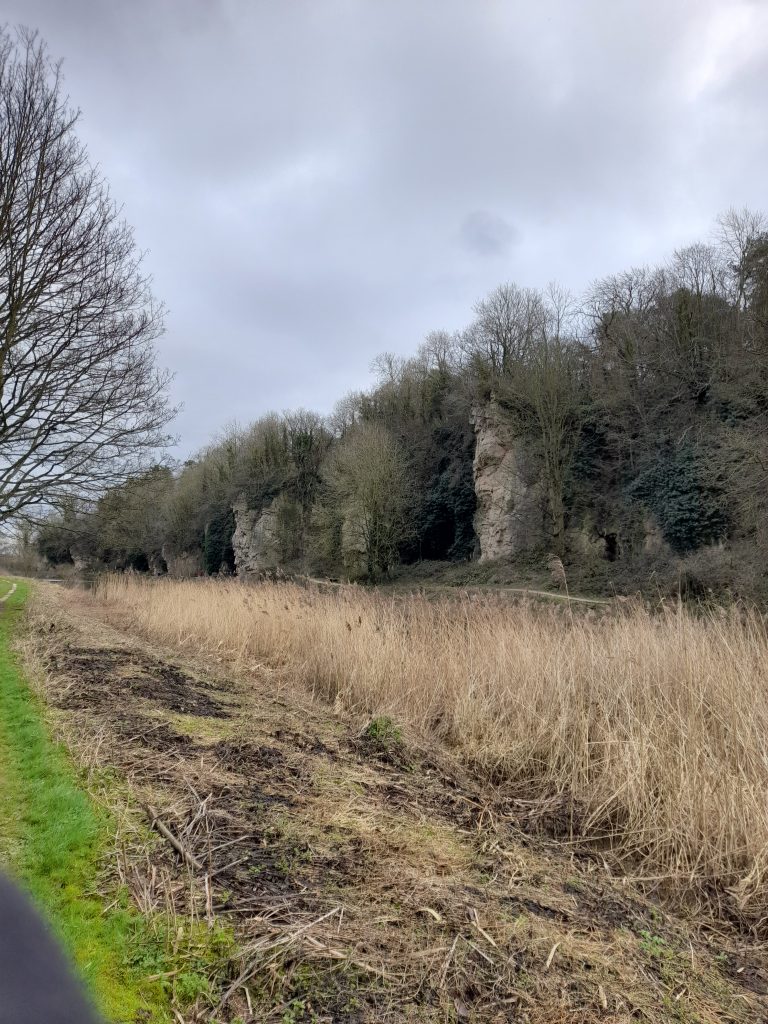
As though the route through Welbeck is not sufficiently enjoyable enough it then emerges onto the gravel track towards Creswell Crags. The caves there offer an insight into life 10,000 years ago. They offer educational tours and riding through I passed scores of school parties looking like mini Bob the Builders in the hi-viz jackets and yellow helmets. So ride through with respect for the many young and less able bodied visitor deserve.

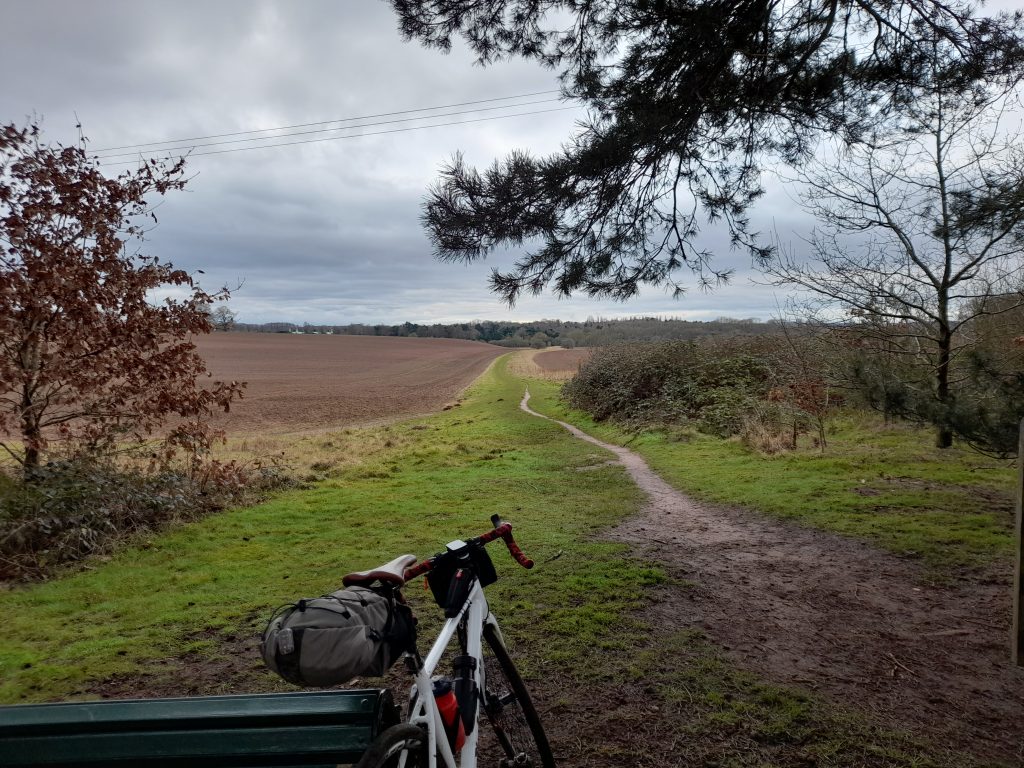
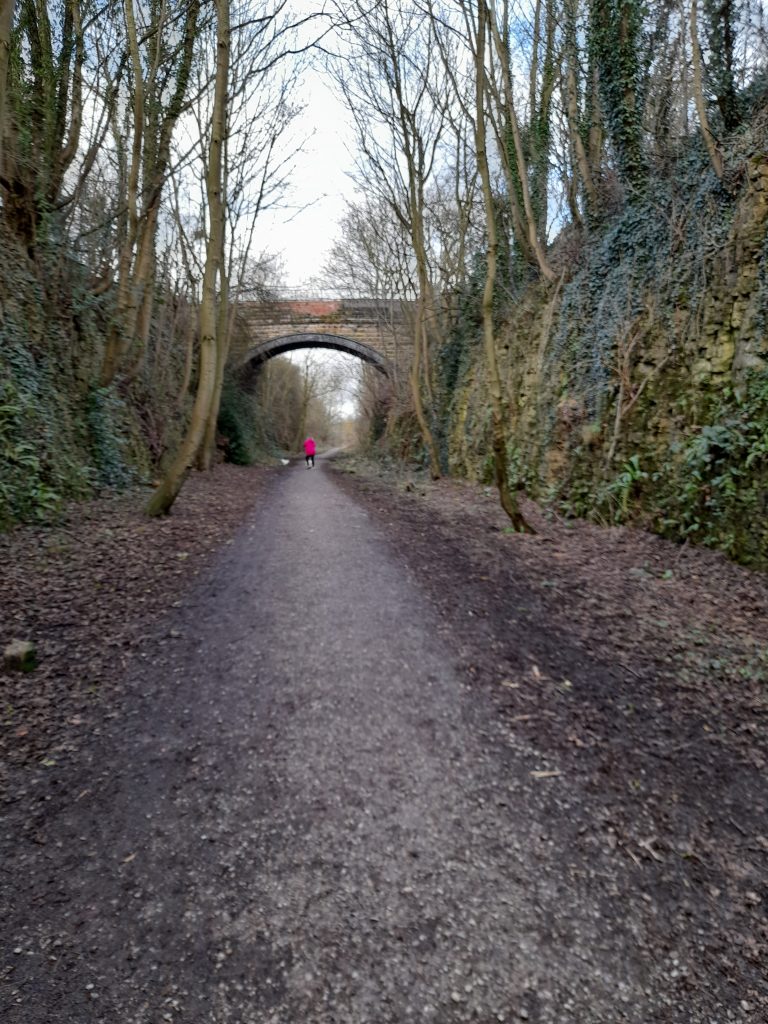
The final section of note, that I’ve not written about elsewhere is the track through Poulter Country Park. Part of the Archeological Way this section of the trail utilises the Park and an old railway line. Newley discovered to myself, after a shimmy across the lanes from the A616 the route is a great off road bypass of Langwith and towards Shirebrook. After that it was the usual route back home via the Parliament Oak and the outskirts of Mansfield.

In conclusion; I made a deal with myself to stop trying too hard once I reached 60 and enjoy life at a slower pace. The unexpected onset of a medical emergency made this less of a choice and more of a reality check. There is something beautiful in the ability to transport oneself many miles without the need to rely on artificial propulsion and with little environmental impact. I recall the actor Paul Eddington speaking at a time when he faced terminal illness. Paul said he would like to be thought of as someone who did very little harm (in a world where a lot of people do a great deal of harm). As cyclists we hopefully contribute very little harm whilst finding our paths to exploration and enrichment. If I can follow that path for the remainder of my active life then I shall be a happy man.

This tour was about making a milestone doing the thing that I love, sharing an evening with good people and not breaking records or pushing my old body to exhaustion. I look forward to the next decade of cycling.

Posted on

New year dead end, a story of the Nottingham Park Tunnel

New Year’s Day can be both an inspiration to make changes and plans for the forthcoming year as well as resolutions that are likely never to be kept. I like to think of it as an opportunity for hope and reflection and the best way for me to achieve this is to go on a bike ride. I expect you thought that might be my conclusion.

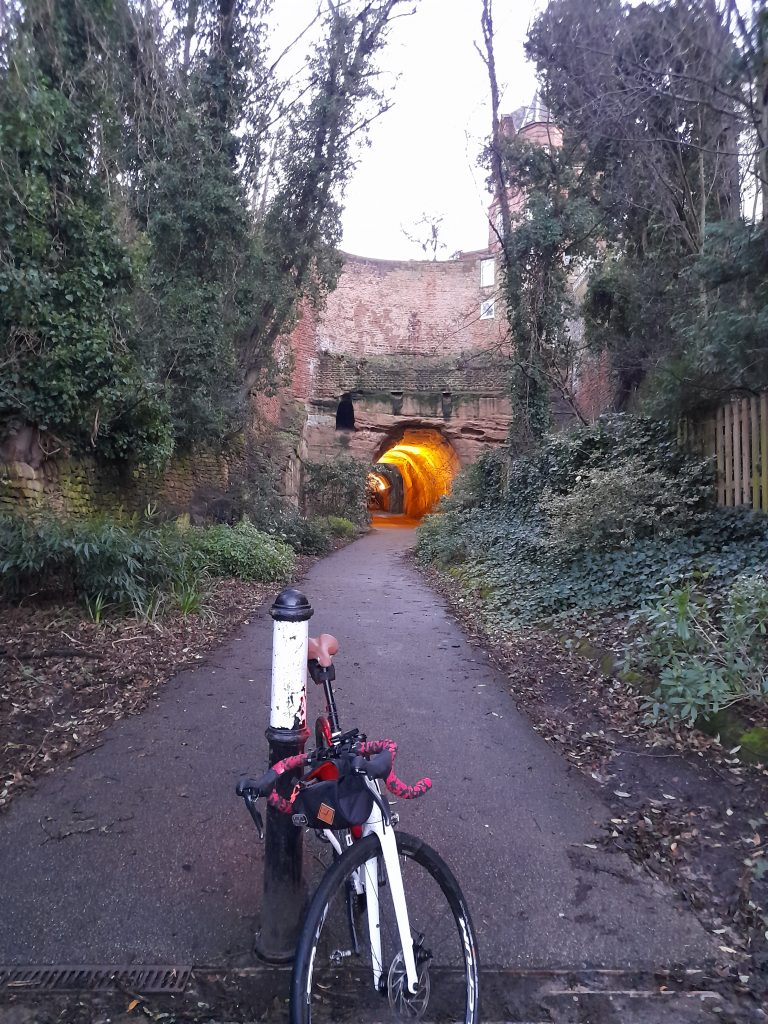
One of the enjoyable things to do on a New Year’s Day bike ride is go somewhere you wouldn’t normally. This year I decided to ride through the city of Nottingham whilst it was dead to traffic and the only people I came across during the first hour of my 07.30 start were the people who had not yet managed to make it home from their late night revelry. The Gravel Notts Route 7 (GRN7) already has a well worked out route through the city that takes advantage of as many gravel tracks and traffic free options as possible. Today I decided to utilise part of that route, National Cycle Network 6 and return along the river Leen Greenway. However, I had a different goal to that of GNR7. My goal was to visit and photograph the Nottingham Park Tunnel.

The Park is a rather upmarket semi private residential area just off the city centre. The wealth there is obvious even today with grand houses all around and the Nottingham Castle Tennis Club at its core. Sitting high above The Park stands Nottingham Castle on its sandstone plinth. There are various entrances with large wooden gates denoting that this is a special place reserved for those of a certain station in life.

Anyhow, enough of the working class chip on my shoulder, no doubt the Duke of Newcastle was an honest guy who accumulated his great wealth and assets through endeavour, oh and a family peerage that dates back to their support of the loyalist cause. As well as owning the Park the Duke once owned Clumber to the north of the county, featured in the Gravel Notts routes.

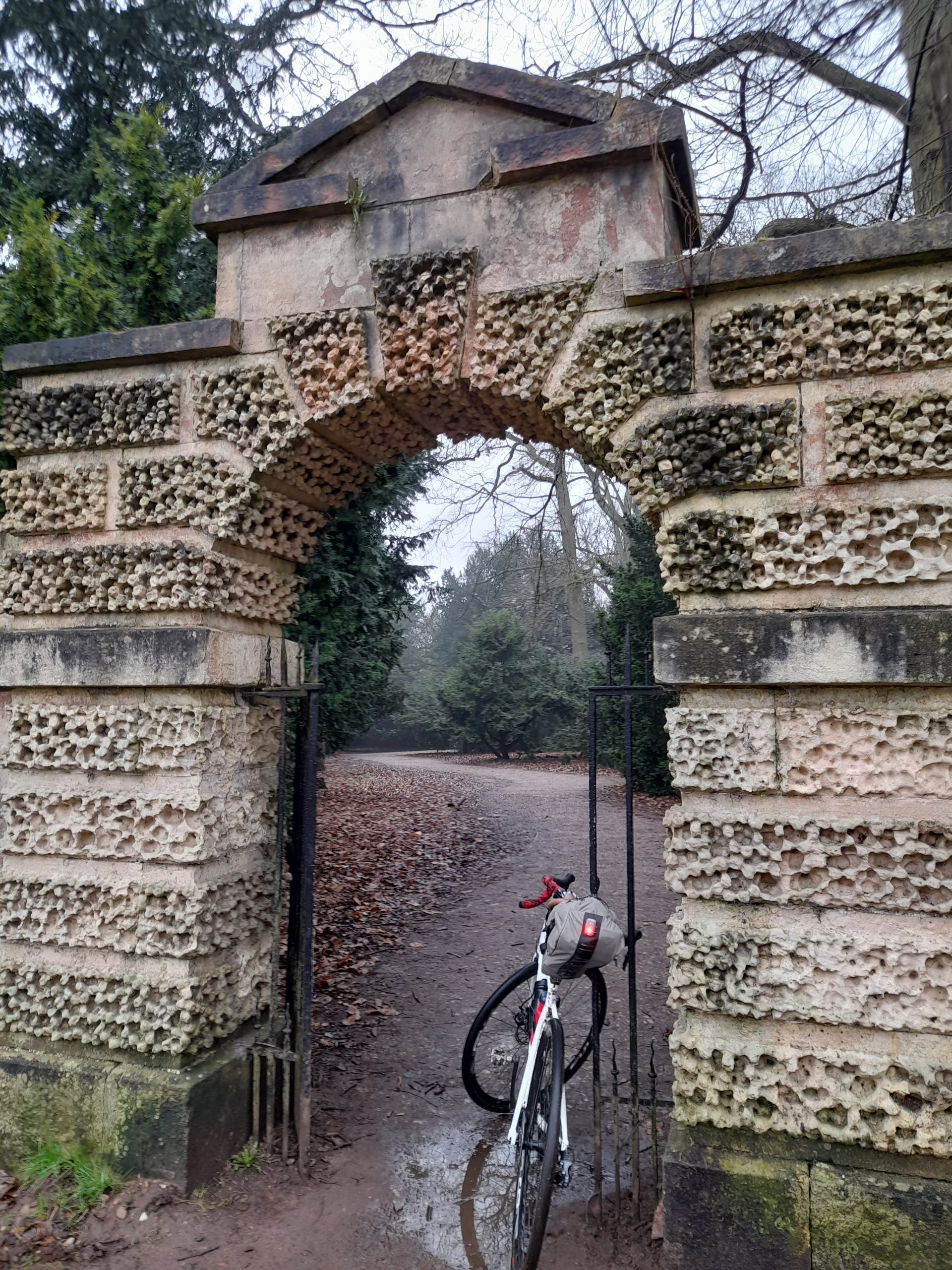
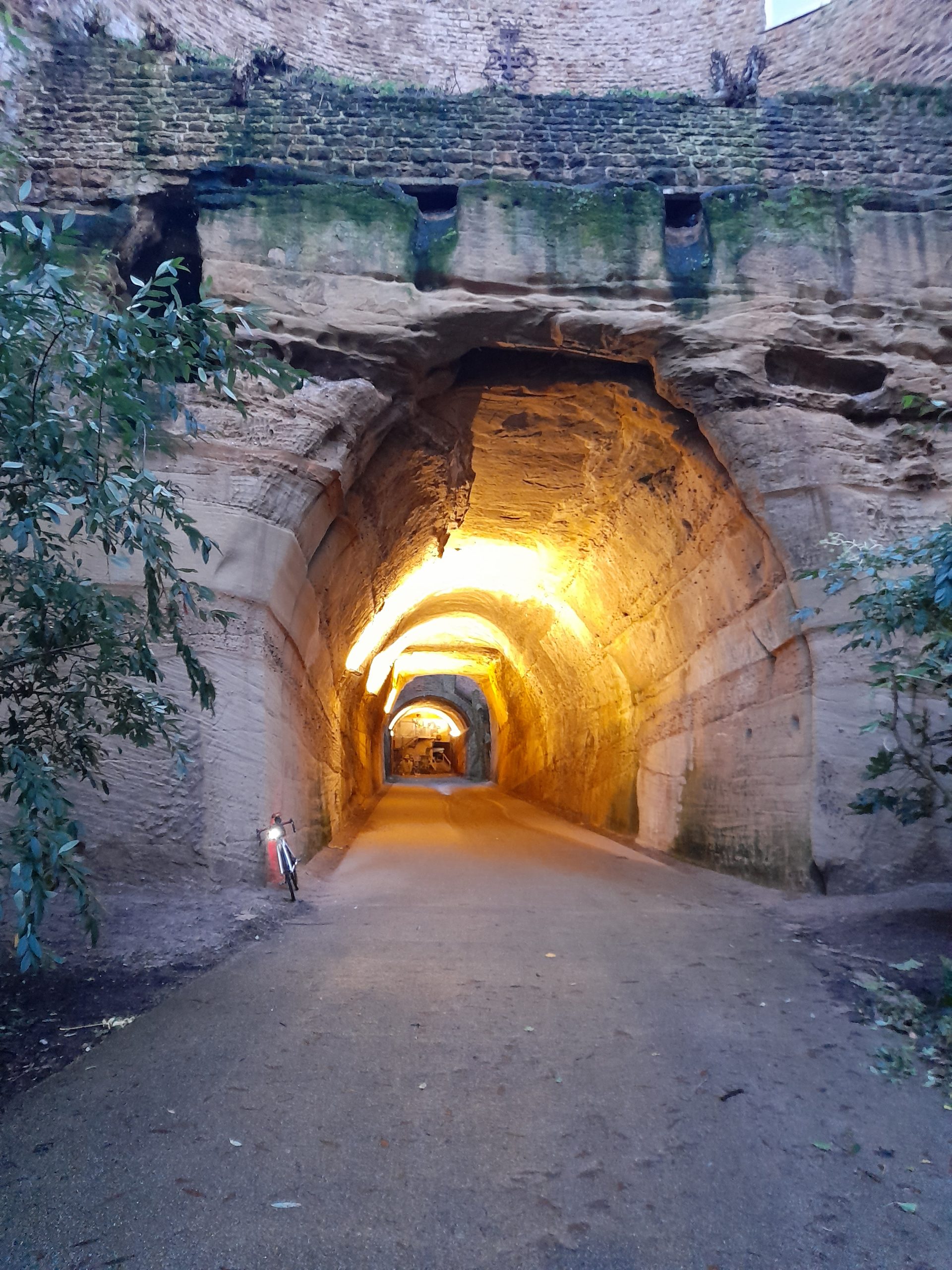
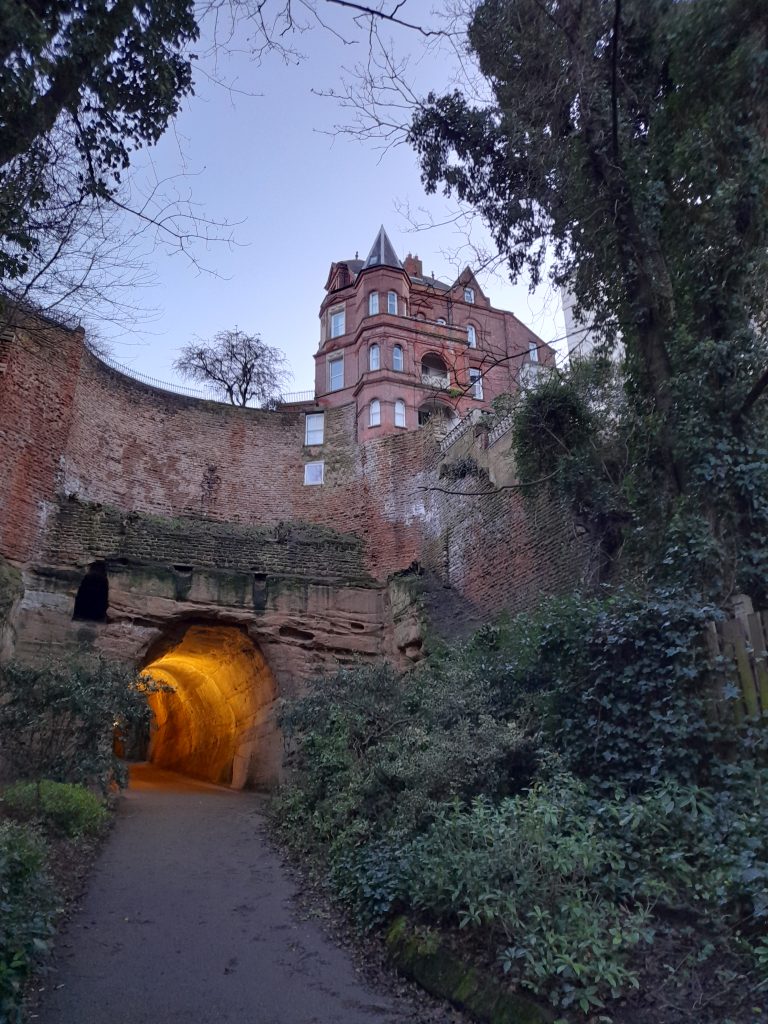
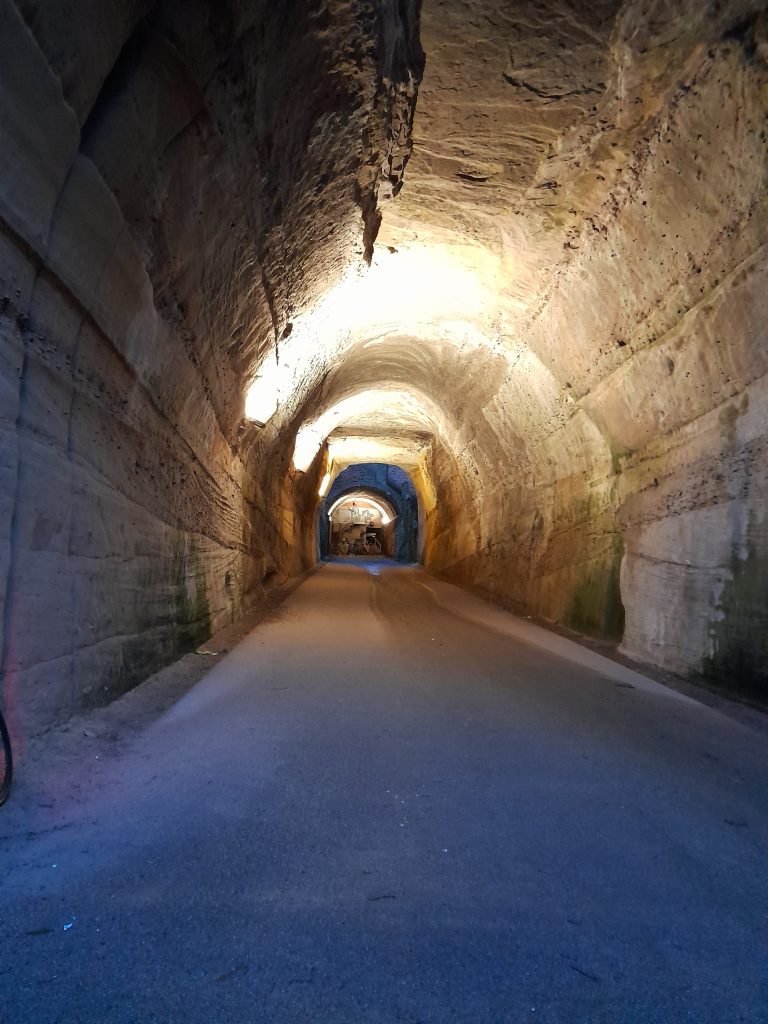
It was the then Duke of Newcastle who commissioned the tunnel as a spectacular entrance the Park in 1885. The idea being to provide access to horse drawn carriages. The project was an engineering disaster with the eventual gradient being too steep for its intended transportation. So, we are left with a piece of abandoned engineering. Two stretches of tunnel unsupported through the sandstone with an open air section in the middle. After entering the tunnel from Tunnel Road you reach a dead end to traffic and an impressive stone staircase that winds its way up onto Derby Road.

The structure is just one of the unusual and interesting things that I shall write about in a Gravel Notts publication (hopefully) later this year. It’s another reminder of the geological history of our fine city and well worth exploring although it is literally a road to nowhere.

Sources of information various public.

Posted on

Boxing Day Byways

Boxing Day is a traditional English bank holiday that sees a full sporting calendar and people walking off overindulgence from the day before. Its origins are more philanthropic, a day for giving to those less fortunate than one’s self. I tend to view Boxing Day as a time to give back to my soul and replenish wellbeing with a good dose of cycling and being out in nature.

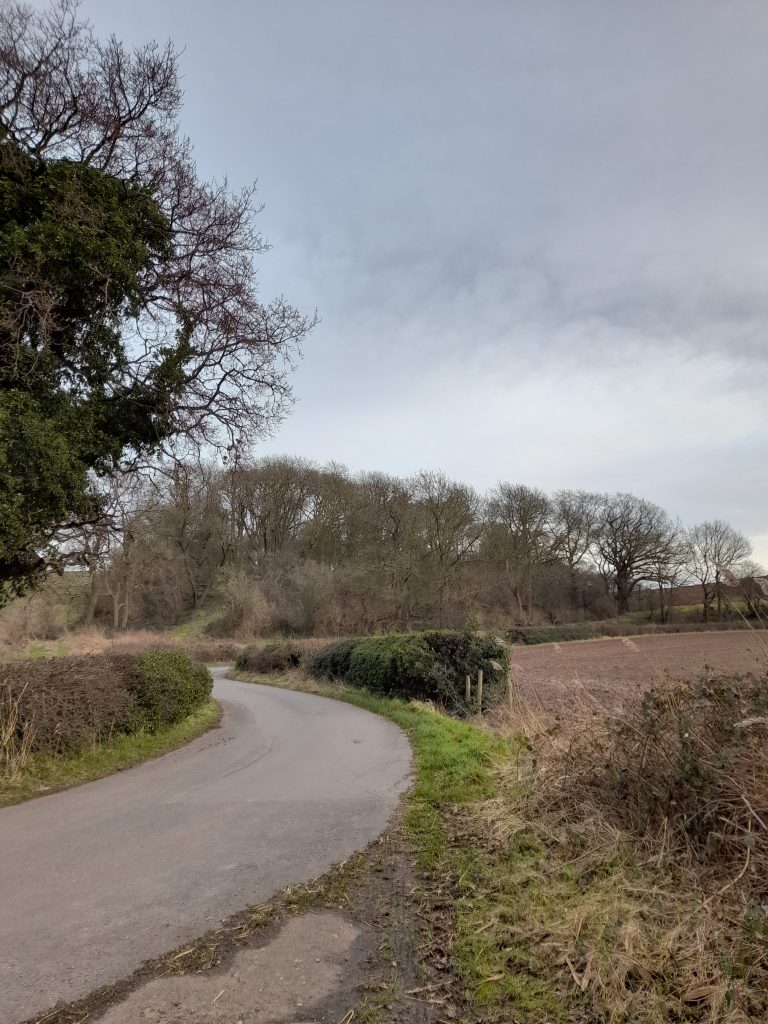
This year, on a bright clear morning I decided to explore a byway that I’ve not ridden before. Surprising because Carvers Hollow is not far from where I live, about 20km away in fact. It does not feature on the Gravel Notts routes simply because it’s not really on a route to anywhere. So, having designed a ride around Cavers Hollow, the adjoining Newhall Lane and interestingly named Cutlersforth I set out early with my leftover vegetarian roast and stuffing sandwich, along with a flask of coffee.

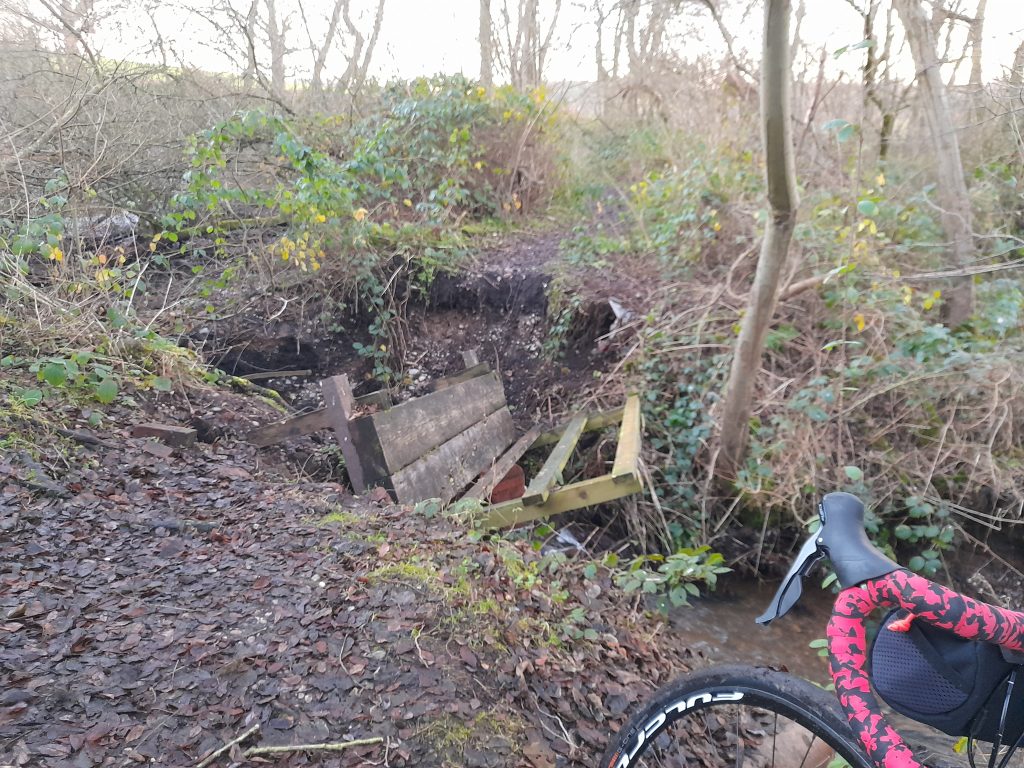
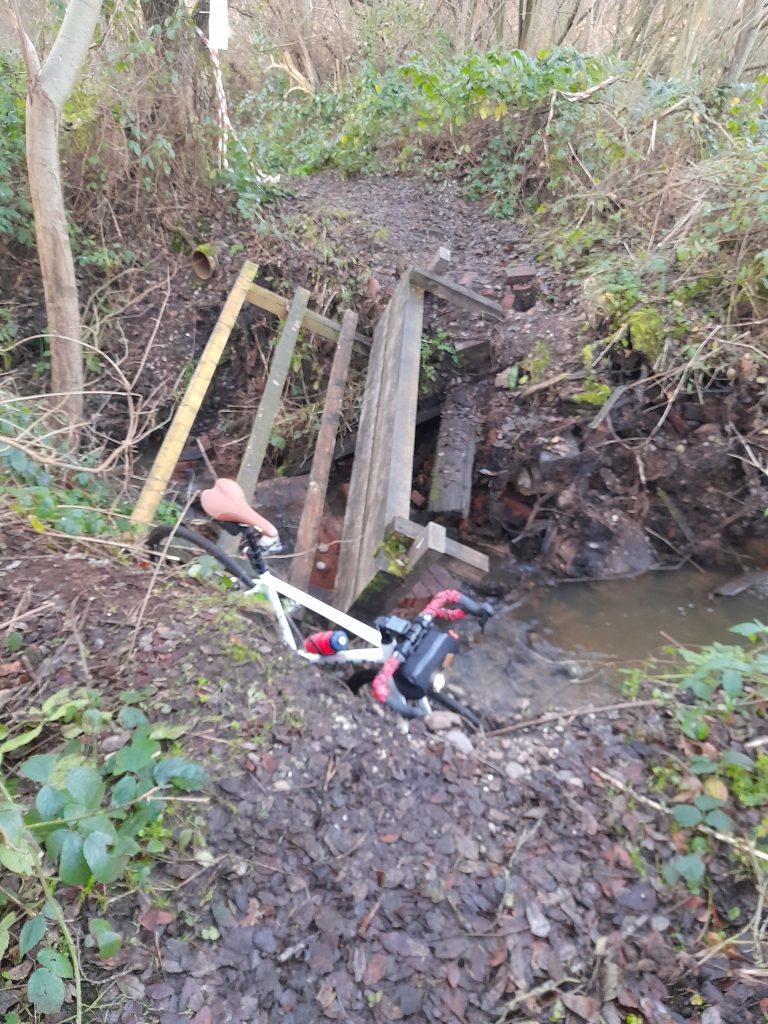
Making my way out of the home town, across Papplewick Moor and through Samsom Wood I decided to try a new footpath linking two main roads to avoid the traffic. That was the real start of my adventure. Having crossed a field into the nearby coppice I was in for a surprise. Within this small patch of trees runs a stream that feeds Beanford Ford. The narrow wooden bridge across the stream had been partially washed away during recent floods forcing a precarious crossing of man and bike.

Having made my way over the stream hauling my heavy winter bike down and out of the obstacle I continued out of the wood and along a delightful track to the main road. The main road was thankfully deserted this early on a bank holiday.

After a short stretch of A road, I took a right into Greaves Lane and climbed the 10% hill before descending in the direction of Edingley village for about two kilometres. A sharp right took me away from the village and my exploration of Carvers Hollow began with a sharp climb maxing out at about 15%. Not much in the way of things but my winter bike only sports an 8 speed 38/28 so I was working by the top of the climb.

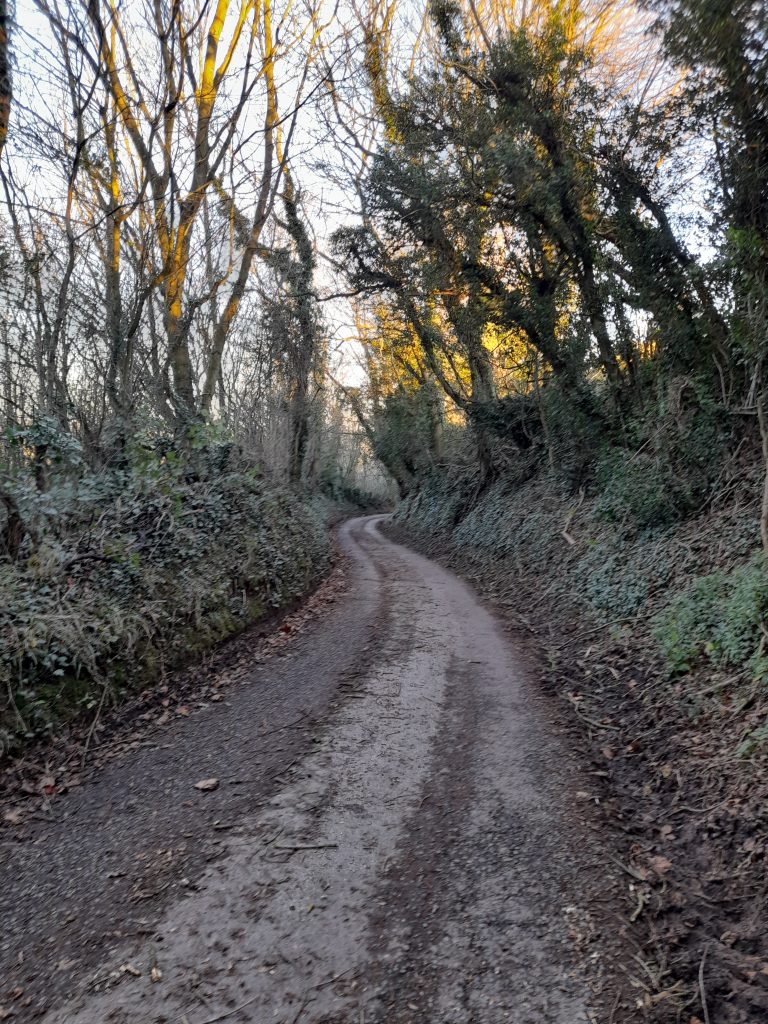
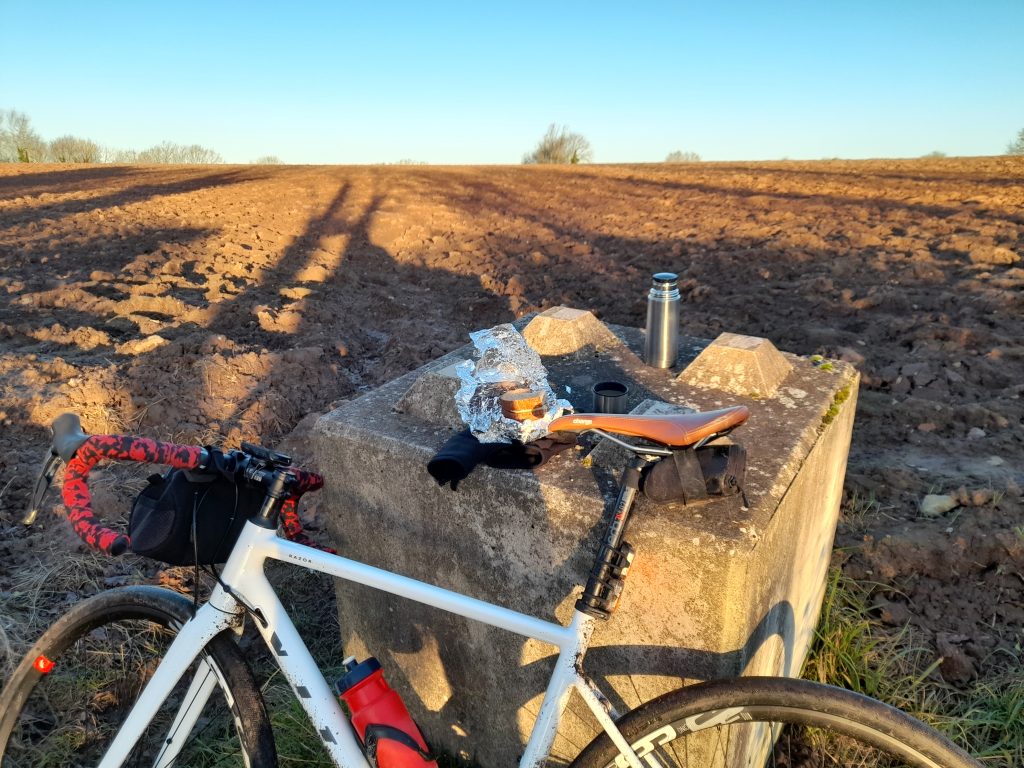
The semi-tarmac Carvers Hollow was smooth in comparison to the unnamed byway taken to the left and towards Newhall Lane. At the summit there was a convenient concrete block that served as a table for my sandwich break. Continuing on Newhall Lane offered a similar surface with the occasional deep puddle to ensure our washing machine would be pressed into service upon my return home.

Turning into Cutlersforth I eventually emerged north of Halam village before the climb to Oxton Bank and a fast descent towards more familiar roads and home.

All in all, this was a satisfying adventure that gave more than expected for a short ride of less than 40km. Back home to a shower, rolled eyes from the wife and an afternoon of more Christmas leftovers.

Posted on

Shirebrook or bust

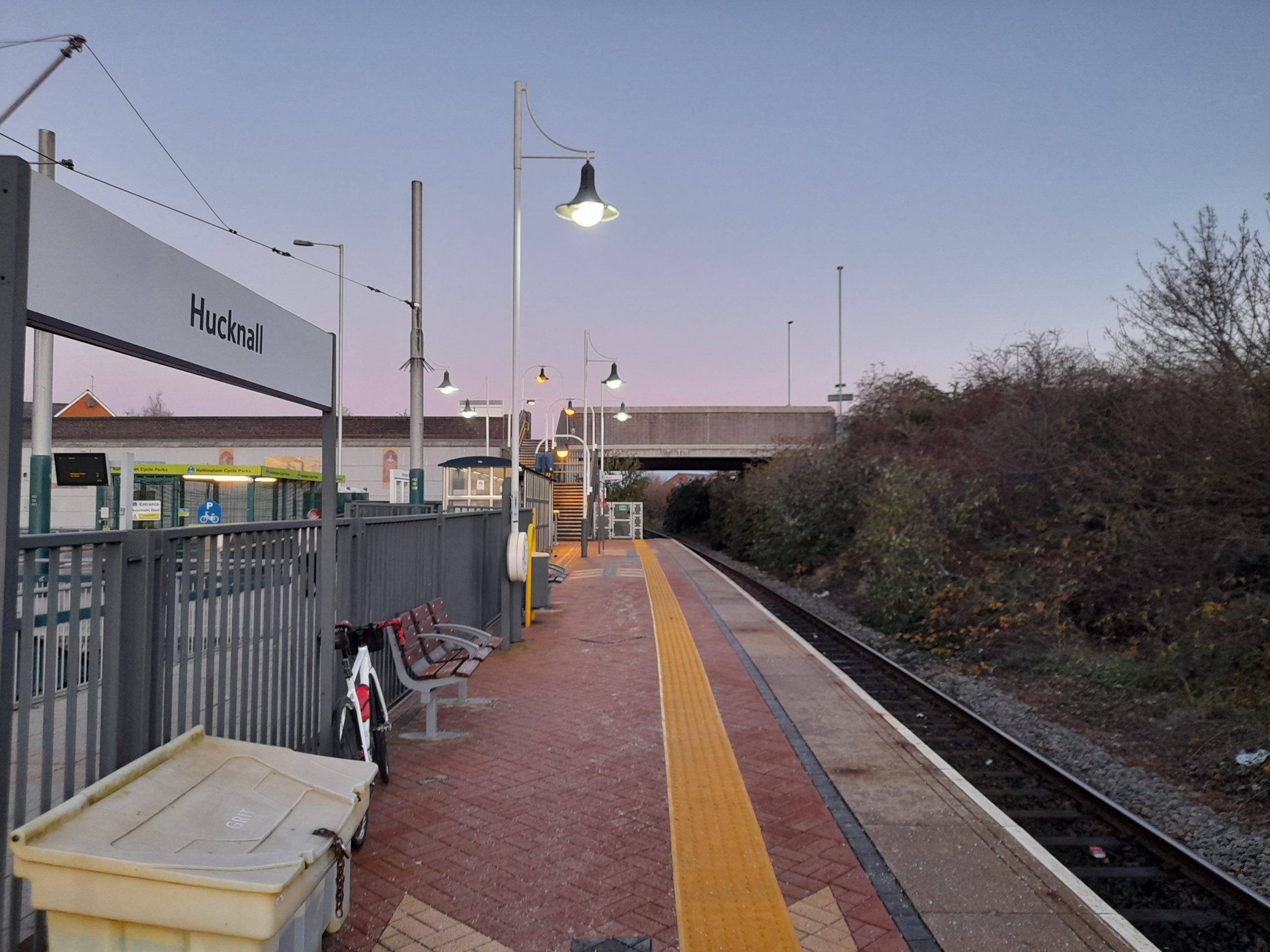
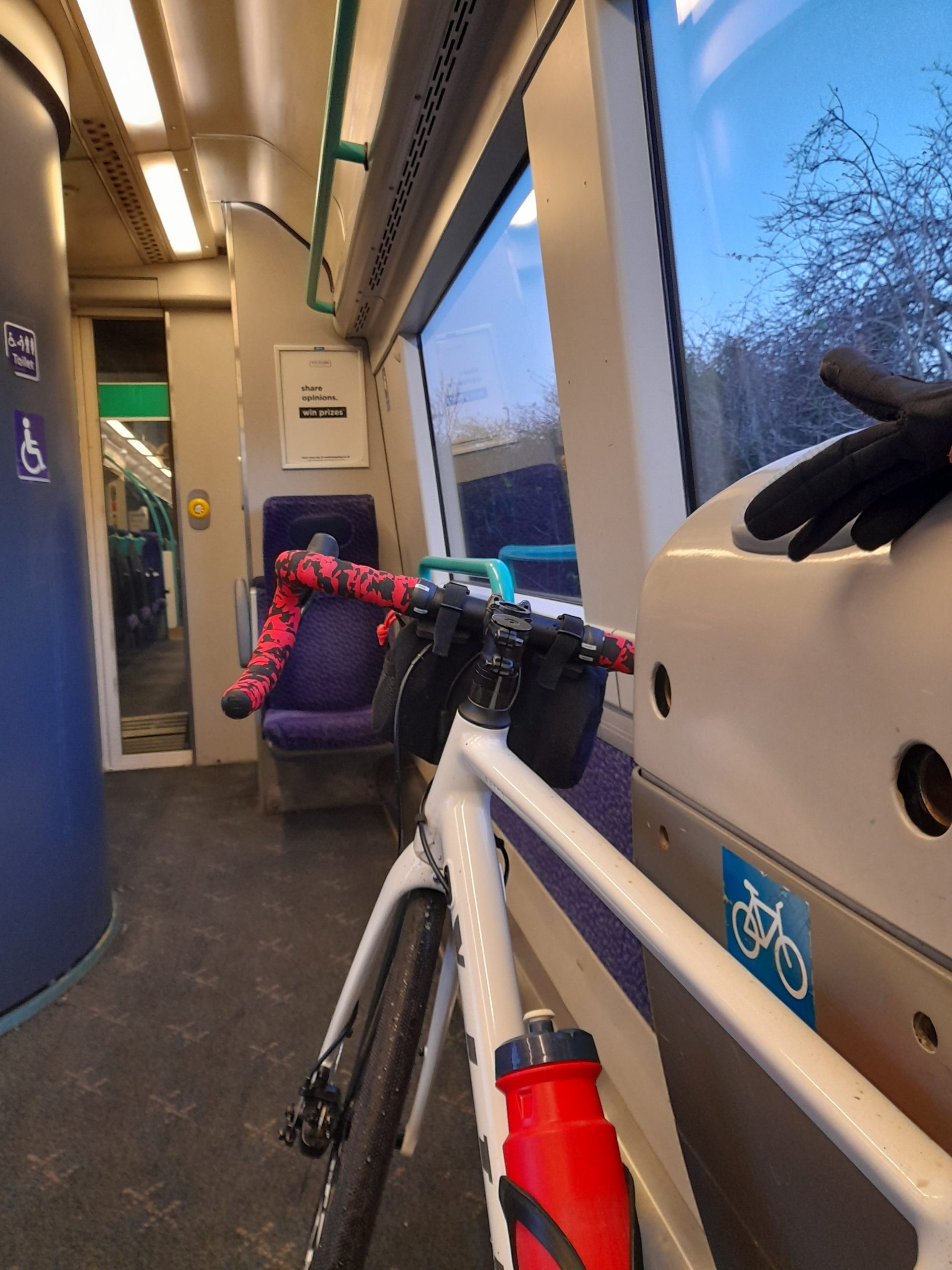
With an objective of taking some winter shots of the historic Parliament Oak for a book I am writing I awoke to a perfect crisp winter morning. My cycling effort and mileage is currently limited whilst I wait with ever diminishing patience for an operation on the NHS. This rendered the only sensible option being an outward journey on the Robin Hood Line from Hucknall to Shirebrook

So, the 7.42 train left Hucknall just as the sun climbed over the station bridge. I could tell this was going to be a perfect morning to capture a photograph of the splendid oak. It was only as I took the phone from my canister bag  hoping to take a picture whilst leaving the station that I realised I’d not put the batteries in! Therefore, phone photo’s it would be.

Alighting the train at Shirebrook station I looked forward to the first leg of my cycling mini adventure from Shirebrook to the Parliament Oak.  This included a detour of Shirebrook wood to avoid the main road. A reflection of low winter sunlight bounced off a pond lying at the edge of the wood. It was blinding, making clear vision virtually impossible.

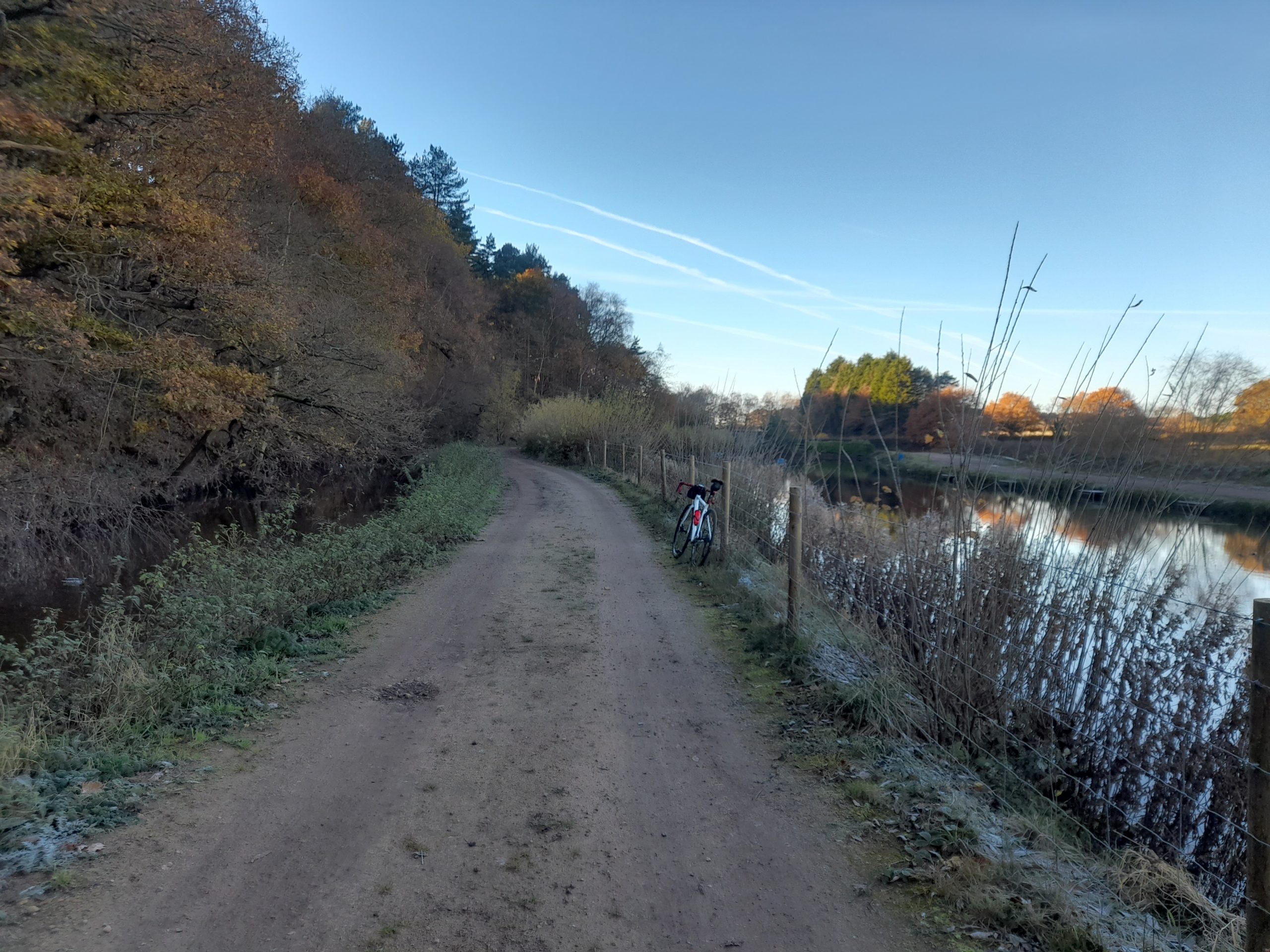
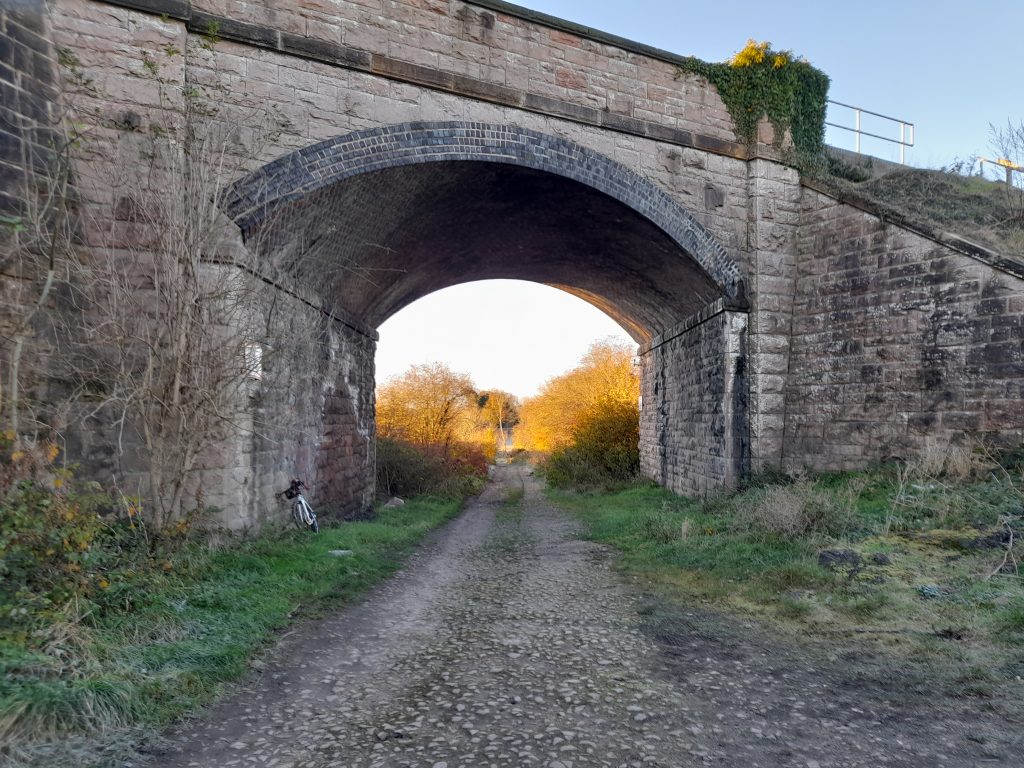
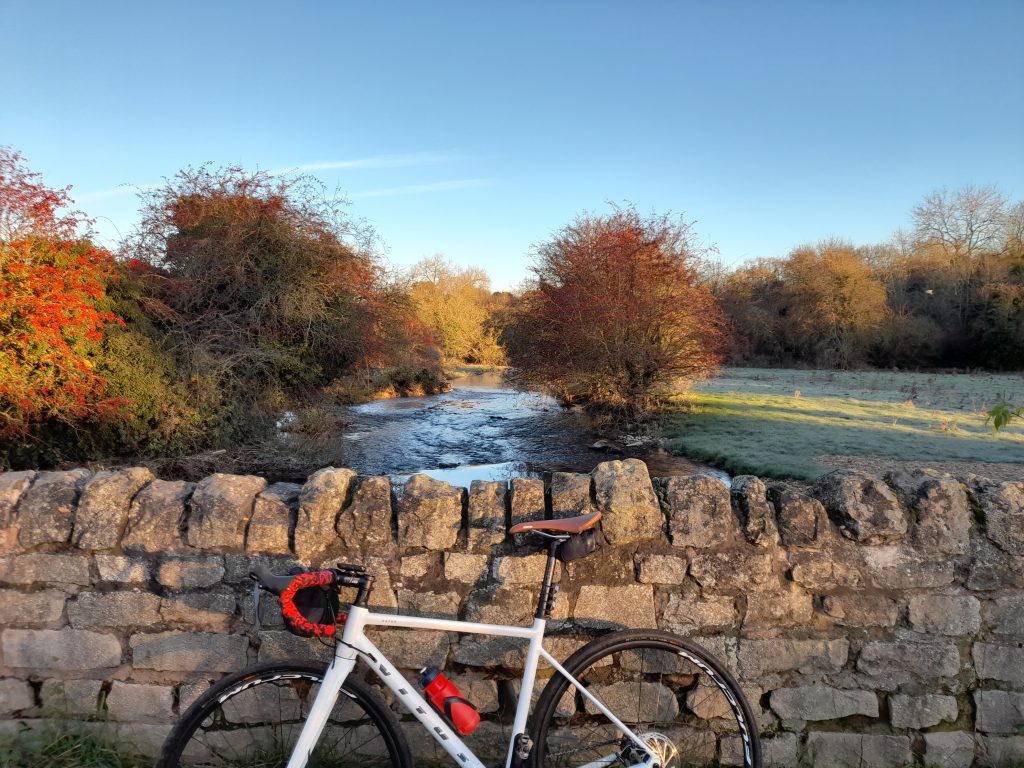
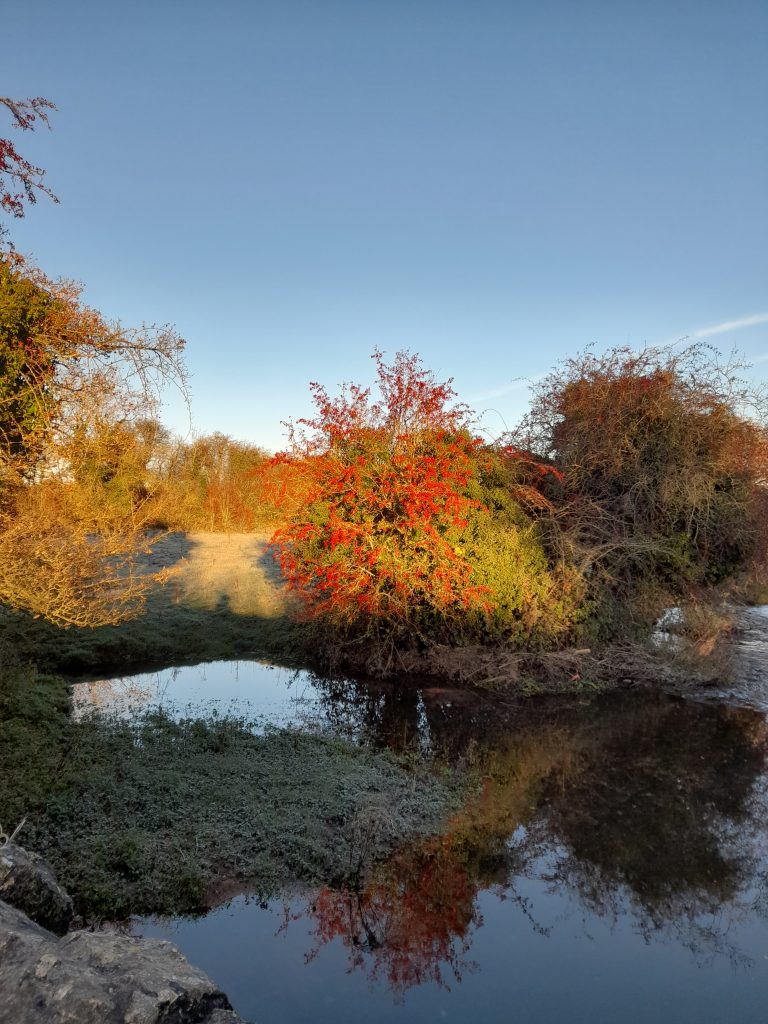
After a short return to tarmac I was able to pick up Sookholme Lane which quickly turned from asphalt to gravel. This section was new to me and riding it wasn’t to disappoint. The farm track was delightful and made better by a frost that kept the surface firm. Passing under a viaduct and then over a limestone bridge that spanned the river Meden I stopped to take a few photographs. The river was cascading over rocks and bordered with bushes resplendent in bright red berries.

It wasn’t long before I said goodbye to Sookholme Lane and hello to Market Warsop.  After resolving my confusion over the route, a lane that Garmin thought had open access was in fact blocked by a tall padlocked gate at each end. I plotted my revised way out of Warsop picking up what must be an ancient track called Coach Road. This track ran along a wood known as Forest Hill Plantation. It was a delight and brought me directly to Parliament Oak.

On my last visit to see this historic Oak it was in its full coat of leaves. Now bare of summer foliage and set against the winter sunlight Parliament Oak looked like the arteries’ of an oversized heart. With few leaves to cover its great mass it was easy to make out the snaking trunk ravaged by time but refusing to give up on life. It very much reminded me of my own self determination to carry on despite the battle scars acquired during decades of running, cycling and striving to make sense of the crazy economy in which we work, or at least the work I do to make a living. But my triumph against adversity is nothing compared to the thousand years or more this battered oak has endured.

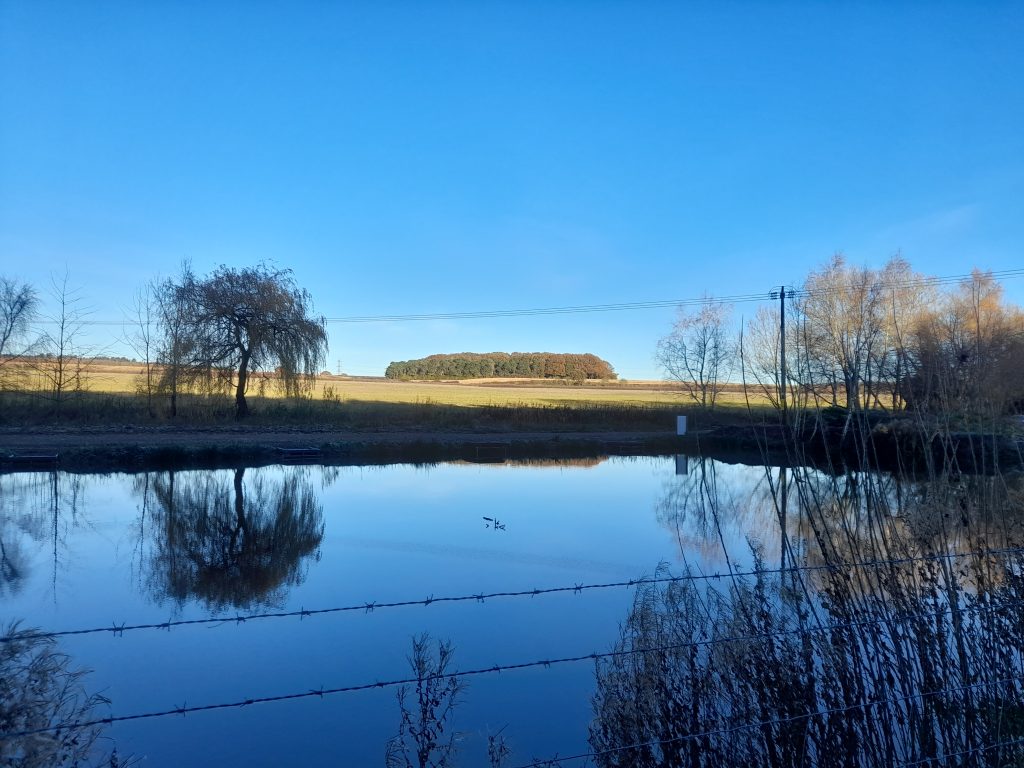
Having gathered the photographs I wished to collect I made my way south, through the sandy track that is New Buildings Drive, I often wonder about the names of these tracks. Once at the bottom of the lane and having shared a few good mornings with local dog walkers I arrived at Sherwood Forest Fishery. There, head tucked under wing was a heron. Perched on a pole driven into the pond bed. I thought it hadn’t seen me and, after gently leaning my bike on a fence, reaching for my phone and pressing the camera icon, off flew the heron. And that is the story of my wildlife photography in one instance. Despite my obvious disappointment the mirror like pond delivered pleasure to the eye so I snapped a few frames for the record.

And onwards, turning into the steep climb of Cavendish Wood I had to remind myself to be sparing with the effort, doctor’s orders. This can be a challenge because I feel I still have climber’s legs. Cavendish Wood is a lovely stretch but having only a 28-tooth sprocket at the back and a loose surface under tyre, made me exert myself more than I know I should at the moment.

After negotiating the climb, I was then following yet more interestingly names and equally enjoyable tracks as I made my way to the outskirts of Mansfield via the delightful named Chestnut Screed and then Clipstone Drive. Once in Mansfield it was easy to avoid the busy roads by following the course of the town’s long- abandoned Racecourse and over Berry Hill Park. Leaving the town there was only a brief encounter with the A60 before turning right into Thieves Wood and a well-earned picnic stop. It was interesting and slightly worrying to observe how many people were there having travelled in cars to take in nature. The burger van proving an ever-popular supply of calories, but not for me having been a vegetarian for the past 35 years.

Having refreshed myself with a pack-up lunch I made my way for the final 14 kilometres of my ride, taking the back route into Newstead Abbey to avoid paying the excessive toll on National Cycle Network route 6 (levied by Nottingham City Council) and entering the grounds after the gatehouse. The section back to Linby and home was more challenging than normal having been churned up by the recent floods. Sustrans volunteers have made a great effort to get this section useable again given the totality of water levels a few weeks before. Reflecting on this ride made me think about how lucky we are in Nottinghamshire having such a diversity and range of gravel bike options and also on the incredible spectacle loaned to me by nature on this bright winter’s day.

Download the GPX file below:

Posted on

Become a Legend of the Gravel

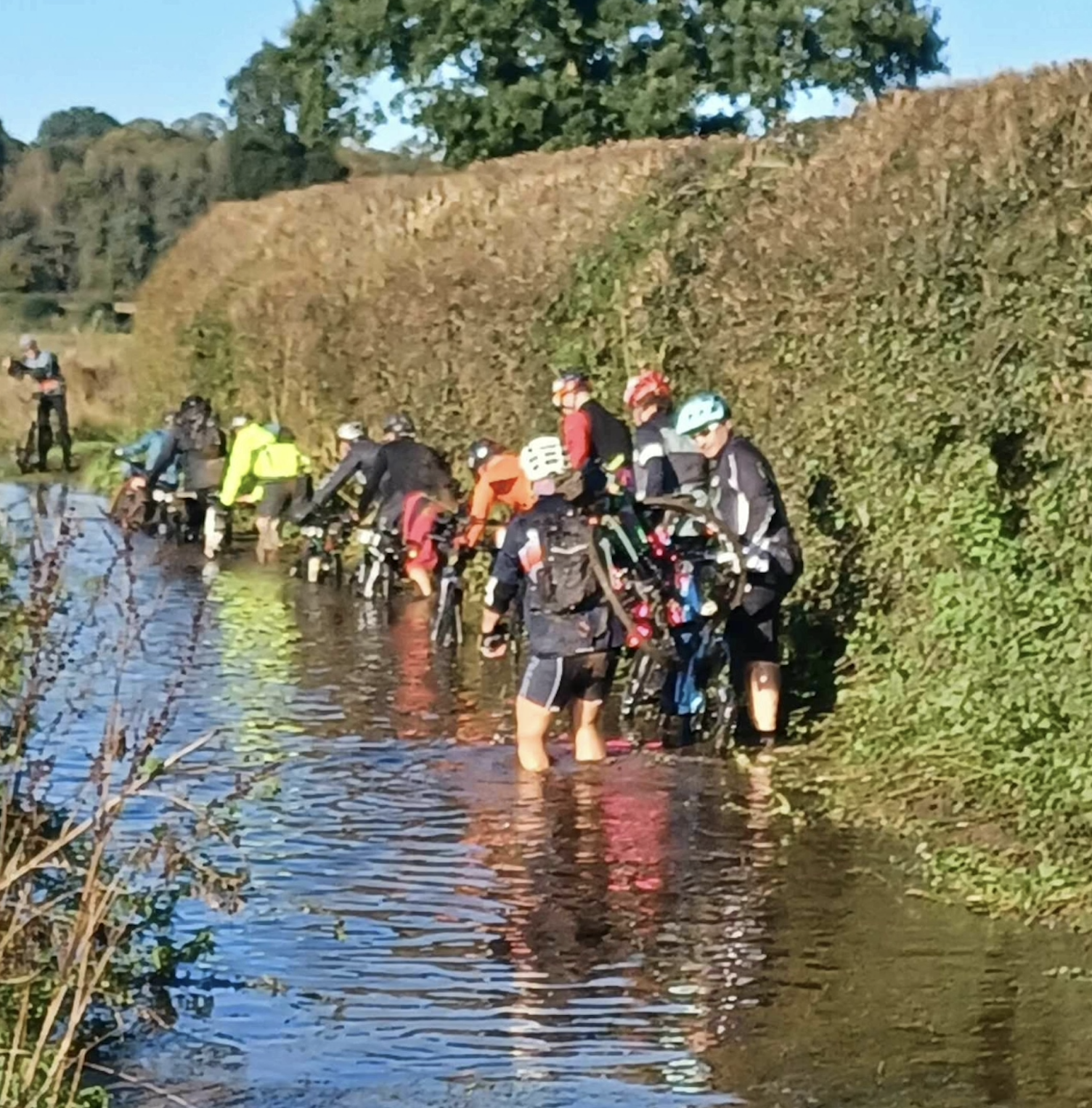
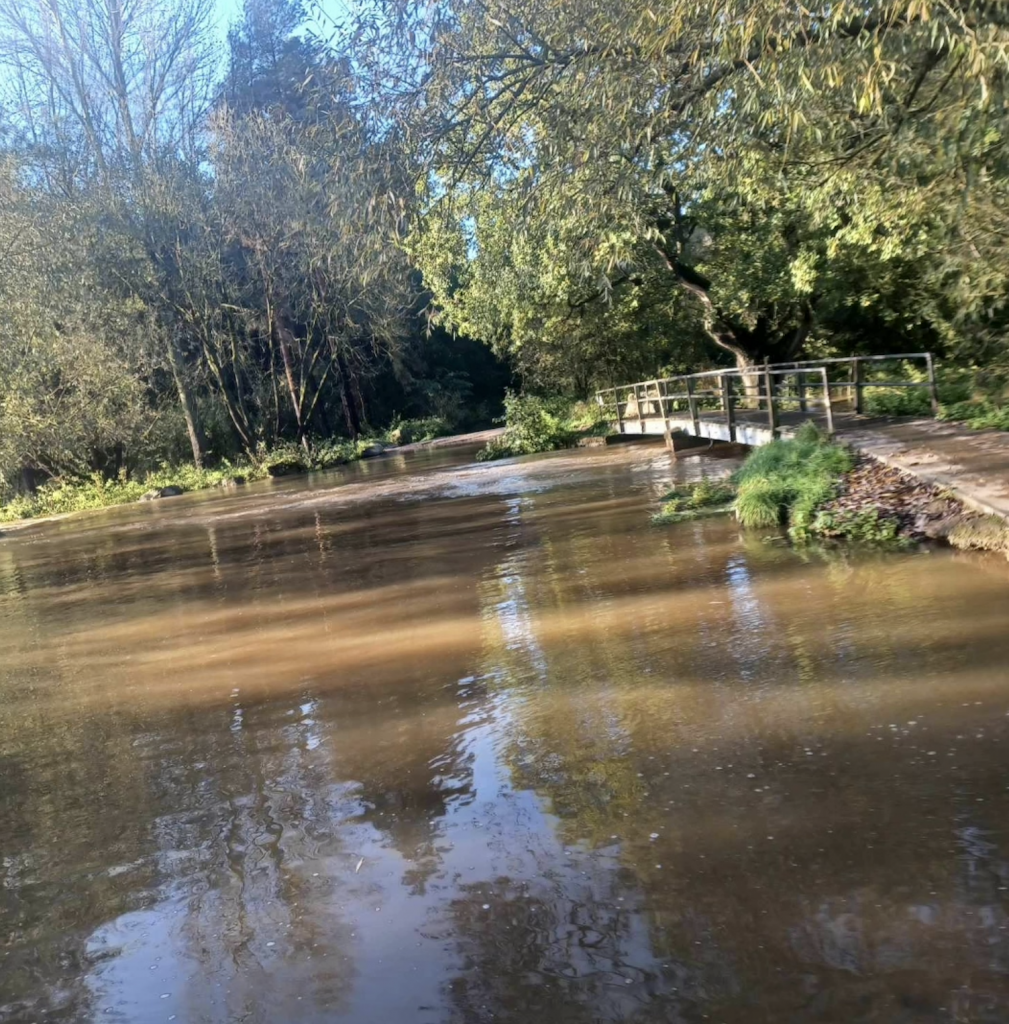
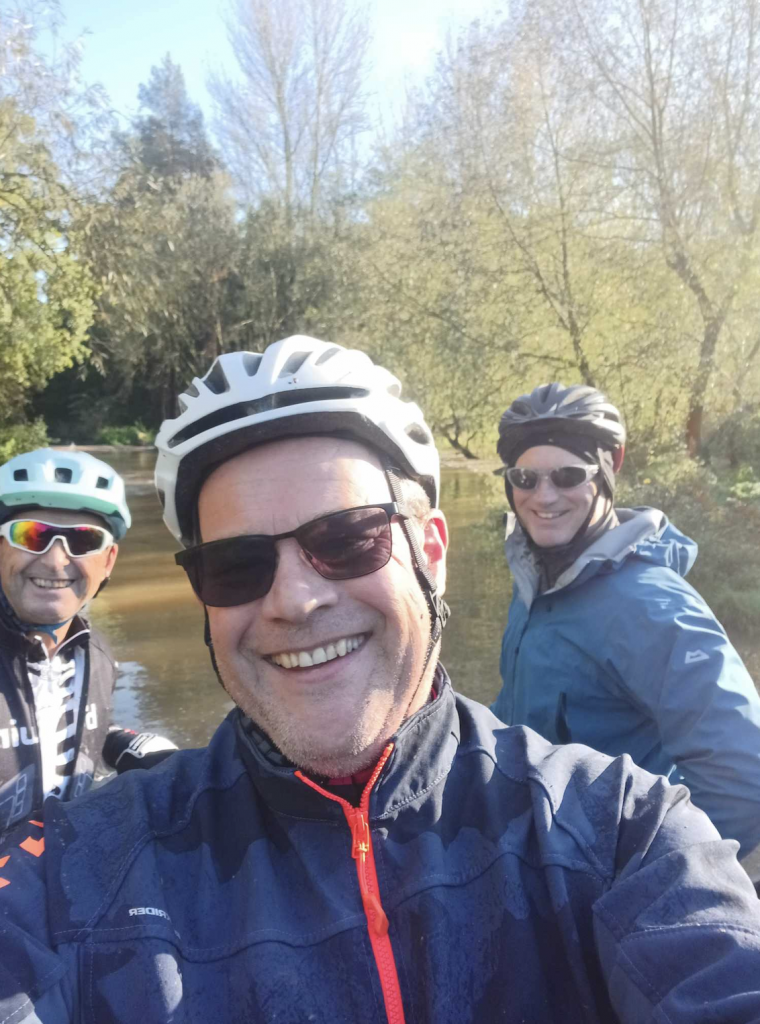
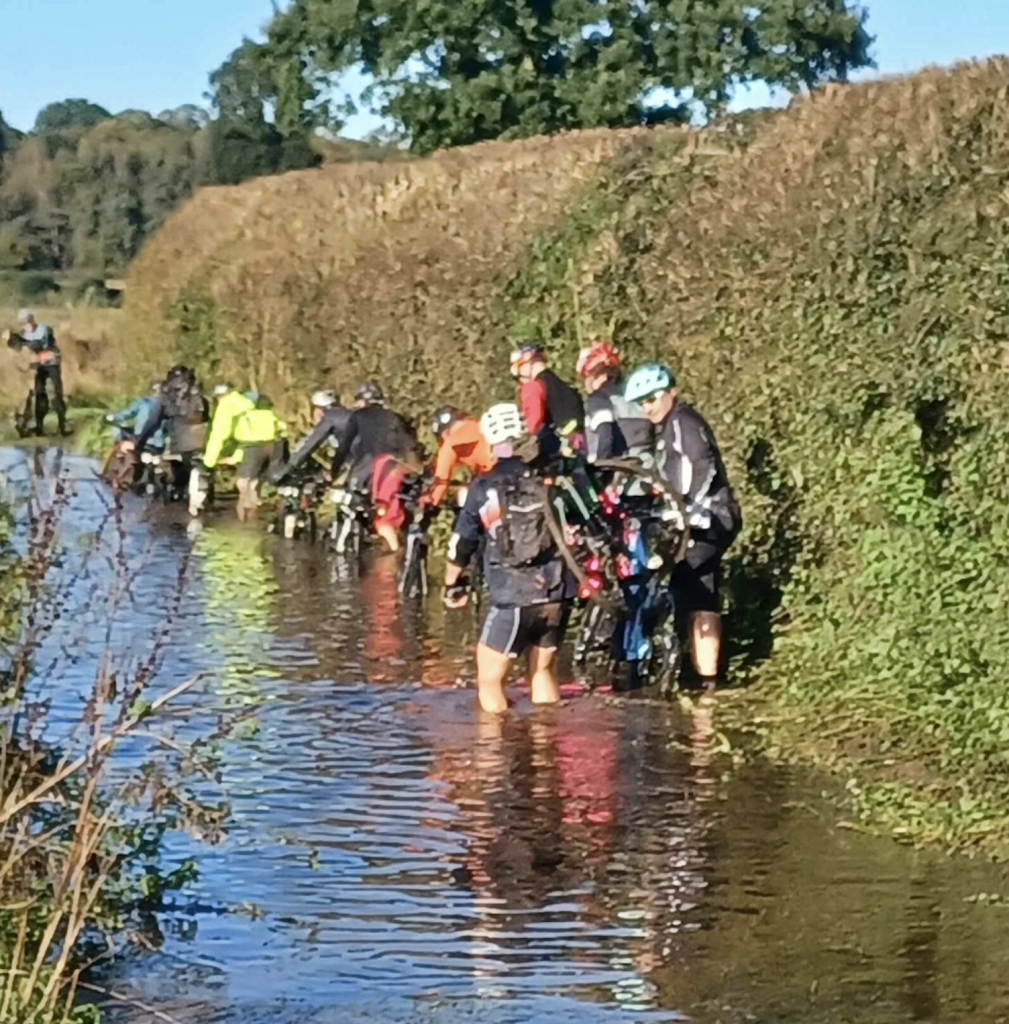
A short post to congratulate our good friend Dave and his Merry Men who took on and championed a very wet Glorious Gravel event today (organised by Glorious Gravel). Despite the horrendous conditions mid-week leaving the course flooded in several places, Dave and his mates managed to complete the course in 3 hours 48 minutes. Not Dave’s normal pace but achieving over 11 mph in these conditions makes him a Gravel Notts Legend. Here’s to all the riders who braved the conditions wherever they might have cycled today. Don’t try this at home.

You too can become a Gravel Notts Legend. If you complete one of our routes we’re happy to share your thoughts and pictures. You don’t have to get as wet as Dave and his mates through!