Having kept modest mileage going until the New Year I decided to book myself some warm weather exploration on the island of Fuerteventura, one of the Canary Islands. There were a number of reasons why I chose this location over the more regular destinations of Tenerife . It is relatively flat compared to the other islands but shares the same all year-round good weather, it is inhabited by a population of Egyptian vultures that I hoped to capture a glimpse of and there is an abundance of unmetalled gravel roads. All in all, apart from the four-hour flight, it all seemed perfect and to boot a non-cycling friend and neighbour, Ian, wanted to join me to, in his words, “keep my beer cool until I got back from the rides.”
My background work before setting off for Fuerteventura made interesting reading. Fuerteventura is the oldest of the Canary Islands, formed some 20 million years ago and first inhabited by native North Africans, the Majorero, before invasion by French knights (Jean de Bethencourt) and eventually in 1418 the King of Castile. Throughout this time the island had been persistently raided by North African pirates leading to the population being concentrated inland in relative safety before the current capital city was adopted. The full history of control is complex and includes incursions by the Moors, Portuguese and Spanish. Today the island, like all the Canaries, is part of Spain as an autonomous community and belongs to The Province of Las Palmas (Gran Canaria). The capital of Fuerteventura is Puerto del Rosario, just north of the airport but we stayed at the tourist resort of Caleta de Fuste.
The economy of Fuerteventura was based on wheat and cereals up until the 18th century. Low profits and famine drove many to a better life on the other islands. The main industry is now tourism but the population remains low at 124,00 (2023) given that it is the second largest of the islands.
Fuerteventura is a Biosphere Reserve and a special protection area of birds with endangered eagles, vultures, the African Houbara and stone chats to mention but a few. The Canaries share the same time zone as the UK unlike mainland Spain so there was no adjusting of clocks.
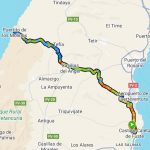
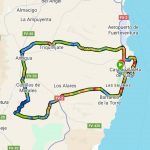
I set out to design some routes that were at least 50% gravel, my altered route to Antigua now falls below that target but for good reason. I utilised both my Garmin Connect app and Ride with GPS to formulate the two main routes. One coast to coast and back and another specifically to an area where I had a realistic chance of spotting vultures, something I have never seen in the wild before. The rest of the rides would just be random exploring to get to know the island.
I was not seeking to ride big miles, just enjoy myself and get a week of consistent cycling in. I figured anything up to 70 km in any day would be enough.
The outward journey went well, flying from East Midlands Airport with my non-cycling travelling companion Ian who decided to join me for a cheap break. Ian, whom I would rename Ian Soigneur was great company for evening meals and a few post ride beers. He was not the most dedicated ‘team soigneur’ failing to clean my bike or provide any training advice. His dietary support usually involved brands of whisky but on the positive side I think I’ve convinced him to have a go at cycling on his return to the UK. On a serious note, thanks to Ian for joining me.
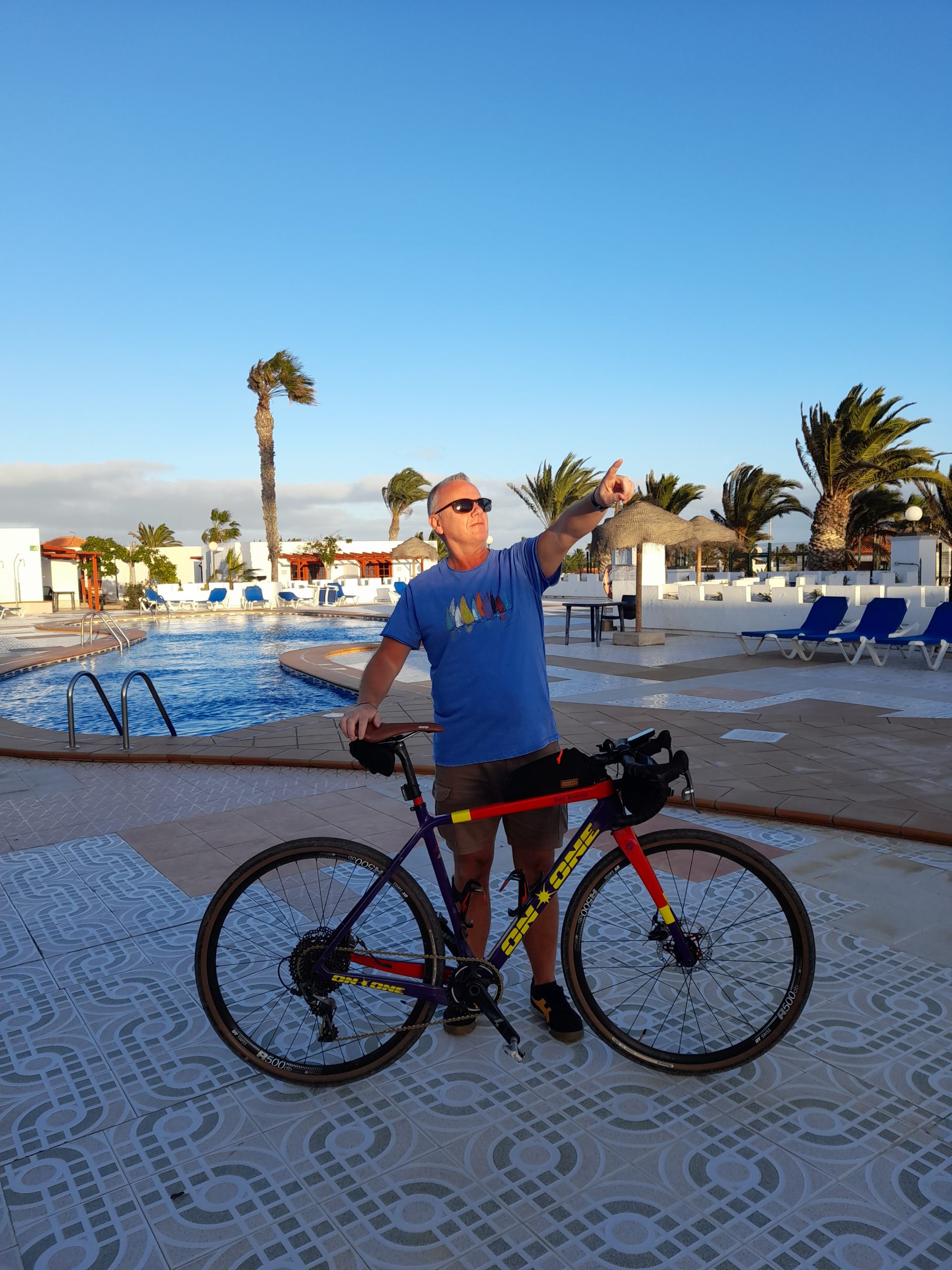
Taking a chance not booking an airport transfer was the correct decision with the taxi charging €17 to our adequate budget accommodation in Caleta de Fuste. Even more impressive was that in my broken Spanish we discussed cycling on the island and the driver showed me his recent downloads to Strava.
So, with some supplies purchased and the bike assembled everything was ready for the following day’s ride, coast to coast.
Setting off a little after 8 am the morning sky was overcast but the clouds soon dispersed. For convenience I followed the main road to the airport before swinging left at which point the ride was mainly gravel. The first few kilometres of gravel provided a challenging surface with short sharp hills past the ‘camel milk farm.’ It was however an improving track and a total joy taking me beyond mid-way at Casillas del Angel where the first cafe stop involved coffee and cake.
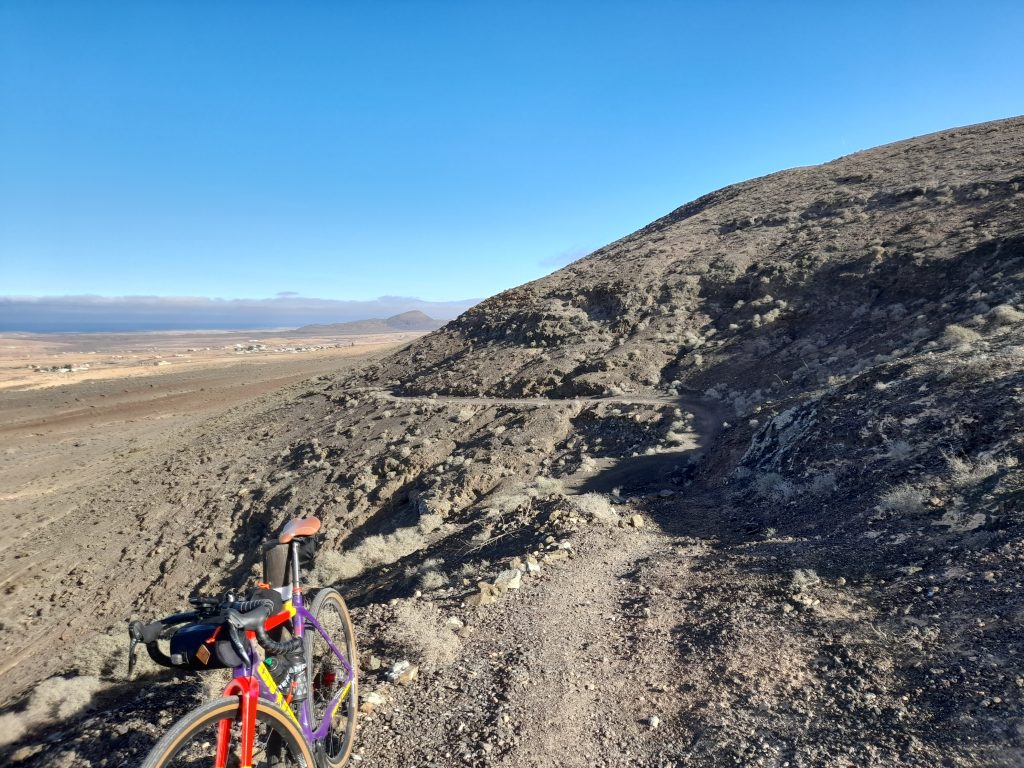
Heading further west out of the village the excellent gravel track left what little tarmac I’d experienced at that point. After a trouble-free ascent of the mid-island mountain range there followed a downward route that was more hiking trail than cycling track. It didn’t last too long before gravel cycling was restored. Keeping to the cautious side of things I walked the most difficult section of about 50 meters.
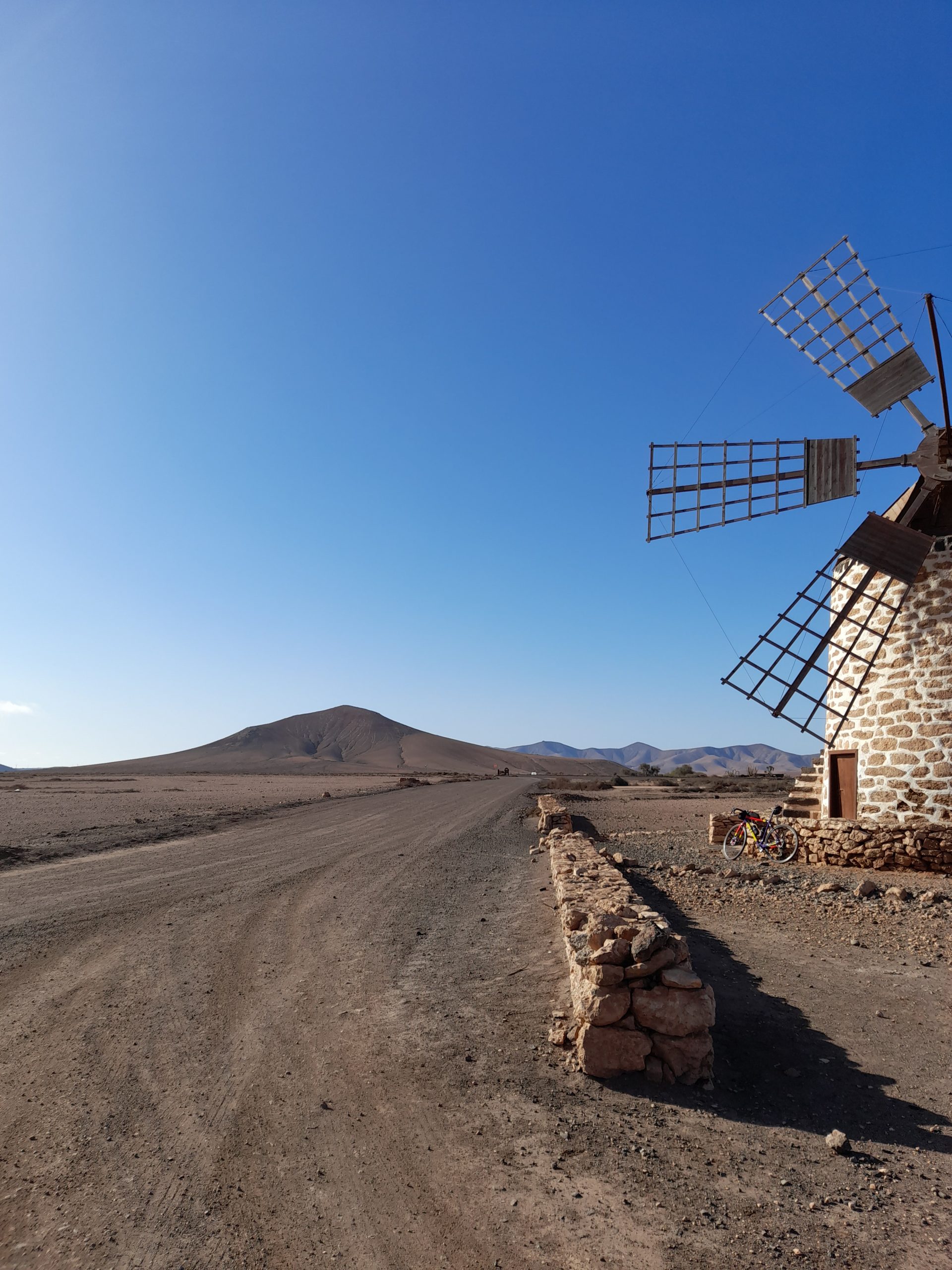
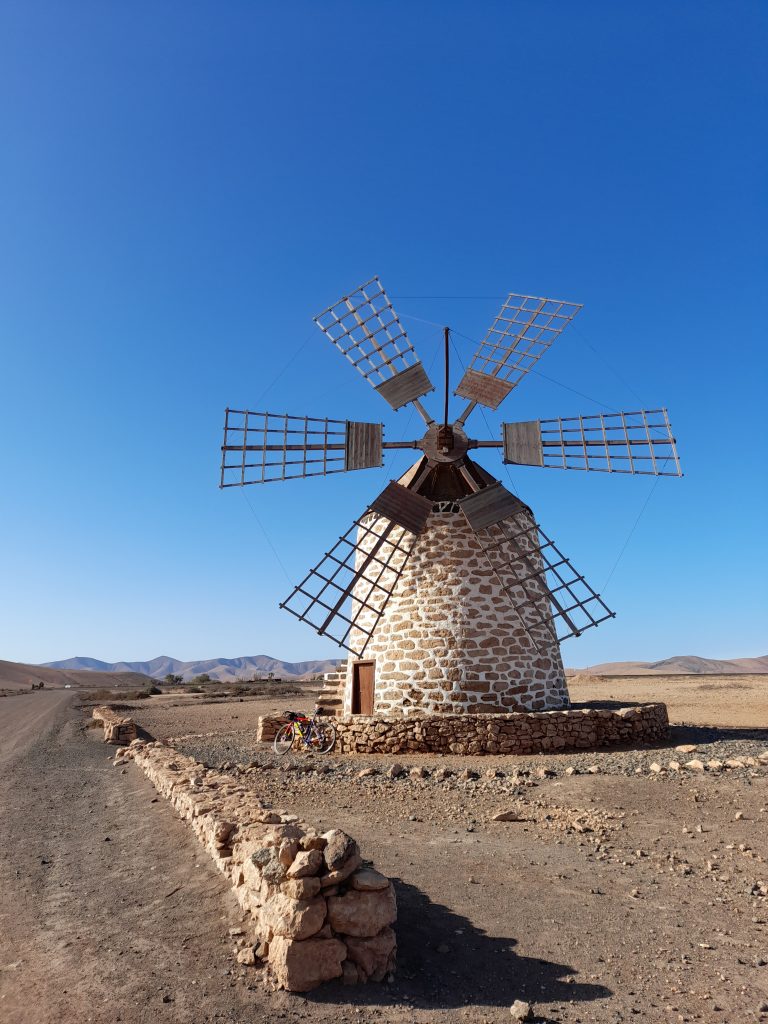
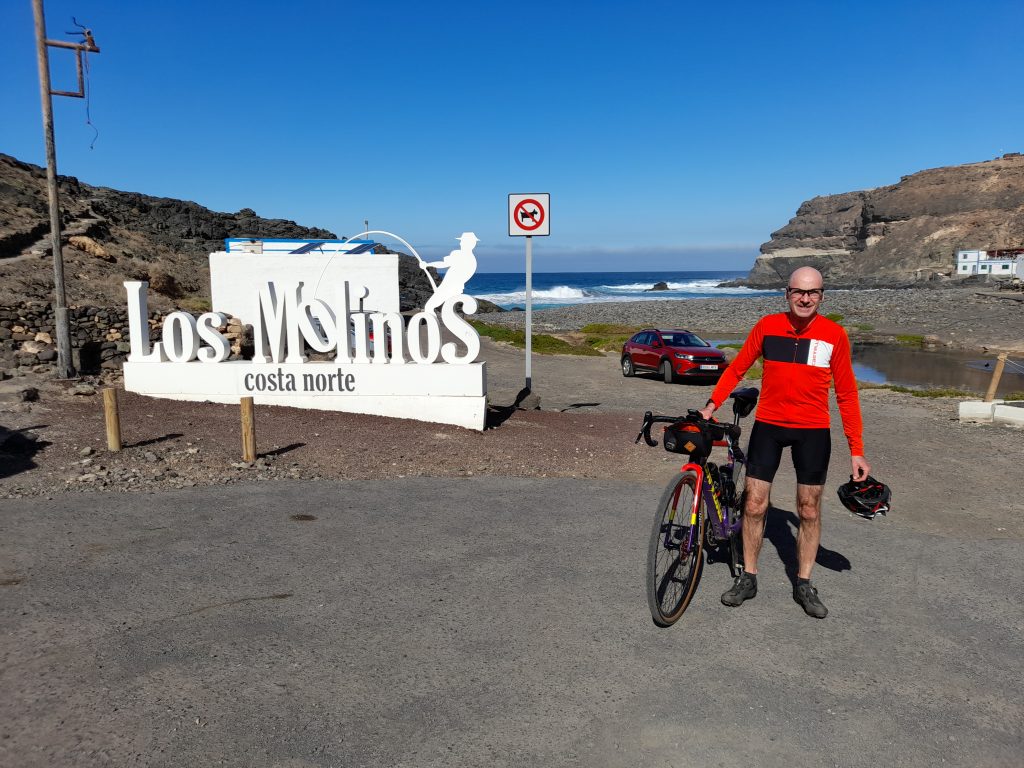
Before me the vast plain provided a clear view of the Atlantic Ocean. After passing a traditional Canarian windmill I picked up the smooth tarmac of the FV-221. It was at this point I caught my first view of Egyptian vultures soaring above in a perfect blue sky. Their distinctive wing markings confirming the sighting. As usual my photographic skills let me down. After a fast descent into the beautiful cove of Puertito de los Molinos and a sandwich stop it was time to repeat the journey in reverse. Four hours of cycling pleasure and my mate Ian waiting with a beer to round things off.
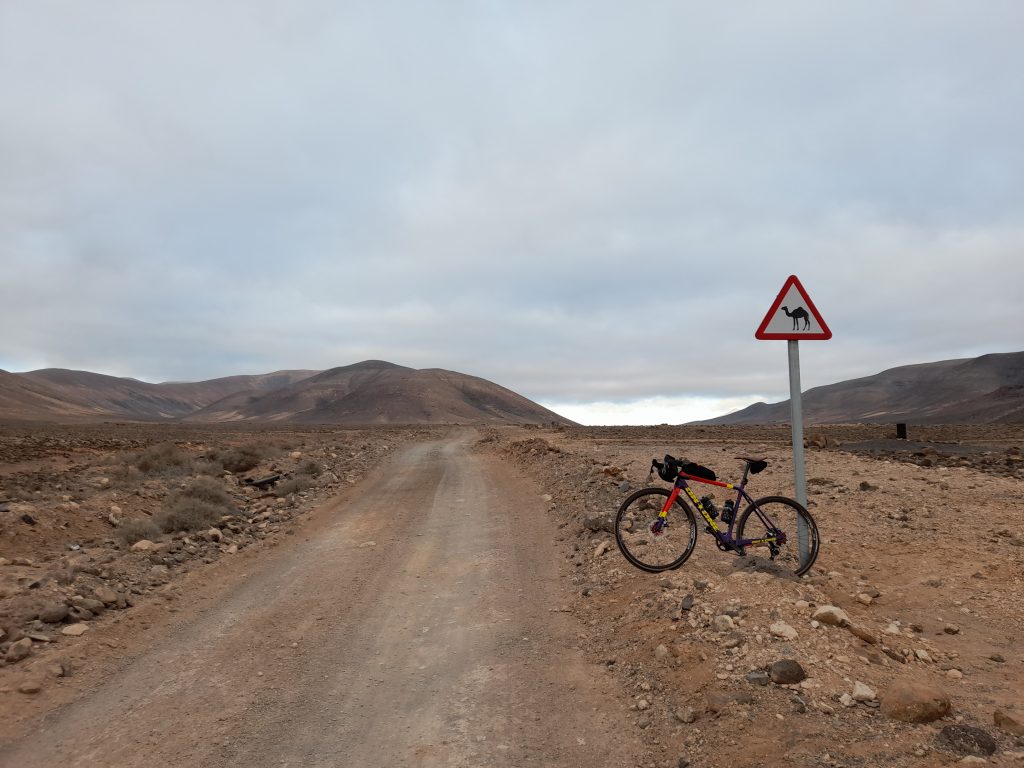
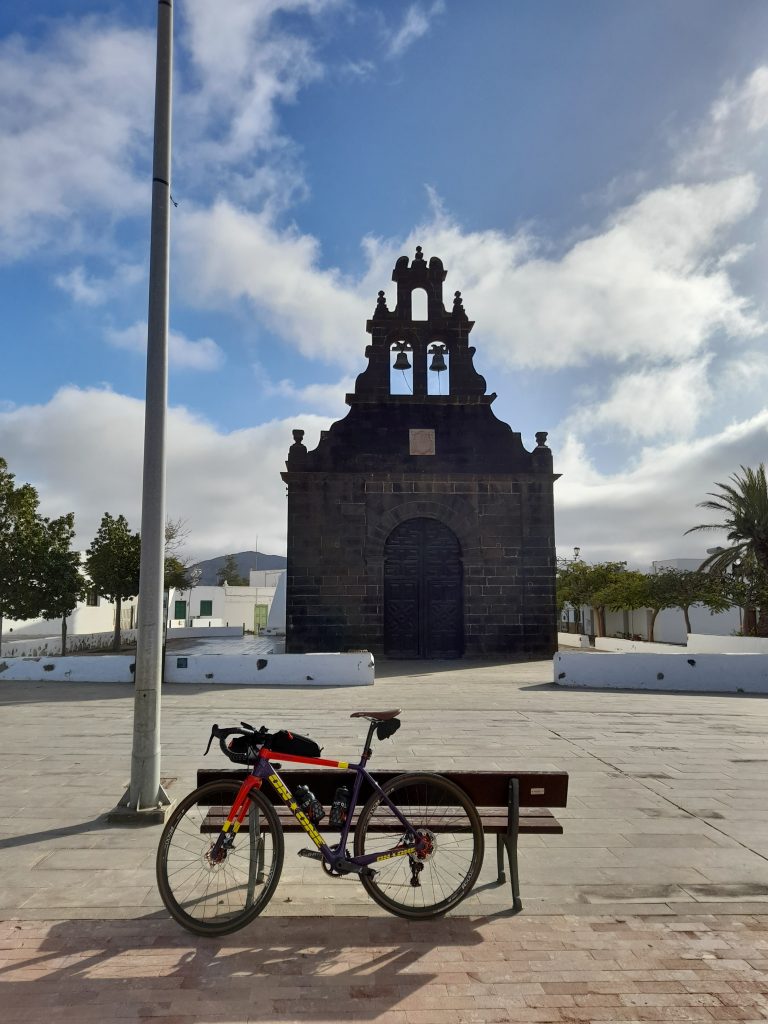
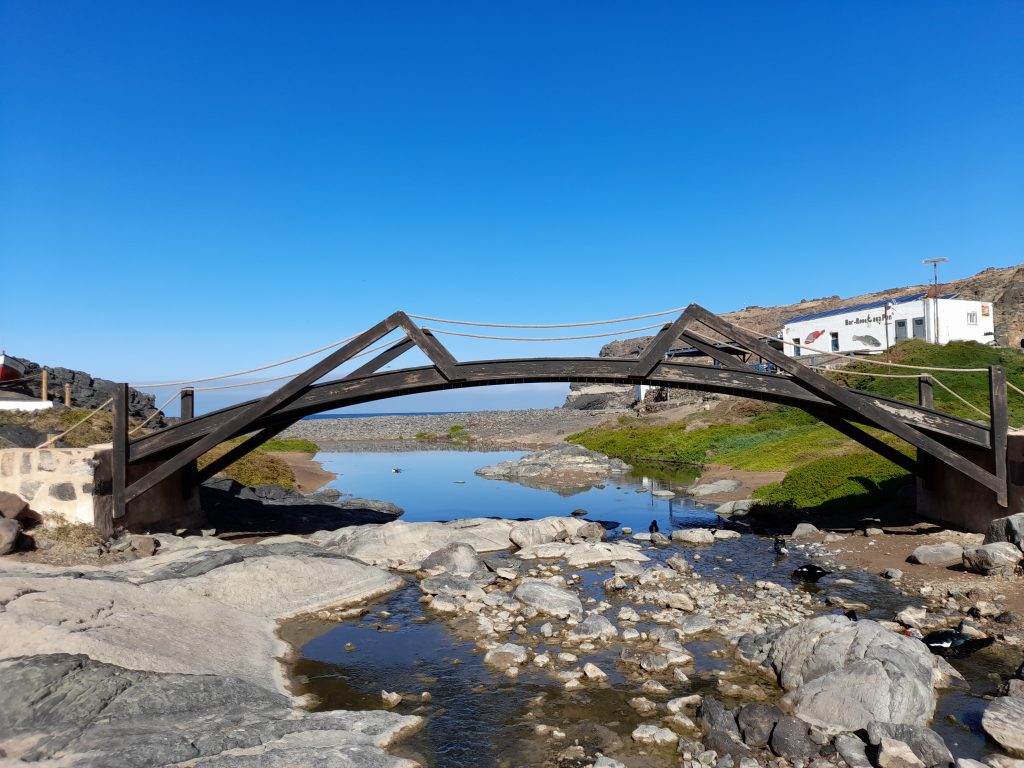
Day two’s ride was a bit of a recovery ride before I ventured back into the interior of the island. A run along the coast to a little bay called Puerto Laja. Heading straight to the shore in Caleta de Fuste and turning north along a dedicated cycle path I realised the force of the wind was going to play a part in the day’s ride. Leaving the resort also left me confused, the trail I had chosen was not rideable so some improvisation was required to get me to the next section of gravel that passed by the airport. This was the point where things improved and despite the strong headwind good progress was made to the capital of Fuerteventura, Puerto del Rosario. Approaching the town, I stopped to watch the barbary ground squirrels busy with their duties. It was also time to eat my warming sandwiches.
Puerto del Resario was a real treat with ferries and cruise ships docked in their mornings. I made full use of one of the many restaurants for a cana (small beer) and patatas fritas. Not my usual cycling fair but I was on holiday.
I then plotted my way further north taking two wrong turns out of the town before picking up yet more coastal gravel to the destination at Puerto de Laja. After a quick break it was about turn and a return to my starting point. The tailwind making the journey back pass in the blink of an eye.
Day three was a rest day to celebrate my birthday and recover for a big day (by my current standards) on Thursday.
On day four normal service was resumed with a loop of the interior and a half way stop in Antigua. Being propelled along the initial coast stretch without many turns of the pedals was an indication of the wind speed I would be riding against later that day. Garmin registered the wind speed at 43 kph but it felt much stronger in places. As I turned inland along the FV-2 I was grateful for the consideration shown by drivers giving me plenty of space as I leaned into the crosswind.
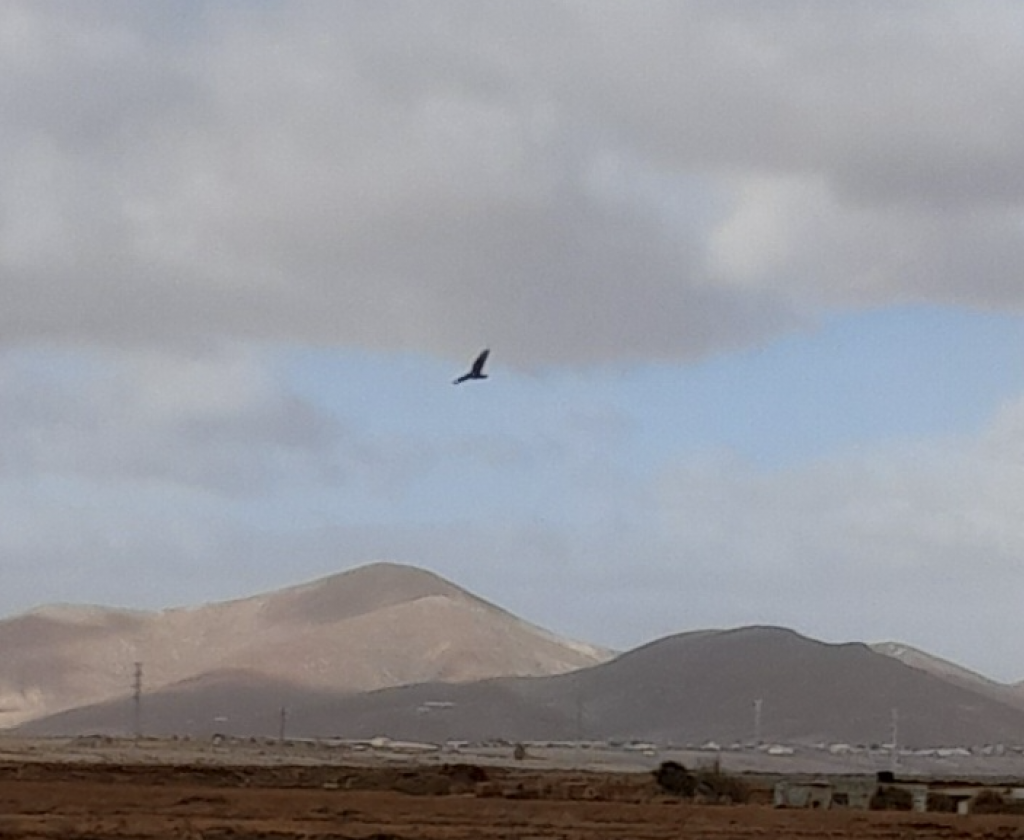
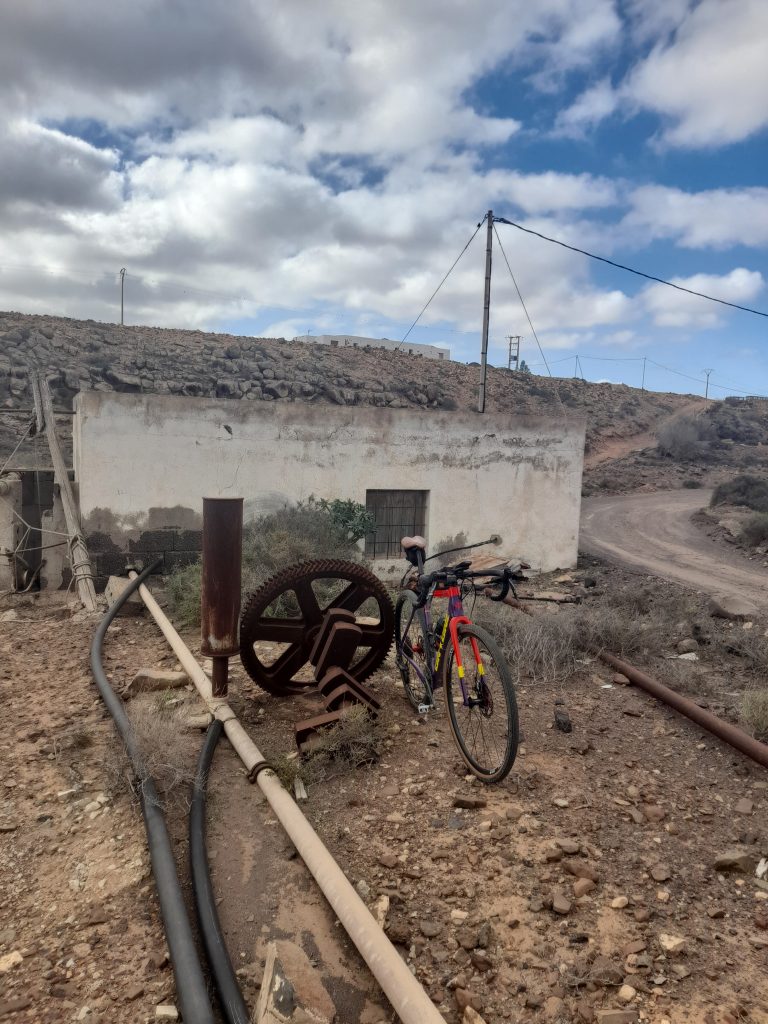
I was also grateful to turn off the tarmac heading towards Tiscamanita passing goat farms and a lunar landscape that was breathtaking. It was at this point I spotted an Egyptian vulture perched on a disused stone tower. As I stopped to get a photograph of this massive raptor it took to the air and made a circular maneuver to glide directly above me about 10 meters high. Once again, my photographic skills let me down by taking a picture before it was at the closest point and then totally missing the bird at the crucial moment. The sighting was a real privilege with the bird’s distinctive wing markings clearly visible unlike the adolescent vulture that was also present yet to acquire it’s adult plumage.
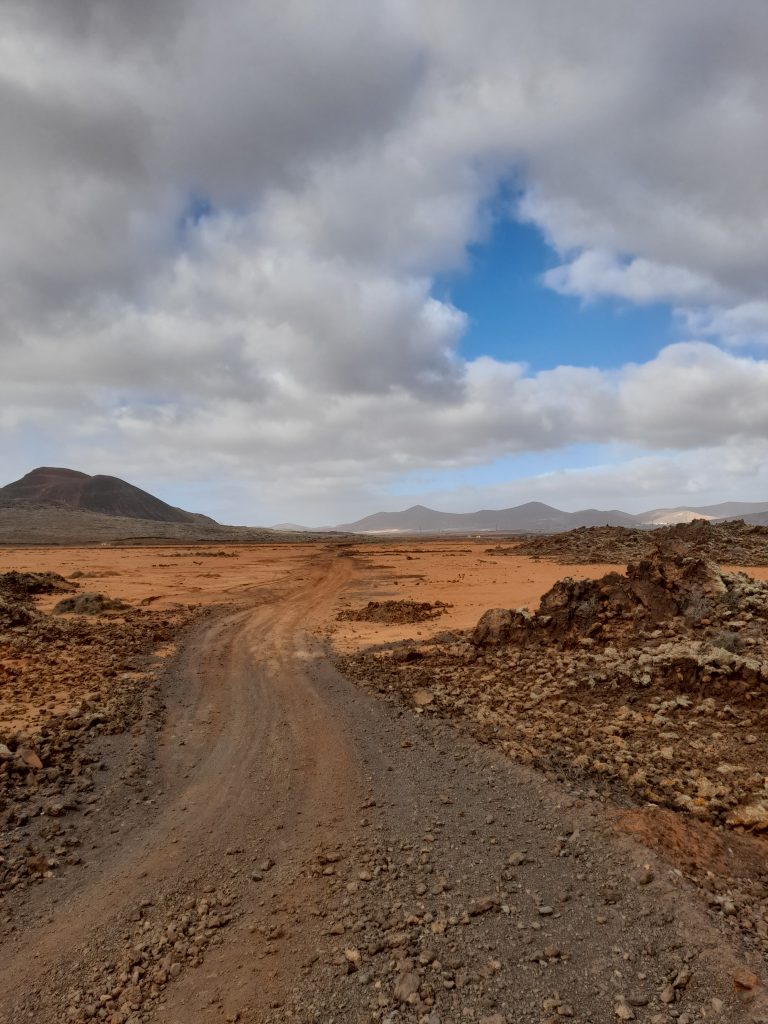
Carrying on I took the planned right hook before Tiscamanita which in hindsight was an error. The trail of large volcanic rock was impossible to ride resulting in me walking for over one kilometre. I’ve changed this on the Ride With GPS provided so that the route continues into Tiscamanita. This quiet road reduces the percentage of gravel but is advisable.
Eventually I was able to remount and make progress against the headwind towards Casillas de Morales, Valley de Ortega and then my lunch stop at Antigua.
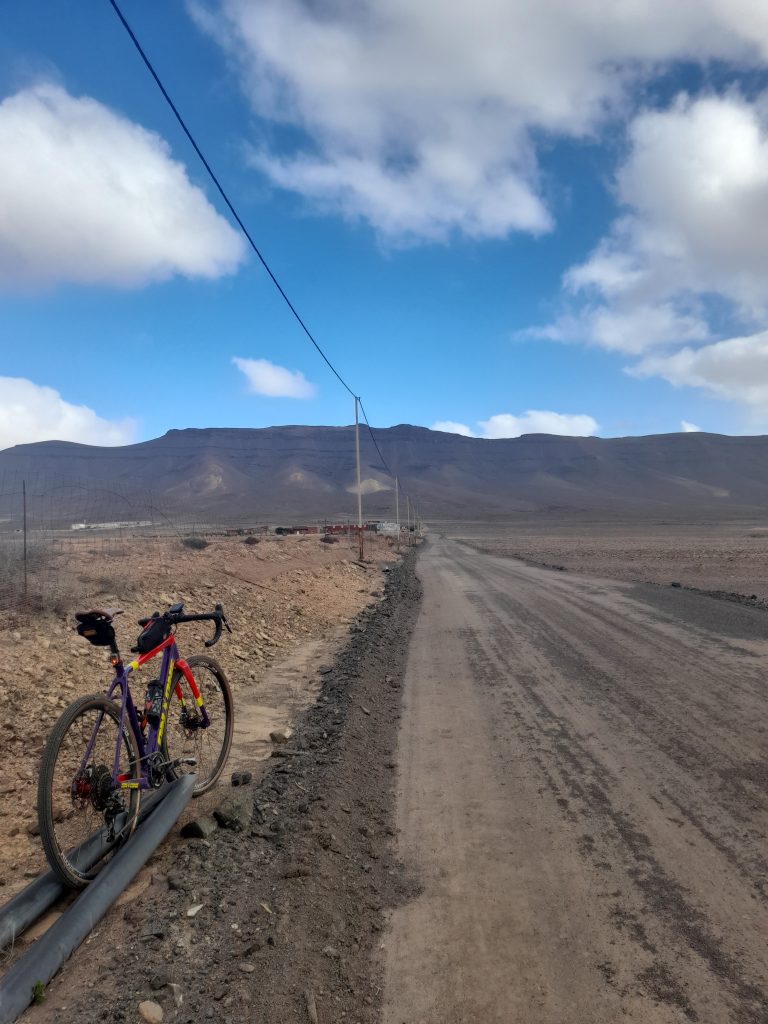
Post lunch the gravel and road mixture took me to Triquivijate after which there was a continuous 10 kilometre gravel track towards the coast and then back along the coast for a wind assisted ride back to base completing the 59 km ride. The revised route is a little less.
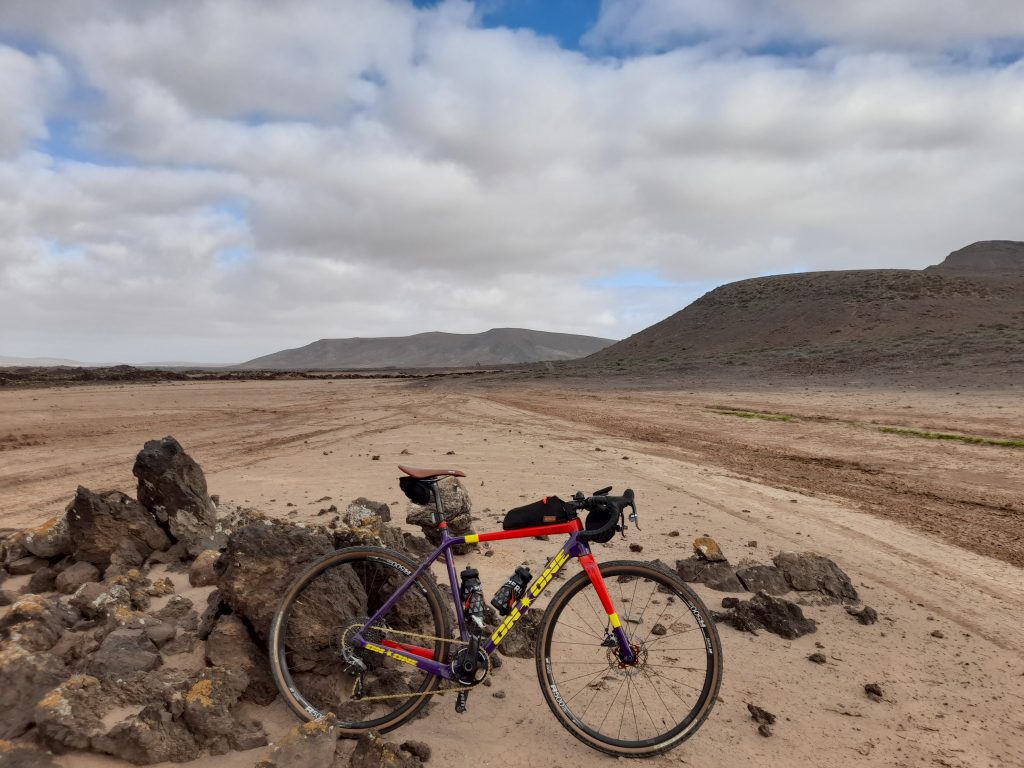
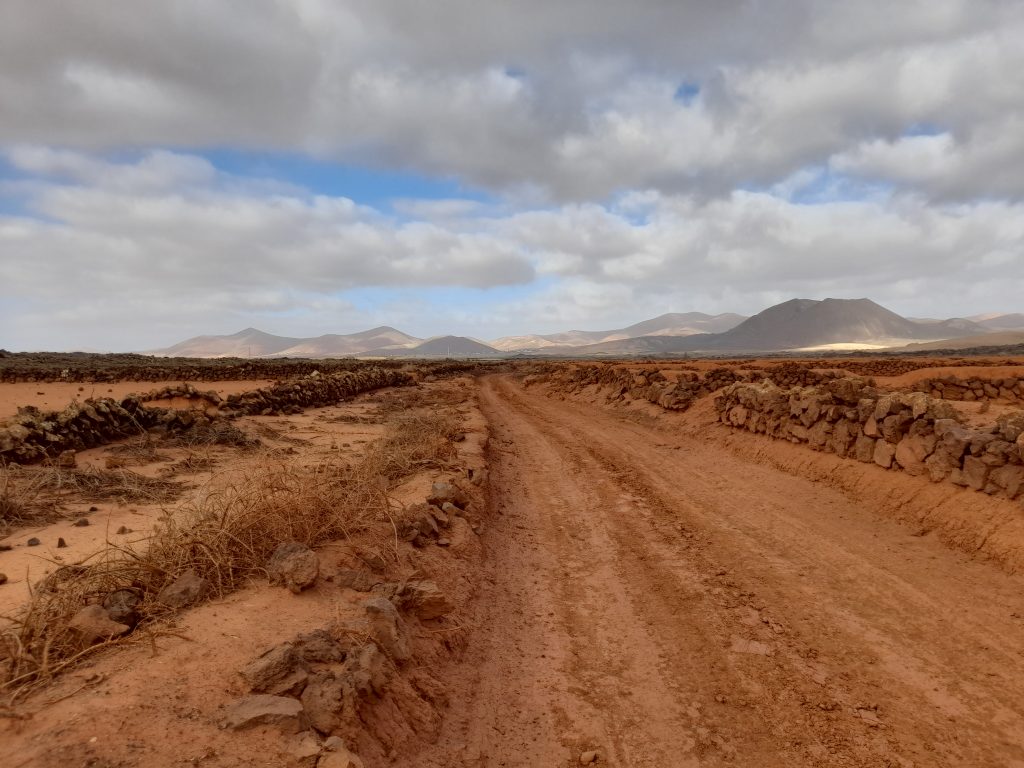
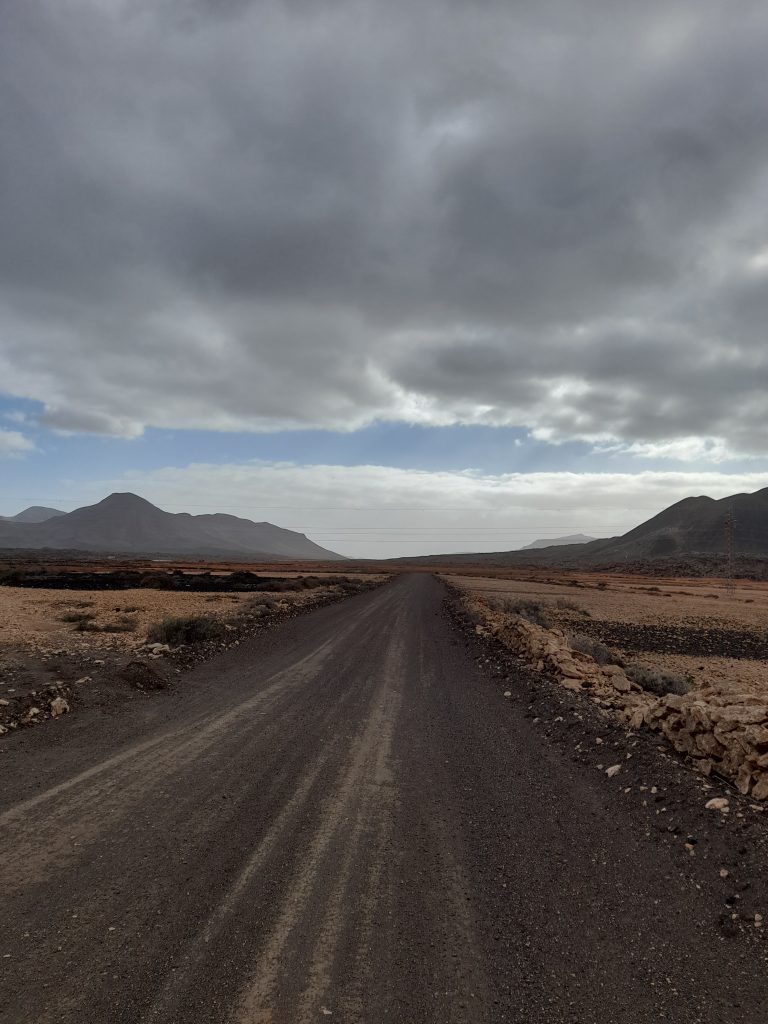
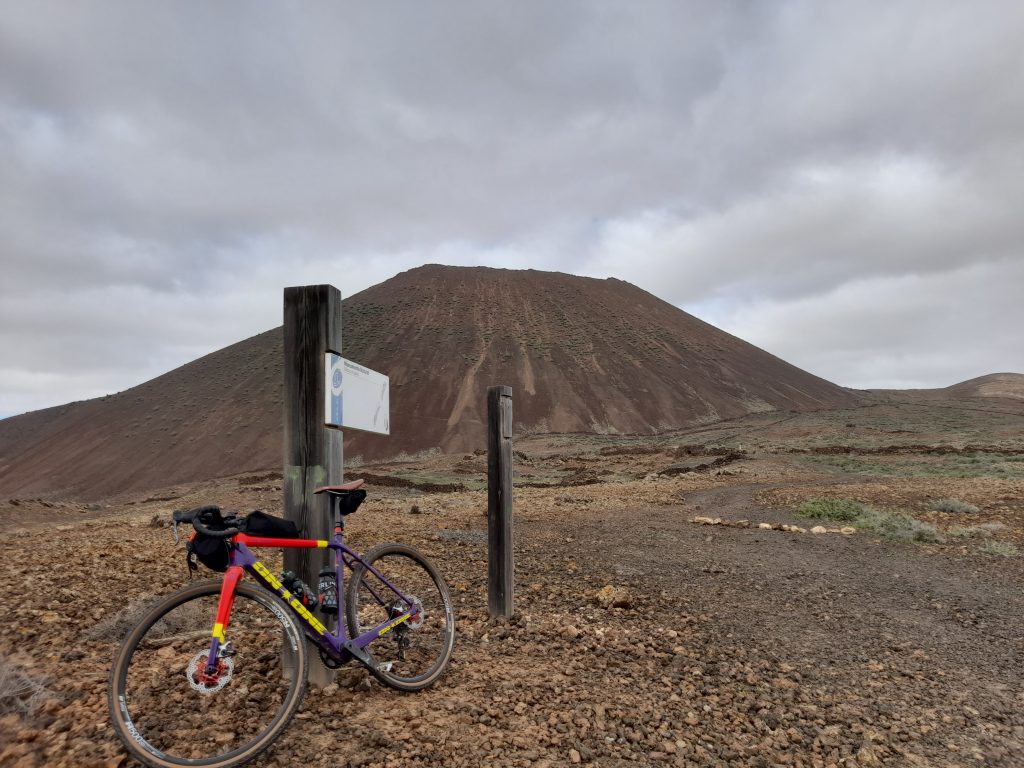
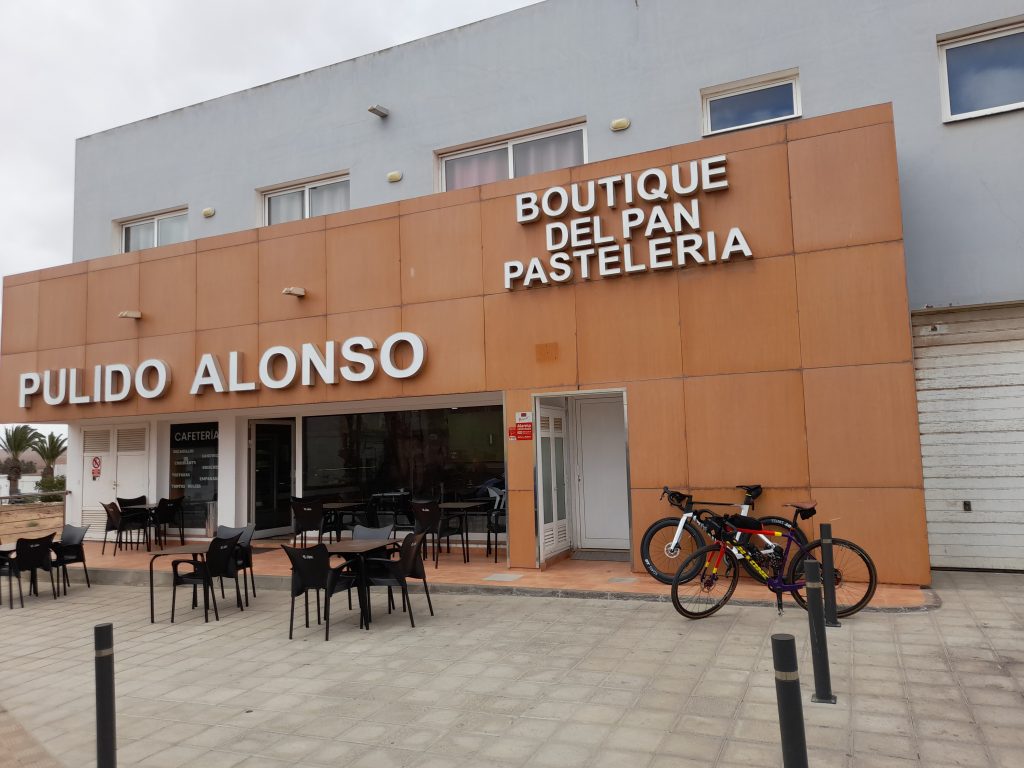
Day five was a shorter ride out to Triquivijate of about 40 km. Once again blasting along the coast on the way out before turning right for a thankfully shorter stretch on the FV-2 and the deadly cross winds. Turning right to leave the main road towards Los Alares I became confused for a while as the track looked like it had been obliterated by a large digger. Eventually I found my way onto the Cam.Buenavista and past the animal sanctuary. The gravel was good and smooth enough to make progress.
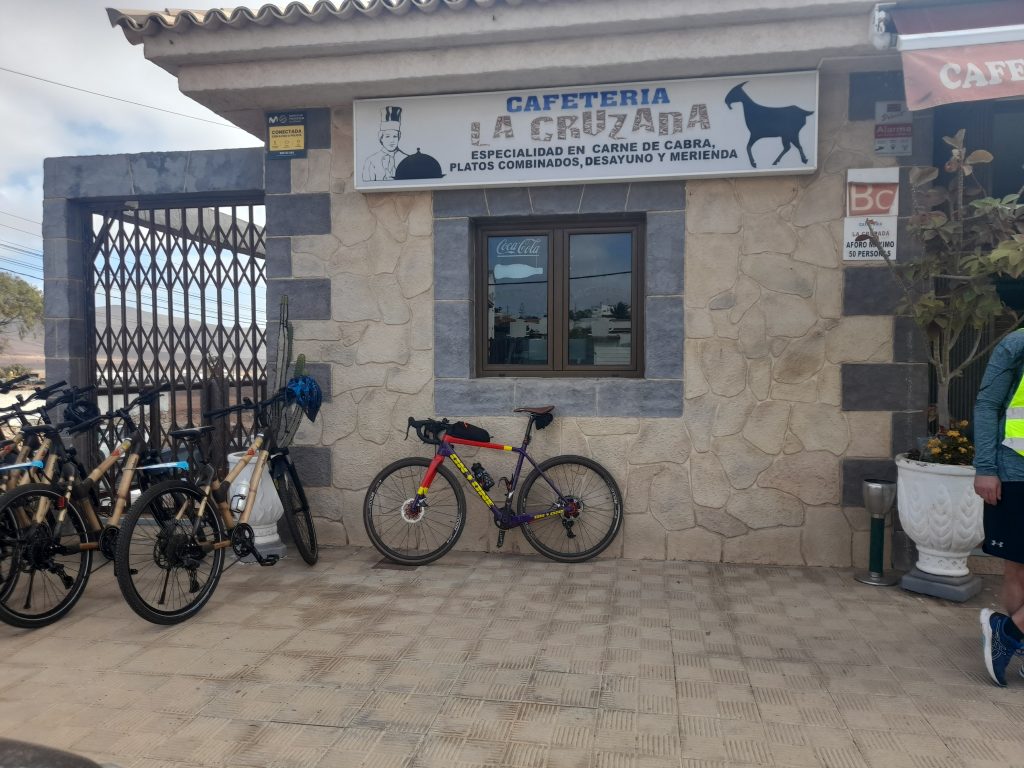
Arriving at Triquivijate I found a pleasant small town with an excellent coffee stop that I had spotted the day before. On arrival I was met by a large group of tourists from a cruise ship docked at Puerto del Rosario. They were on an excursion on bamboo bikes made by Myboo. After coffee and cake, it was back to a mixture of trails and the FV-413 back towards the coast to complete my winter cycling adventure in Fuerteventura.
In summary the island is a great destination for gravel cyclists and I could have planned much longer routes. However, be aware that this is a windy place and the crosswinds were very challenging at times, maybe I was just unlucky. My most enjoyable day was the coast-to-coast ride of about 70 km. The enjoyment was helped by this being the least windy day. There was a section that required me to walk for a few hundred metres but all in all a great route.
Day four was my other major objective. As stated, I have amended the route to take out a very long unrideable section whilst retaining the fascinating and isolated track that provided a close encounter of the vulture kind. This ride offers the least percentage of gravel but the sections that are will take your breath away.
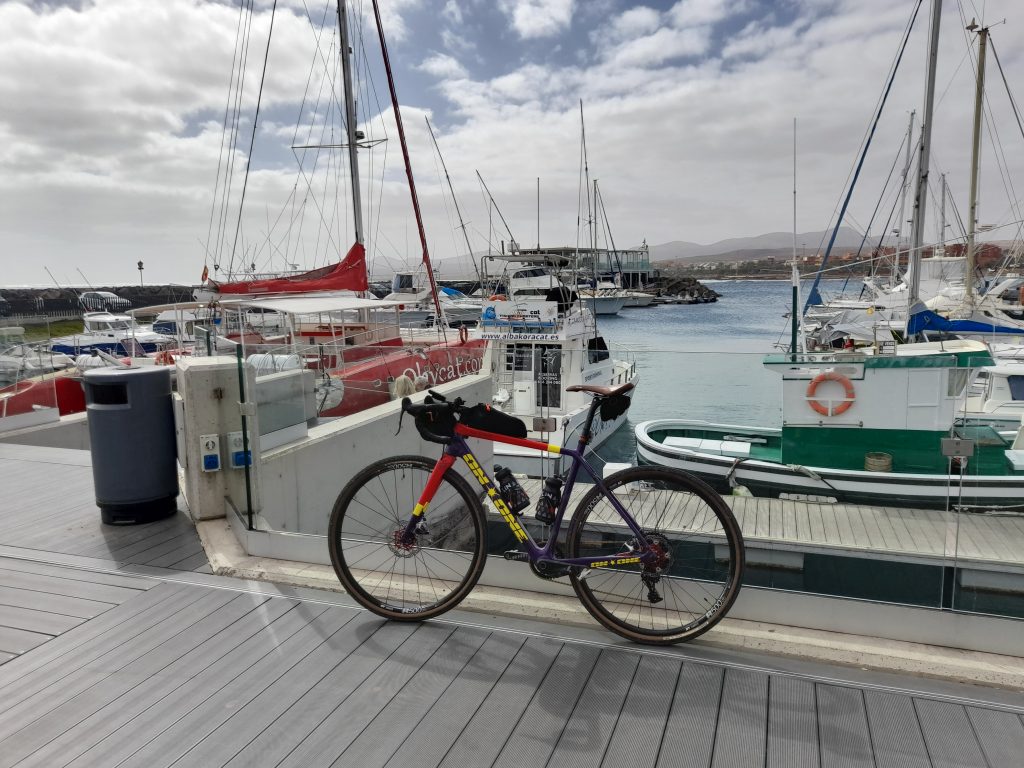
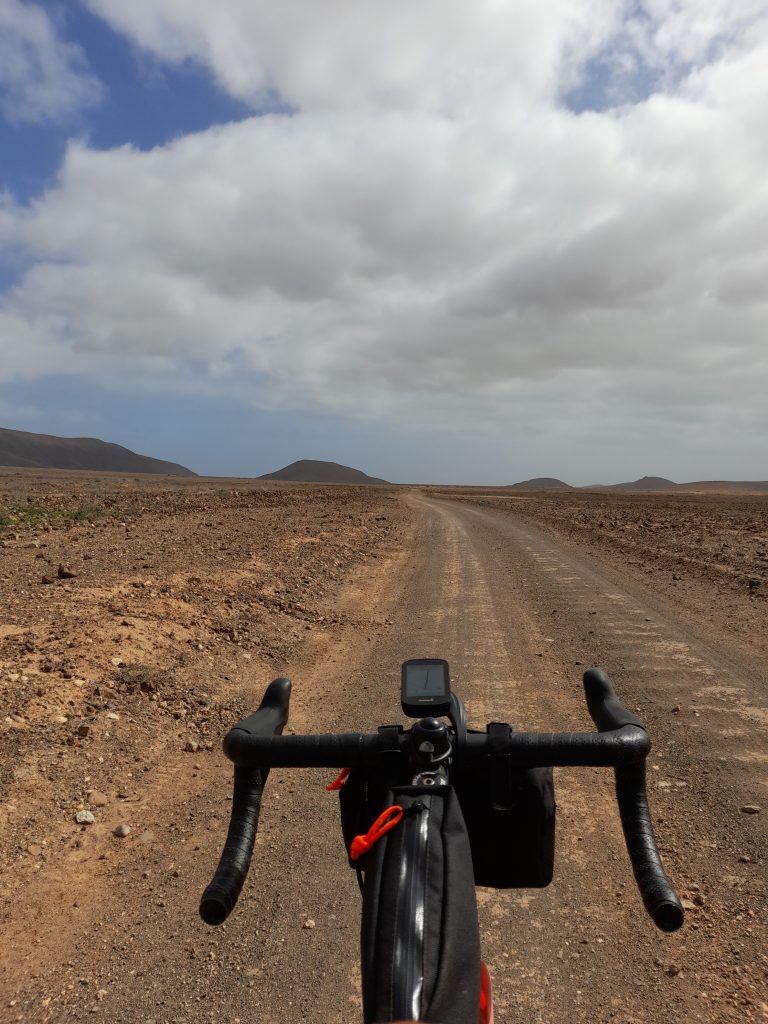
If I were to return, I’d probably base myself in Puerto del Rosario that has a much more Canarian feel to it than the mainly British resort of Caleta de Fuste but remaining close to the airport. Having said that, the accommodation was cheap and acceptable, there were plentiful restaurants to choose from and located midway along the east coast the resort was an ideal base for cycling adventures.
All in all, I’m glad I did it.